Department of Molecular and Medical Pharmacology, The Geffen School of Medicine at UCLA, Los Angeles, CA, 90095, USA.
Department of Nuclear Medicine, Cleveland Clinic, Cleveland, OH, 44195, USA.
J Neurooncol. 2018 Jul;138(3):557-569. doi: 10.1007/s11060-018-2823-7. Epub 2018 Mar 10.
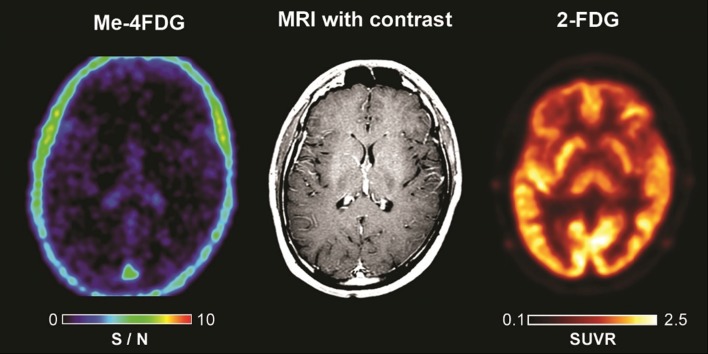
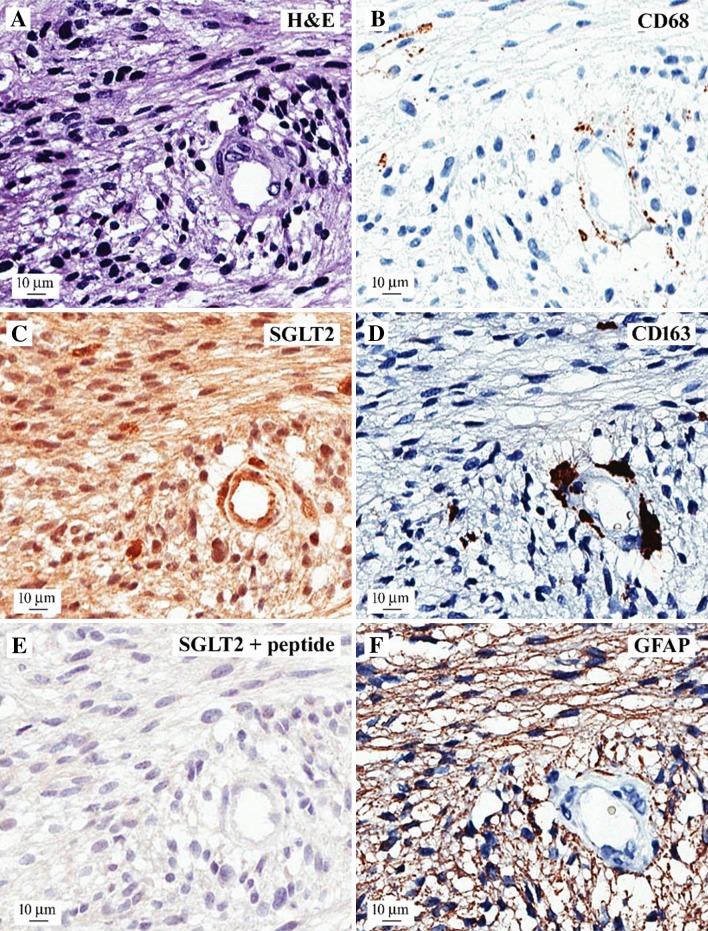
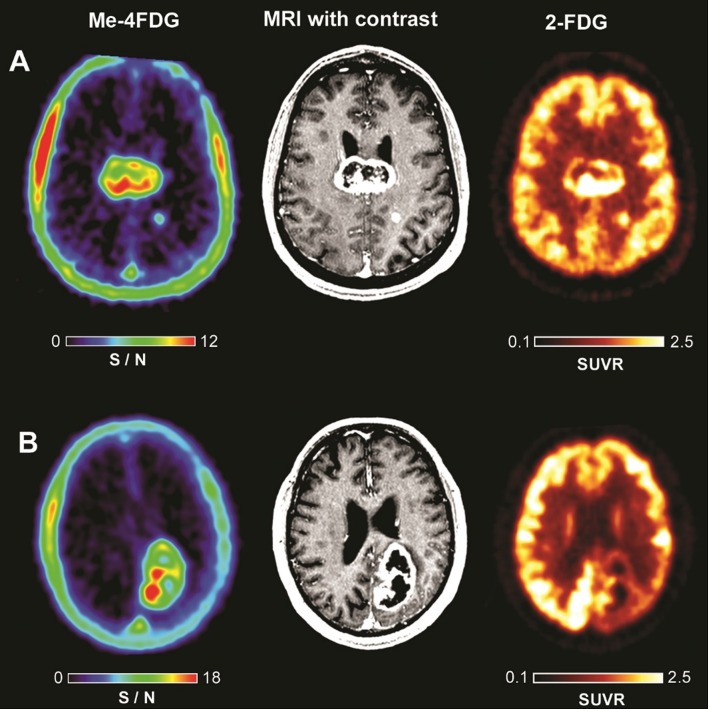
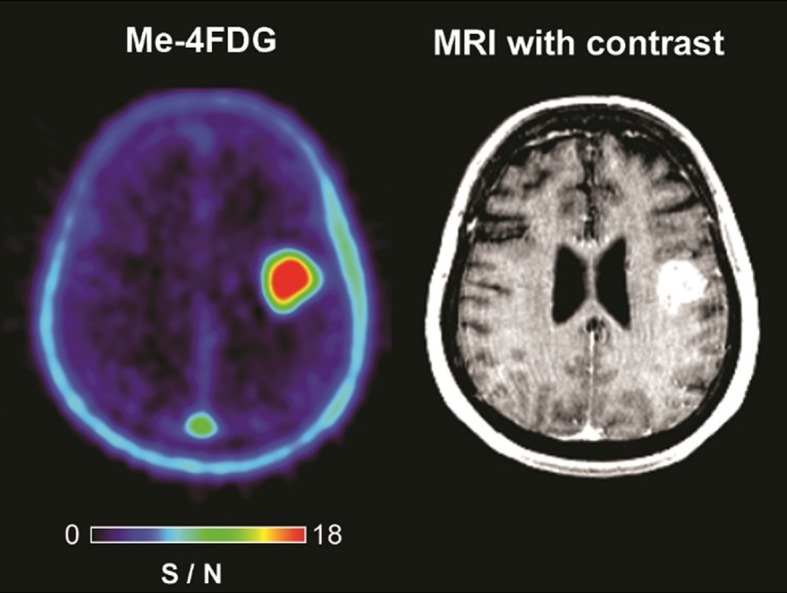
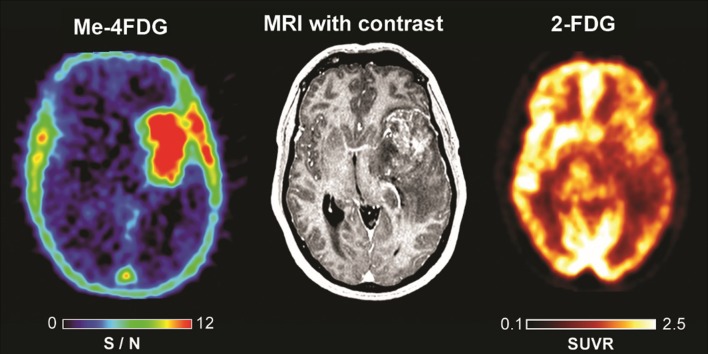
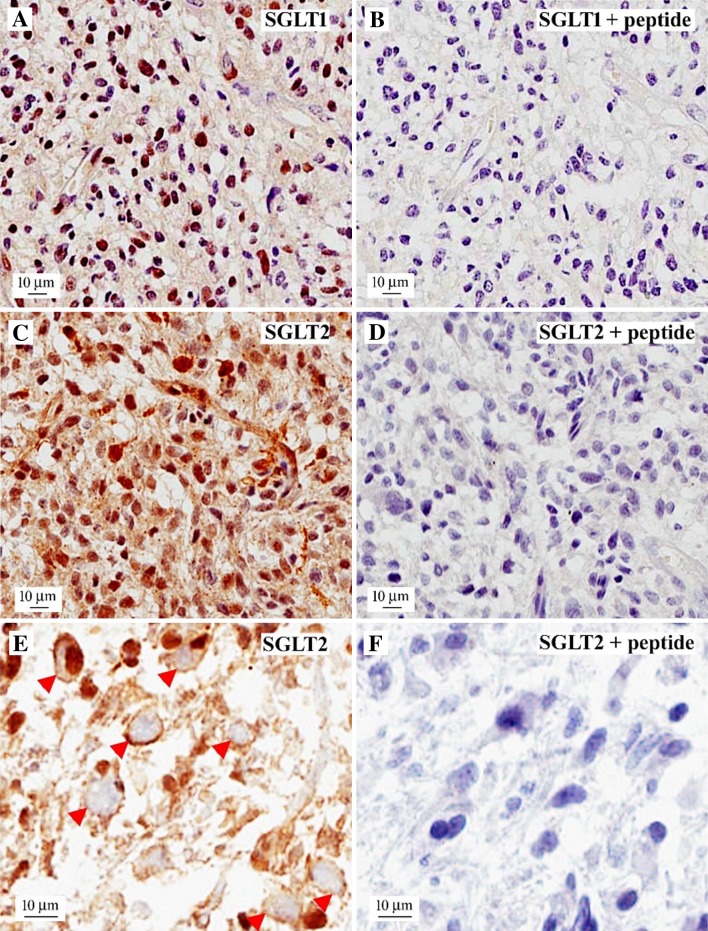
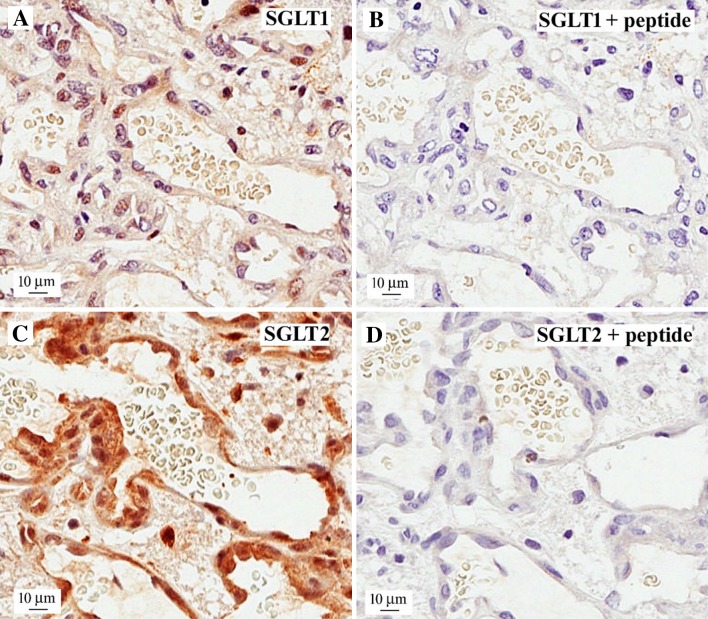
A novel glucose transporter, the sodium glucose cotransporter 2 (SGLT2), has been demonstrated to contribute to the demand for glucose by pancreatic and prostate tumors, and its functional activity has been imaged using a SGLT specific PET imaging probe, α-methyl-4-[F-18]fluoro-4-deoxy-D-glucopyaranoside (Me-4FDG). In this study, Me-4FDG PET was extended to evaluate patients with high-grade astrocytic tumors. Me-4FDG PET scans were performed in four patients diagnosed with WHO Grade III or IV astrocytomas and control subjects, and compared with 2-deoxy-2-[F-18]fluoro-D-glucose (2-FDG) PET and magnetic resonance imaging (MRI) of the same subjects. Immunocytochemistry was carried out on Grade IV astrocytomas to determine the cellular location of SGLT proteins within the tumors. Me-4FDG retention was pronounced in astrocytomas in dramatic contrast to the lack of uptake into the normal brain, resulting in a high signal-to-noise ratio. Macroscopically, the distribution of Me-4FDG within the tumors overlapped with that of 2-FDG uptake and tumor definition using contrast-enhanced MRI images. Microscopically, the SGLT2 protein was found to be expressed in neoplastic glioblastoma cells and endothelial cells of the proliferating microvasculature. This preliminary study shows that Me-4FDG is a highly sensitive probe for visualization of high-grade astrocytomas by PET. The distribution of Me-4FDG within tumors overlapped that for 2-FDG, but the absence of background brain Me-4FDG resulted in superior imaging sensitivity. Furthermore, the presence of SGLT2 protein in astrocytoma cells and the proliferating microvasculature may offer a novel therapy using the SGLT2 inhibitors already approved by the FDA to treat type 2 diabetes mellitus.
一种新型葡萄糖转运蛋白,即钠-葡萄糖协同转运蛋白 2(SGLT2),已被证实可促进胰腺和前列腺肿瘤对葡萄糖的需求,其功能活性已通过 SGLT 特异性 PET 成像探针α-甲基-4-[F-18]氟-4-脱氧-D-葡萄糖苷(Me-4FDG)进行了成像。在这项研究中,Me-4FDG PET 被扩展用于评估高级别星形细胞瘤患者。对 4 名被诊断为 WHO Ⅲ级或Ⅳ级星形细胞瘤的患者和对照组进行了 Me-4FDG PET 扫描,并与同一患者的 2-脱氧-2-[F-18]氟-D-葡萄糖(2-FDG)PET 和磁共振成像(MRI)进行了比较。对Ⅳ级星形细胞瘤进行免疫细胞化学分析,以确定 SGLT 蛋白在肿瘤内的细胞位置。与正常大脑缺乏摄取相比,星形细胞瘤中 Me-4FDG 的保留非常明显,导致信噪比高。宏观上,Me-4FDG 在肿瘤内的分布与 2-FDG 摄取和对比增强 MRI 图像上的肿瘤定义重叠。显微镜下,SGLT2 蛋白在肿瘤性胶质母细胞瘤细胞和增殖性微血管内皮细胞中表达。这项初步研究表明,Me-4FDG 是通过 PET 可视化高级别星形细胞瘤的高度敏感探针。Me-4FDG 在肿瘤内的分布与 2-FDG 重叠,但背景大脑 Me-4FDG 的缺乏导致了更高的成像灵敏度。此外,SGLT2 蛋白在星形细胞瘤细胞和增殖性微血管中的存在可能为使用已经获得 FDA 批准用于治疗 2 型糖尿病的 SGLT2 抑制剂提供一种新的治疗方法。