Nottingham NIHR Biomedical Research Centre, Nottingham MRC Molecular Pathology Node, Division of Respiratory Medicine, University of Nottingham, Nottingham University Hospitals NHS Trust, City Hospital, Nottingham, UK.
2Centre for Heart Lung Innovation, University of British Columbia, Vancouver, Canada.
Clin Epigenetics. 2018 Mar 5;10:32. doi: 10.1186/s13148-018-0464-5. eCollection 2018.
Chronic obstructive pulmonary disease (COPD) is a heterogeneous disease of the lungs that is currently the fourth leading cause of death worldwide. Genetic factors account for only a small amount of COPD risk, but epigenetic mechanisms, including DNA methylation, have the potential to mediate the interactions between an individual's genetics and environmental exposure. DNA methylation is highly cell type-specific, and individual cell type studies of DNA methylation in COPD are sparse. Fibroblasts are present within the airway and parenchyma of the lung and contribute to the aberrant deposition of extracellular matrix in COPD. No assessment or comparison of genome-wide DNA methylation profiles in the airway and parenchymal fibroblasts from individuals with and without COPD has been undertaken. These data provide valuable insight into the molecular mechanisms contributing to COPD and the differing pathologies of small airways disease and emphysema in COPD.
Genome-wide DNA methylation was evaluated at over 485,000 CpG sites using the Illumina Infinium HumanMethylation450 BeadChip array in the airway (non-COPD = 8, COPD = 7) and parenchymal fibroblasts (non-COPD = 17, COPD = 29) isolated from individuals with and without COPD. Targeted gene expression was assessed by qPCR in matched RNA samples.
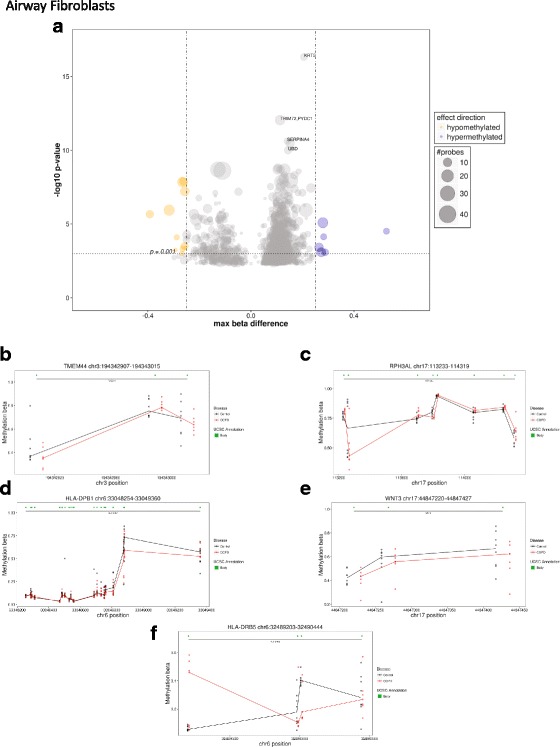
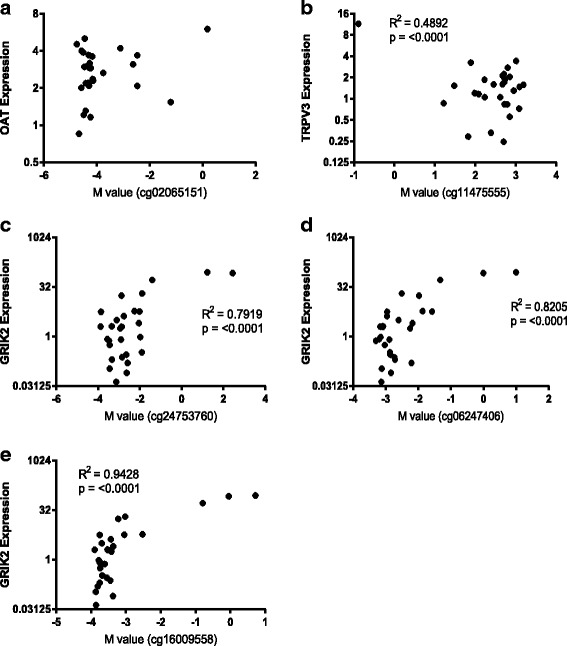
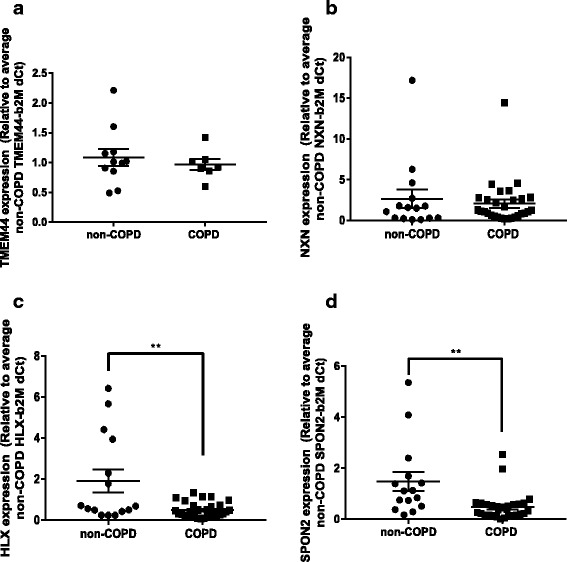
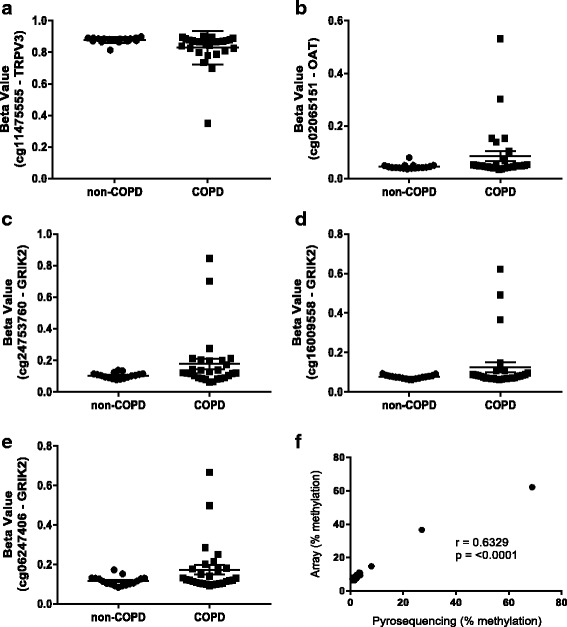
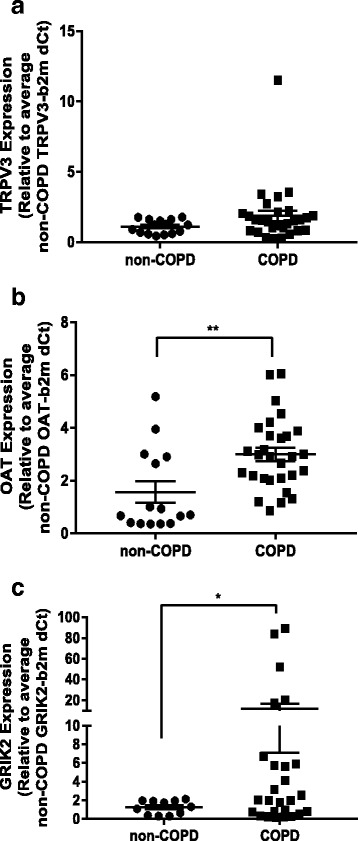
Differentially methylated DNA regions were identified between cells isolated from individuals with and without COPD in both airway and parenchymal fibroblasts. Only in parenchymal fibroblasts was differential DNA methylation associated with differential gene expression. A second analysis of differential DNA methylation variability identified 359 individual differentially variable CpG sites in parenchymal fibroblasts. No differentially variable CpG sites were identified in the airway fibroblasts. Five differentially variable-methylated CpG sites, associated with three genes, were subsequently assessed for gene expression differences. Two genes (OAT and GRIK2) displayed significantly increased gene expression in cells isolated from individuals with COPD.
Differential and variable DNA methylation was associated with COPD status in the parenchymal fibroblasts but not airway fibroblasts. Aberrant DNA methylation was associated with altered gene expression imparting biological function to DNA methylation changes. Changes in DNA methylation are therefore implicated in the molecular mechanisms underlying COPD pathogenesis and may represent novel therapeutic targets.
慢性阻塞性肺疾病(COPD)是一种肺部异质性疾病,目前是全球第四大致死原因。遗传因素仅占 COPD 风险的一小部分,但表观遗传机制,包括 DNA 甲基化,有可能介导个体遗传与环境暴露之间的相互作用。DNA 甲基化具有高度的细胞类型特异性,关于 COPD 中单个细胞类型的 DNA 甲基化研究较为匮乏。成纤维细胞存在于气道和肺实质中,并导致 COPD 中外细胞外基质的异常沉积。目前尚未对 COPD 患者和非 COPD 患者气道和肺实质成纤维细胞的全基因组 DNA 甲基化谱进行评估或比较。这些数据为 COPD 发病机制以及 COPD 中小气道疾病和肺气肿的不同病理学提供了有价值的见解。
在 COPD 患者和非 COPD 患者的气道(非 COPD = 8,COPD = 7)和肺实质成纤维细胞(非 COPD = 17,COPD = 29)中,使用 Illumina Infinium HumanMethylation450 BeadChip 芯片评估了超过 485000 个 CpG 位点的全基因组 DNA 甲基化。在匹配的 RNA 样本中通过 qPCR 评估靶向基因表达。
在气道和成纤维细胞中,均在 COPD 患者和非 COPD 患者分离的细胞之间鉴定出差异甲基化的 DNA 区域。仅在肺实质成纤维细胞中,差异 DNA 甲基化与差异基因表达相关。对差异 DNA 甲基化可变性的二次分析确定了肺实质成纤维细胞中 359 个个体差异可变 CpG 位点。在气道成纤维细胞中未鉴定出差异可变 CpG 位点。随后评估了与三个基因相关的 5 个差异可变甲基化 CpG 位点的基因表达差异。两个基因(OAT 和 GRIK2)在 COPD 患者分离的细胞中显示出显著增加的基因表达。
在肺实质成纤维细胞中,差异和可变 DNA 甲基化与 COPD 状态相关,但在气道成纤维细胞中不相关。异常 DNA 甲基化与改变的基因表达相关,从而赋予 DNA 甲基化变化生物学功能。因此,DNA 甲基化的变化可能与 COPD 发病机制的分子机制有关,并可能代表新的治疗靶点。