Newman Patrick M, Franke Molly F, Arrieta Jafet, Carrasco Hector, Elliott Patrick, Flores Hugo, Friedman Alexandra, Graham Sophia, Martinez Luis, Palazuelos Lindsay, Savage Kevin, Tymeson Hayley, Palazuelos Daniel
Division of Pediatric Hospital Medicine, Department of Pediatrics, University of California San Francisco School of Medicine, San Francisco, California, USA.
Harvard Medical School, Department of Global Health and Social Medicine, Boston, Massachusetts, USA.
BMJ Glob Health. 2018 Feb 15;3(1):e000566. doi: 10.1136/bmjgh-2017-000566. eCollection 2018.
Non-communicable diseases (NCDs) contribute greatly to morbidity and mortality in low-income and middle-income countries (LMICs). Community health workers (CHWs) may improve disease control and medication adherence among patients with NCDs in LMICs, but data are lacking. We assessed the impact of a CHW-led intervention on disease control and adherence among patients with diabetes and/or hypertension in Chiapas, Mexico.
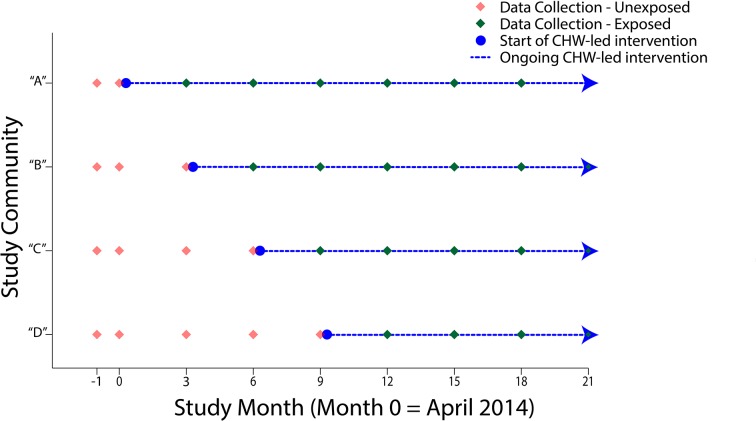
We conducted a prospective observational study among adult patients with diabetes and/or hypertension, in the context of a stepped-wedge roll-out of a CHW-led intervention. We measured self-reported adherence to medications, blood pressure and haemoglobin A1c at baseline and every 3 months, timed just prior to expansion of the intervention to a new community. We conducted individual-level mixed effects analyses of study data, adjusting for time and clustering by patient and community.
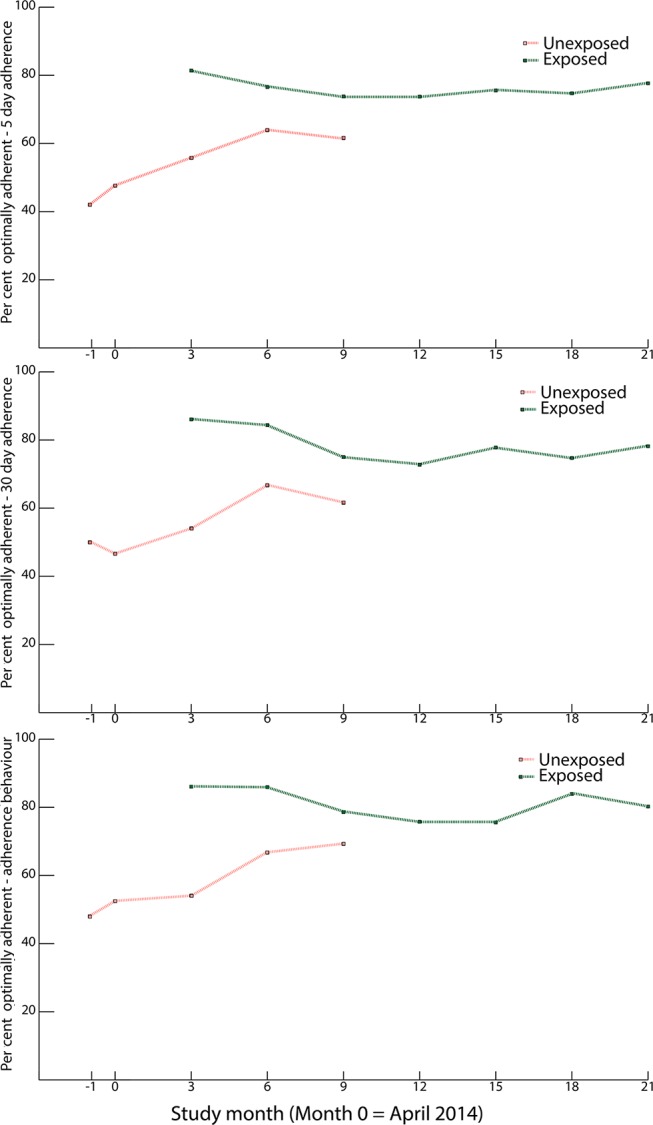
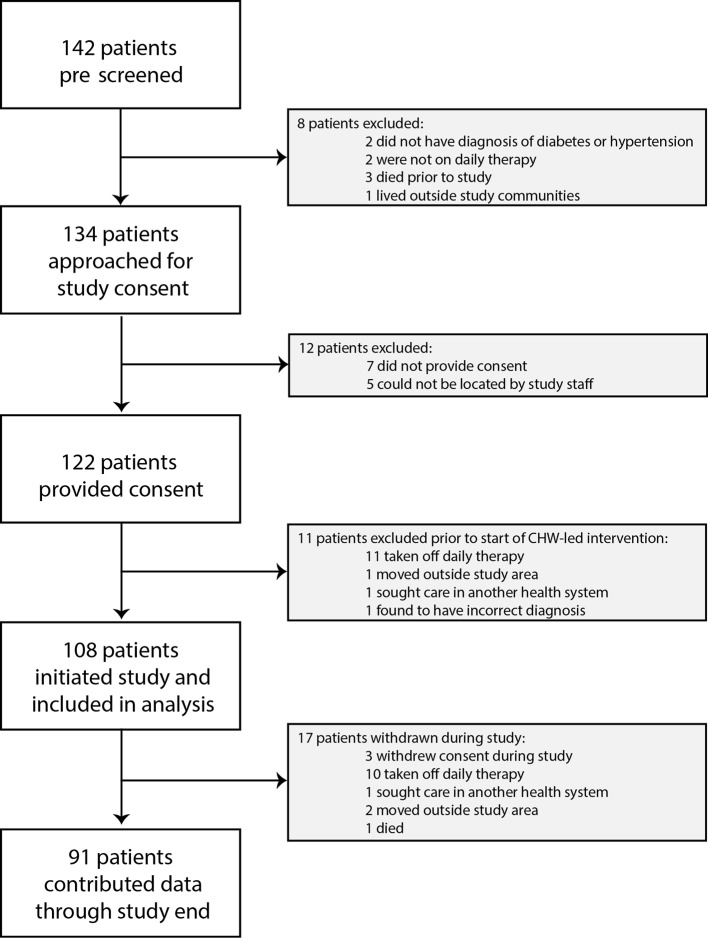
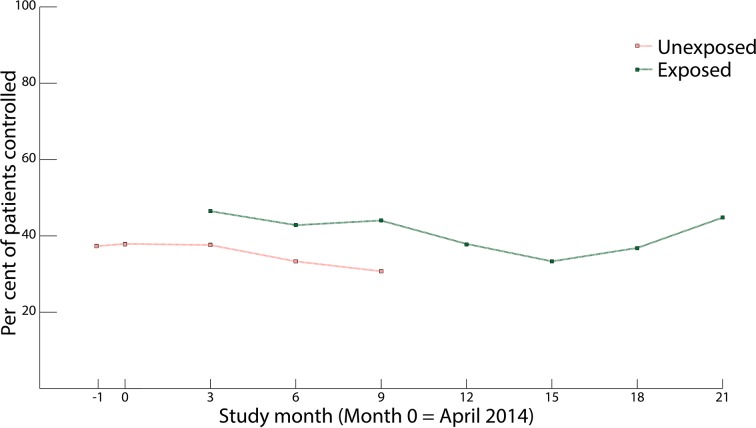
We analysed 108 patients. The CHW-led intervention was associated with a twofold increase in the odds of disease control (OR 2.04, 95% CI 1.15 to 3.62). It was also associated with optimal adherence assessed by 30-day recall (OR 1.86; 95% CI 1.15 to 3.02) and a positive self-assessment of adherence behaviour (OR 2.29; 95% CI 1.26 to 4.15), but not by 5-day recall.
A CHW-led adherence intervention was associated with disease control and adherence among adults with diabetes and/or hypertension. This study supports a role of CHWs in supplementing comprehensive primary care for patients with NCDs in LMICs.
NCT02549495.
在低收入和中等收入国家(LMICs),非传染性疾病(NCDs)对发病率和死亡率有很大影响。社区卫生工作者(CHWs)可能会改善LMICs中NCDs患者的疾病控制和药物依从性,但相关数据尚缺。我们评估了由CHW主导的干预措施对墨西哥恰帕斯州糖尿病和/或高血压患者疾病控制和依从性的影响。
在逐步推广由CHW主导的干预措施的背景下,我们对成年糖尿病和/或高血压患者进行了一项前瞻性观察研究。我们在基线时以及每3个月测量一次自我报告的药物依从性、血压和糖化血红蛋白,测量时间为干预措施扩展到新社区之前。我们对研究数据进行了个体水平的混合效应分析,并对时间以及患者和社区的聚类进行了调整。
我们分析了108名患者。由CHW主导的干预措施与疾病控制几率增加两倍相关(OR 2.04,95%CI 1.15至3.62)。它还与通过30天回忆评估的最佳依从性相关(OR 1.86;95%CI 1.15至3.02)以及对依从行为的积极自我评估相关(OR 2.29;95%CI 1.26至4.15),但与5天回忆无关。
由CHW主导的依从性干预措施与糖尿病和/或高血压成年患者的疾病控制和依从性相关。本研究支持CHWs在补充LMICs中NCDs患者的综合初级保健方面的作用。
NCT02549495。