Department of Psychiatry and Human Behavior, Alpert Medical School of Brown University.
Department of Biostatistics, Neuropsychiatric Research Institute.
J Abnorm Psychol. 2018 Feb;127(2):251-264. doi: 10.1037/abn0000327.
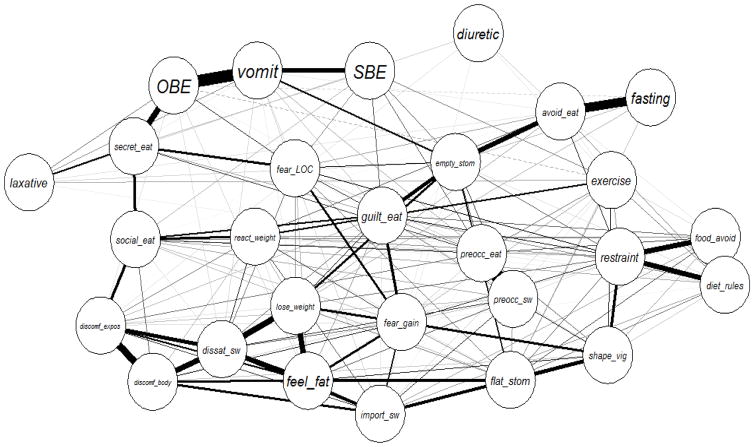
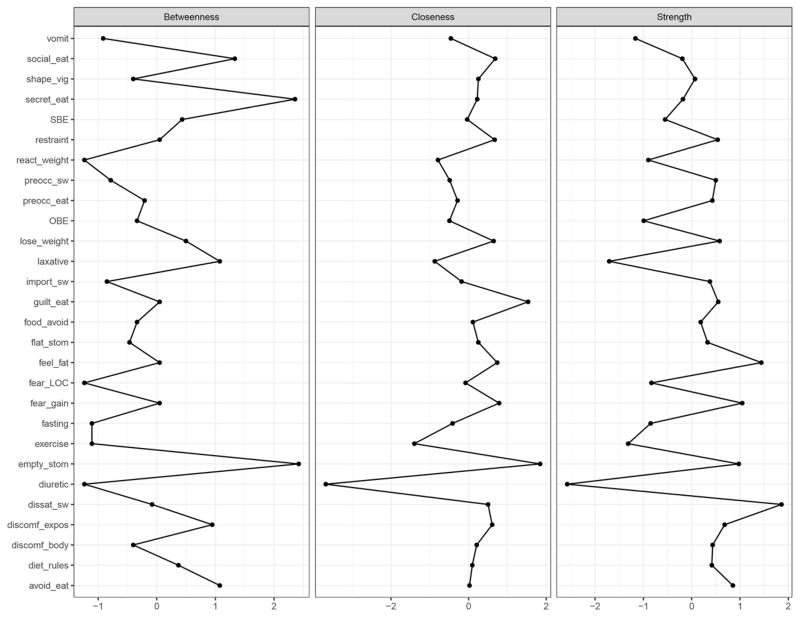
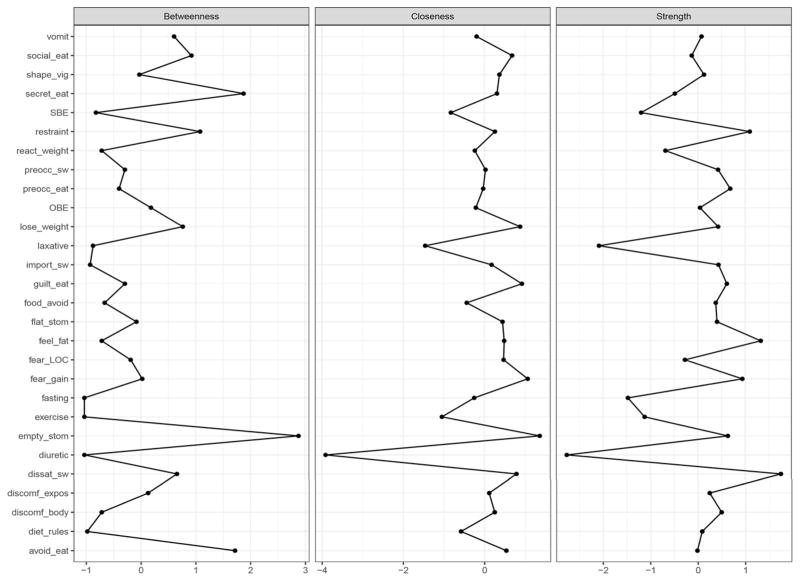
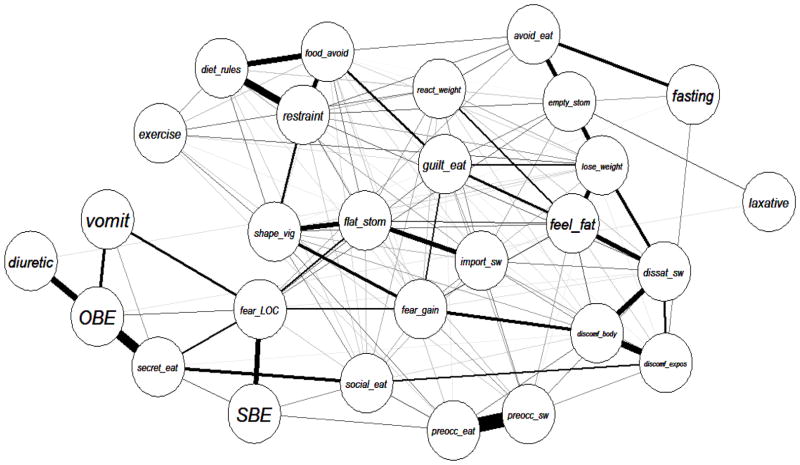
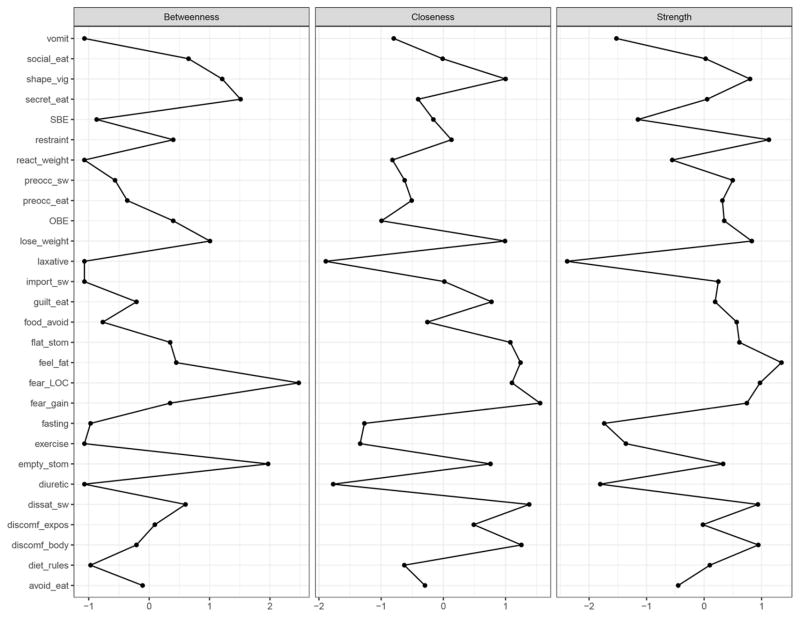
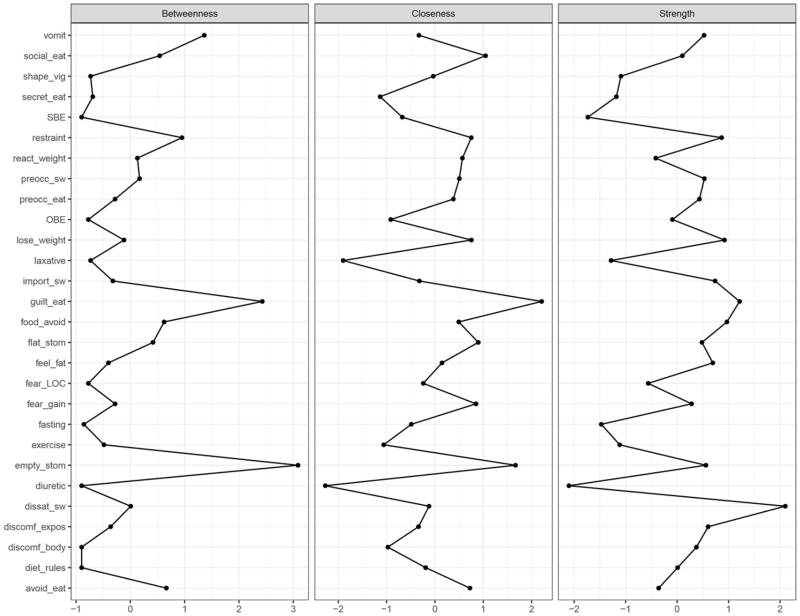
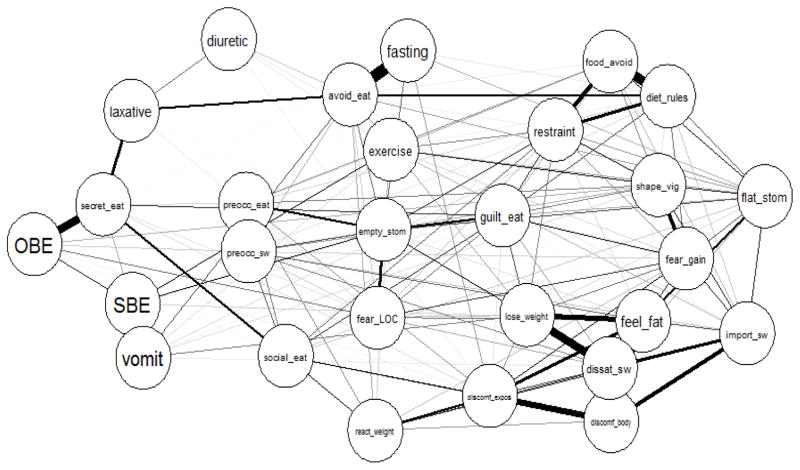
Classifying eating disorders in youth is challenging in light of developmental considerations and high rates of diagnostic migration. Understanding the transactional relationships among eating disorder symptoms, both across the transdiagnostic spectrum and within specific diagnostic categories, may clarify which core eating disorder symptoms contribute to, and maintain, eating-related psychopathology in youth. We utilized network analysis to investigate interrelationships among eating disorder symptoms in 636 treatment-seeking children and adolescents (90.3% female) ages 6-18 years (M age = 15.4 ± 2.2). An undirected, weighted network of eating disorder symptoms was created using behavioral and attitudinal items from the Eating Disorder Examination. Across diagnostic groups, symptoms reflecting appearance-related concerns (e.g., dissatisfaction with shape and weight) and dietary restraint (e.g., a desire to have an empty stomach) were most strongly associated with other eating disorder symptoms in the network. Binge eating and compensatory behaviors (e.g., self-induced vomiting) were strongly connected to one another but not to other symptoms in the network. Network connectivity was similar across anorexia nervosa, bulimia nervosa, and otherwise specified feeding or eating disorder subgroups. Among treatment-seeking children and adolescents, dietary restraint and shape- and weight-related concerns appear to play key roles in the psychopathology of eating disorders, supporting cognitive-behavioral theories of onset and maintenance. Similarities across diagnostic categories provide support for a transdiagnostic classification scheme. Clinical interventions should seek to disrupt these symptoms early in treatment to achieve maximal outcomes. (PsycINFO Database Record
在考虑到发展因素和高诊断迁移率的情况下,对青少年的饮食障碍进行分类具有挑战性。了解饮食障碍症状之间的相互关系,无论是在跨诊断谱还是在特定诊断类别中,都可以阐明哪些核心饮食障碍症状会导致并维持青少年的饮食相关心理病理。我们利用网络分析来研究 636 名寻求治疗的儿童和青少年(90.3%为女性)的饮食障碍症状之间的相互关系,他们的年龄在 6-18 岁之间(M 年龄=15.4±2.2)。使用饮食障碍检查中的行为和态度项目创建了一个无向、加权的饮食障碍症状网络。在所有诊断组中,反映与外貌相关的担忧(例如,对体型和体重不满意)和饮食限制(例如,渴望空腹)的症状与网络中其他饮食障碍症状的关联最强。暴食和补偿行为(例如,自我诱导呕吐)彼此之间联系紧密,但与网络中的其他症状没有联系。网络连接在神经性厌食症、神经性贪食症和其他特定的进食或饮食障碍亚组中相似。在寻求治疗的儿童和青少年中,饮食限制和与体型和体重相关的担忧似乎在饮食障碍的心理病理中起着关键作用,支持了发病和维持的认知行为理论。在诊断类别中存在相似性为跨诊断分类方案提供了支持。临床干预应该在治疗早期就寻求打破这些症状,以实现最佳效果。