Division of Rheumatology, Department of Internal Medicine, Yonsei University College of Medicine, 15-1 Yonseo-ro, Seodaemun-gu, Seoul 03722, Korea.
Rheumatism Research Center, Catholic Institutes of Medical Science, College of Medicine, The Catholic University of Korea, 222 Banpo-daero, Seocho-gu, Seoul 06591, Korea.
Int J Mol Sci. 2018 Mar 13;19(3):829. doi: 10.3390/ijms19030829.
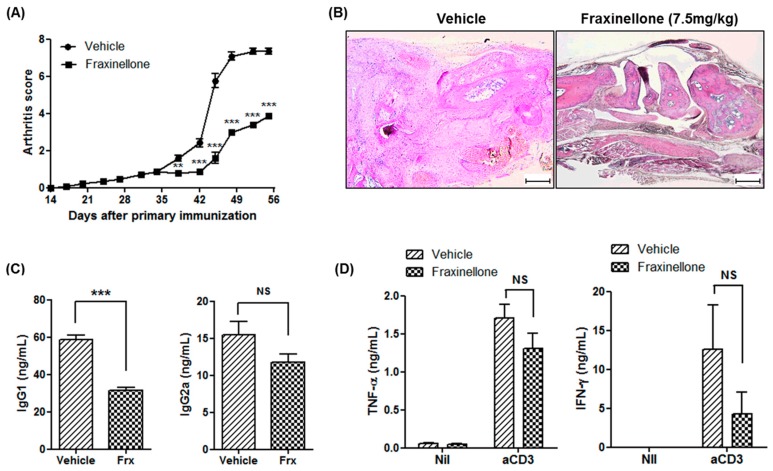
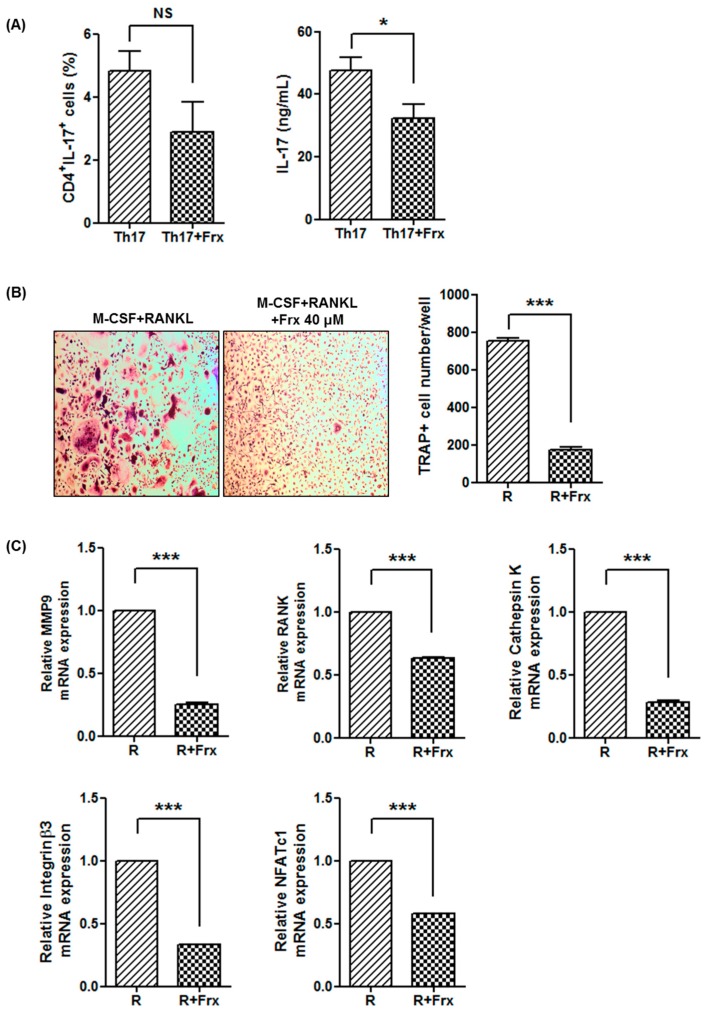
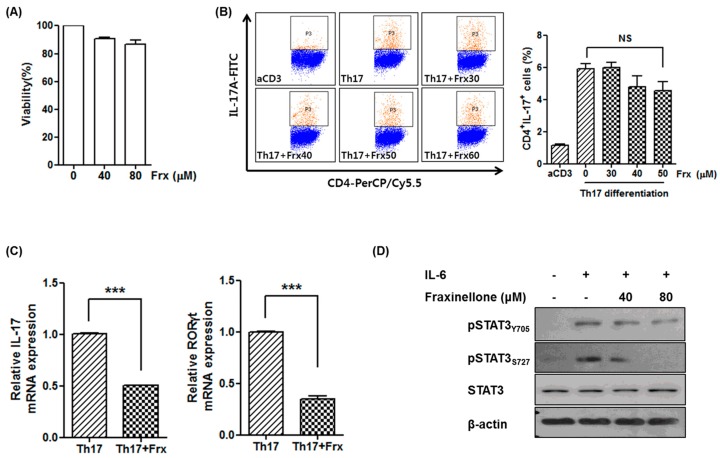
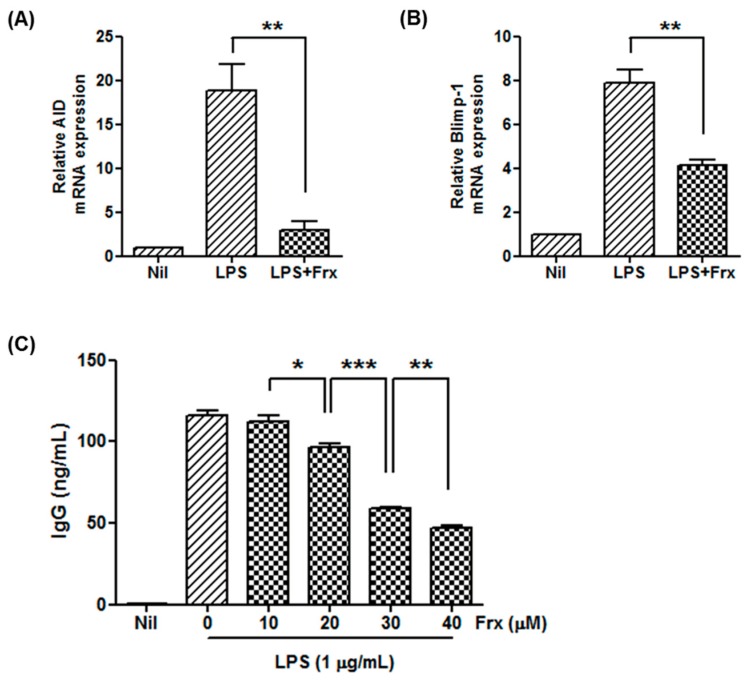
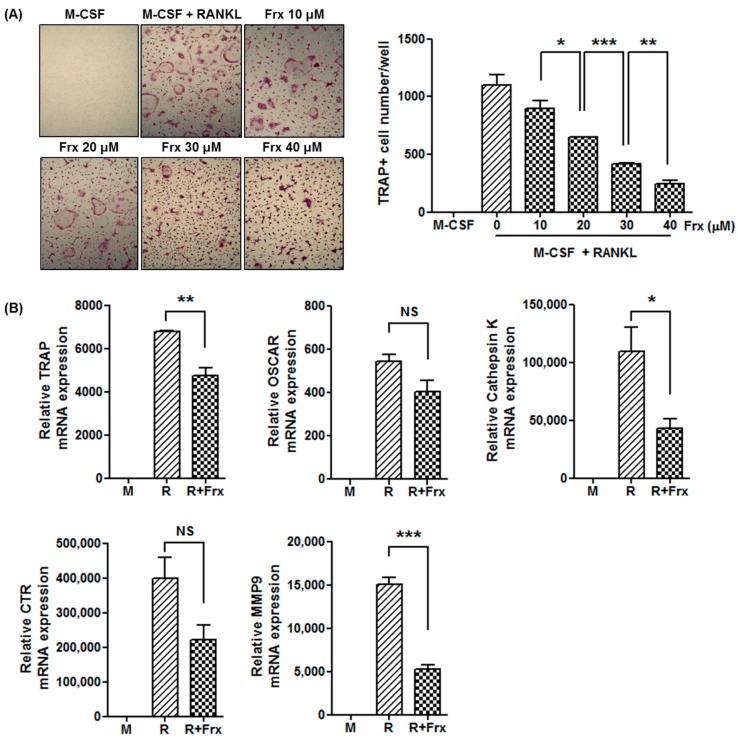
This study aimed to evaluate the therapeutic effect of fraxinellone on inflammatory arthritis and identify the underlying mechanisms. Fraxinellone (7.5 mg/kg) or a vehicle control was injected into mice with collagen-induced arthritis (CIA). The severity of arthritis was evaluated clinically and histologically. The differentiation of CD4⁺ T cells and CD19⁺ B cells was investigated in the presence of fraxinellone. Osteoclastogenesis after fraxinellone treatment was evaluated by staining with tartrate-resistant acid phosphatase (TRAP) and by measuring the mRNA levels of osteoclastogenesis-related genes. Fraxinellone attenuated the clinical and histologic features of inflammatory arthritis in CIA mice. Fraxinellone suppressed the production of interleukin-17 and the expression of and phospho-signal transducer and activator of transcription 3 in CD4⁺ T cells. CD19⁺ B cells showed lower expression of and after treatment with fraxinellone. The formation of TRAP-positive cells and the expression of osteoclastogenesis-related markers were reduced in the presence of fraxinellone. Inhibition of interleukin-17 and osteoclastogenesis was also observed in experiments using human peripheral mononuclear cells. Fraxinellone alleviated synovial inflammation and osteoclastogenesis in mice. The therapeutic effect of fraxinellone was associated with the inhibition of cellular differentiation and activation. The data suggests that fraxinellone could be a novel treatment for inflammatory arthritis, including rheumatoid arthritis.
本研究旨在评估瑞香素对炎性关节炎的治疗作用,并探讨其潜在机制。将瑞香素(7.5mg/kg)或载体对照注射到胶原诱导性关节炎(CIA)小鼠中。通过临床和组织学评估关节炎的严重程度。在瑞香素存在的情况下,研究 CD4+T 细胞和 CD19+B 细胞的分化。通过抗酒石酸酸性磷酸酶(TRAP)染色和测量破骨细胞生成相关基因的 mRNA 水平评估瑞香素处理后的破骨细胞生成。瑞香素减轻 CIA 小鼠的炎症性关节炎的临床和组织学特征。瑞香素抑制 CD4+T 细胞中白细胞介素-17 的产生和磷酸化信号转导和转录激活因子 3 的表达。瑞香素处理后 CD19+B 细胞的 和 表达降低。TRAP 阳性细胞的形成和破骨细胞生成相关标志物的表达在瑞香素存在下减少。在使用人外周单核细胞的实验中也观察到白细胞介素-17 和破骨细胞生成的抑制。瑞香素减轻了小鼠的滑膜炎症和破骨细胞生成。瑞香素的治疗作用与细胞分化和激活的抑制有关。数据表明,瑞香素可能是一种治疗炎症性关节炎(包括类风湿性关节炎)的新方法。