Zhang Bo, Xie Mouzhe, Bruschweiler-Li Lei, Brüschweiler Rafael
Department of Chemistry and Biochemistry, The Ohio State University, Columbus, OH 43210, USA.
Campus Chemical Instrument Center, The Ohio State University, Columbus, OH 43210, USA.
Metabolites. 2018 Mar 13;8(1):21. doi: 10.3390/metabo8010021.
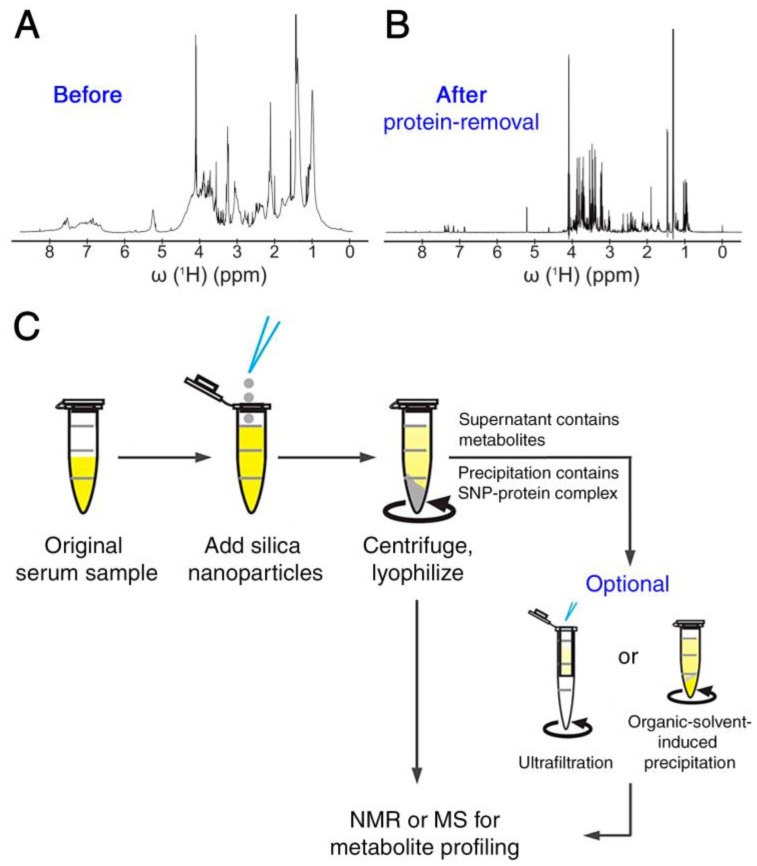
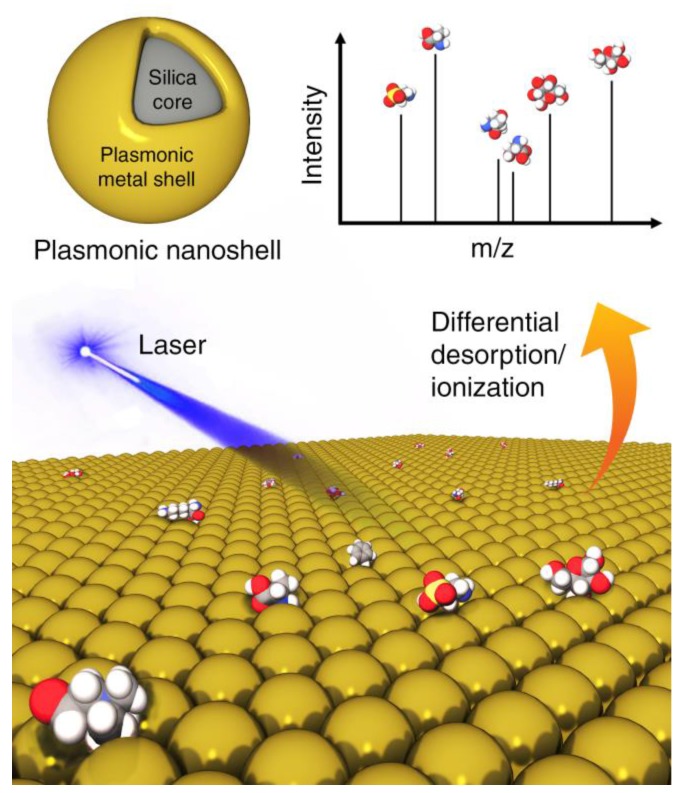
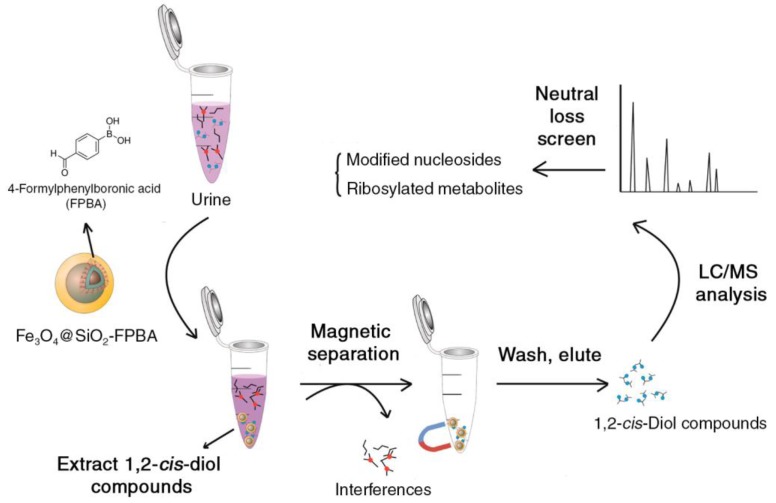
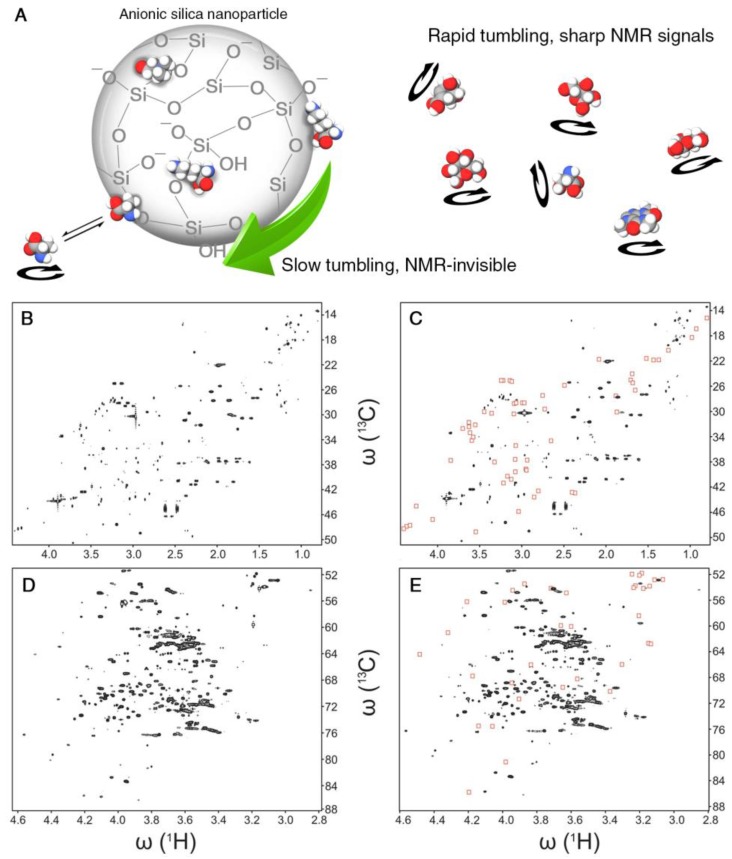
Understanding and harnessing the interactions between nanoparticles and biological molecules is at the forefront of applications of nanotechnology to modern biology. Metabolomics has emerged as a prominent player in systems biology as a complement to genomics, transcriptomics and proteomics. Its focus is the systematic study of metabolite identities and concentration changes in living systems. Despite significant progress over the recent past, important challenges in metabolomics remain, such as the deconvolution of the spectra of complex mixtures with strong overlaps, the sensitive detection of metabolites at low abundance, unambiguous identification of known metabolites, structure determination of unknown metabolites and standardized sample preparation for quantitative comparisons. Recent research has demonstrated that some of these challenges can be substantially alleviated with the help of nanoscience. Nanoparticles in particular have found applications in various areas of bioanalytical chemistry and metabolomics. Their chemical surface properties and increased surface-to-volume ratio endows them with a broad range of binding affinities to biomacromolecules and metabolites. The specific interactions of nanoparticles with metabolites or biomacromolecules help, for example, simplify metabolomics spectra, improve the ionization efficiency for mass spectrometry or reveal relationships between spectral signals that belong to the same molecule. Lessons learned from nanoparticle-assisted metabolomics may also benefit other emerging areas, such as nanotoxicity and nanopharmaceutics.
理解和利用纳米颗粒与生物分子之间的相互作用是纳米技术应用于现代生物学的前沿领域。代谢组学已成为系统生物学中的一个重要组成部分,作为基因组学、转录组学和蛋白质组学的补充。其重点是对生物系统中代谢物的种类和浓度变化进行系统研究。尽管在最近取得了重大进展,但代谢组学仍面临一些重要挑战,例如对重叠严重的复杂混合物光谱进行解卷积、低丰度代谢物的灵敏检测、已知代谢物的明确鉴定、未知代谢物的结构测定以及用于定量比较的标准化样品制备。最近的研究表明,借助纳米科学可以在很大程度上缓解其中一些挑战。特别是纳米颗粒已在生物分析化学和代谢组学的各个领域得到应用。它们的化学表面性质和增加的表面积与体积之比赋予它们对生物大分子和代谢物广泛的结合亲和力。例如,纳米颗粒与代谢物或生物大分子的特异性相互作用有助于简化代谢组学光谱、提高质谱分析的电离效率或揭示属于同一分子的光谱信号之间的关系。从纳米颗粒辅助代谢组学中学到的经验教训也可能有益于其他新兴领域,如纳米毒性和纳米制药学。