López-Alba Elías, Schmeer Sebastian, Díaz Francisco
Departamento de Ingeniería Mecánica y Minera, Campus las Lagunillas, Universidad de Jaén, 23071 Jaén, Spain.
Institute for Composite Materials (IVW), Kaiserslautern University of Technology, 67663 Kaiserslautern, Germany.
Materials (Basel). 2018 Mar 13;11(3):418. doi: 10.3390/ma11030418.
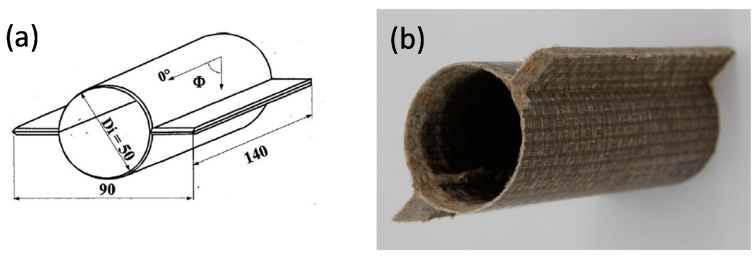
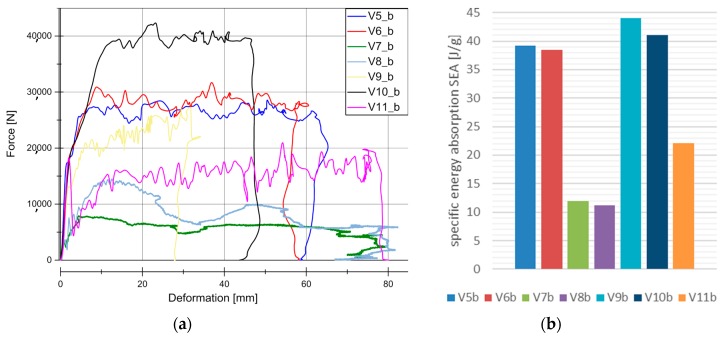
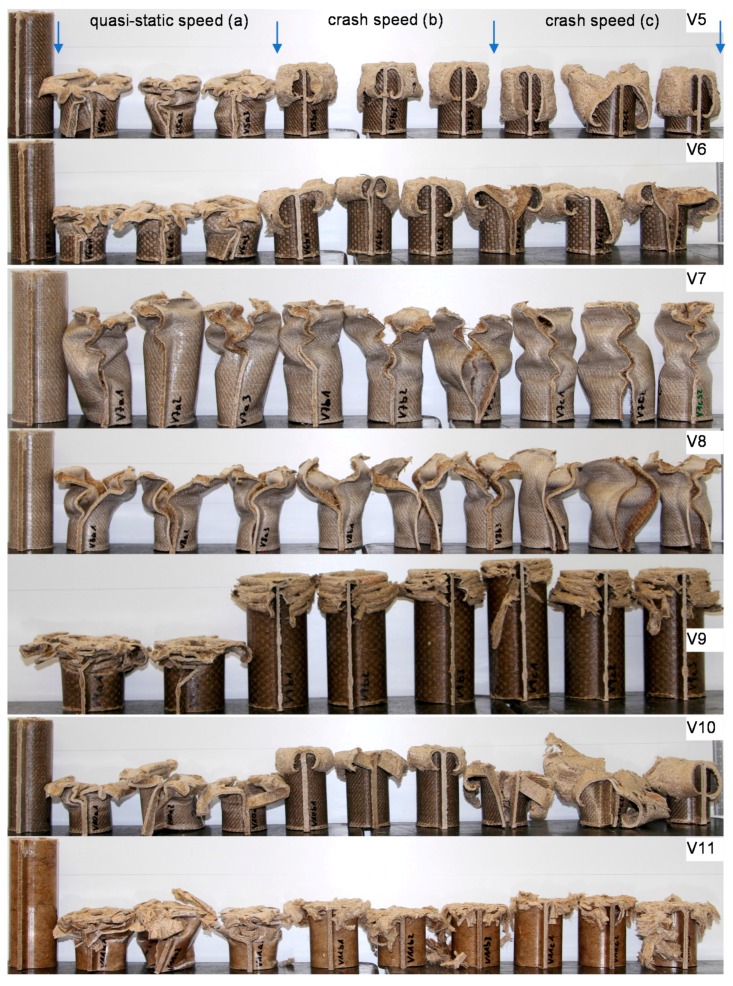
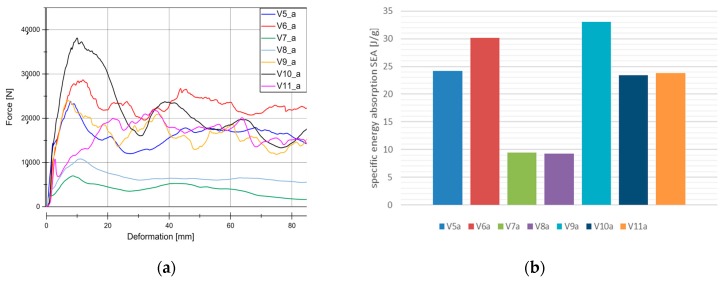
The study of natural fiber reinforcement composite structures has focused the attention of the automobile industry due to the new regulation in relation to the recyclability and the reusability of the materials preserving and/or improving the mechanical characteristics. The influence of different parameters on the material behavior of natural fiber reinforced plastic structures has been investigated, showing the potential for transport application in energy absorbing structures. Two different woven fabrics (twill and hopsack) made of flax fibers as well as a non-woven mat made of a mixture of hemp and kenaf fibers were employed as reinforcing materials. These reinforcing textiles were impregnated with both HD-PE (high-density polyethylen) and PLA (polylactic acid) matrix, using a continuous compression molding press. The impregnated semi-finished laminates (so-called organic sheets) were thermoformed in a second step to half-tubes that were assembled through vibration-welding process to cylindric crash absorbers. The specimens were loaded by compression to determine the specific energy absorption capacity. Quasi-static test results were compared to dynamic test data obtained on a catapult arrangement. The differences on the specific energies absorption (SEA) as a function of different parameters, such as the wall thickness, the weave material type, the reinforced textiles, and the matrix used, depending on the velocity rate application were quantified. In the case of quasi-static analysis it is observed a 20% increment in the SEA value when wove Hopsack fabric reinforcement is employed. No velocity rate influence from the material was observed on the SEA evaluation at higher speeds used to perform the experiments. The influence of the weave configuration (Hopsack) seems to be more stable against buckling effects at low loading rates with 10% higher SEA values. An increase of SEA level of up to 72% for PLA matrix was observed when compared with HD-PE matrix.
由于在材料的可回收性和可再利用性方面的新规定,同时要保持和/或改善机械性能,天然纤维增强复合材料结构的研究已引起汽车行业的关注。研究了不同参数对天然纤维增强塑料结构材料性能的影响,显示出其在能量吸收结构运输应用中的潜力。使用了两种不同的亚麻纤维机织织物(斜纹布和方平织物)以及一种由大麻和红麻纤维混合物制成的非织造毡作为增强材料。这些增强织物用高密度聚乙烯(HD-PE)和聚乳酸(PLA)基体进行浸渍,采用连续压缩模压机。浸渍后的半成品层压板(所谓的有机片材)在第二步中热成型为半管,通过振动焊接工艺组装成圆柱形防撞器。对试样进行压缩加载以确定比能量吸收能力。将准静态试验结果与弹射装置上获得的动态试验数据进行比较。根据速度加载率,对不同参数(如壁厚、织物材料类型、增强织物和所用基体)作用下的比能量吸收(SEA)差异进行了量化。在准静态分析中,当采用方平织物增强时,观察到SEA值增加了20%。在进行实验的较高速度下,未观察到材料的速度加载率对SEA评估有影响。在低加载率下,织物结构(方平织物)对屈曲效应的影响似乎更稳定,SEA值高10%。与HD-PE基体相比,观察到PLA基体的SEA水平提高了72%。