Section of Orthodontics, Aarhus University, Aarhus, Denmark.
Section of Orthodontics, University of Bergen, Bergen, Norway.
PLoS One. 2018 Mar 13;13(3):e0194177. doi: 10.1371/journal.pone.0194177. eCollection 2018.
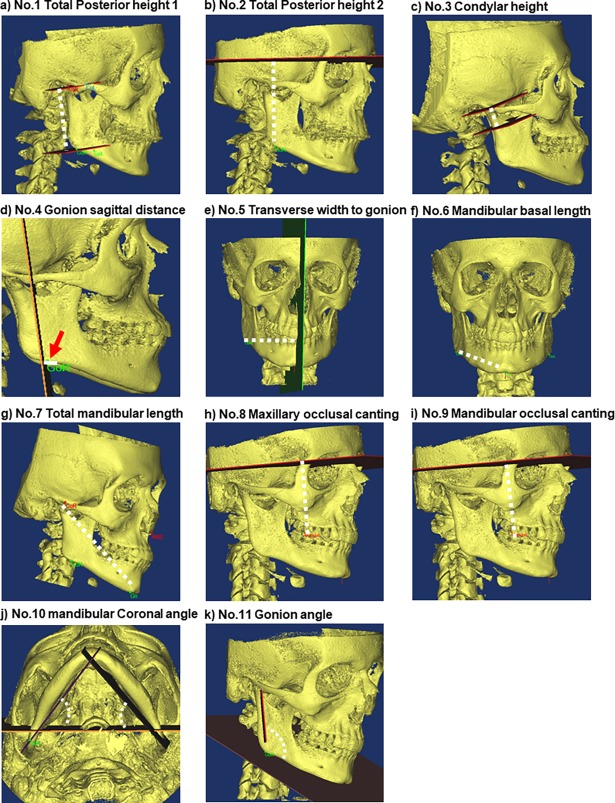
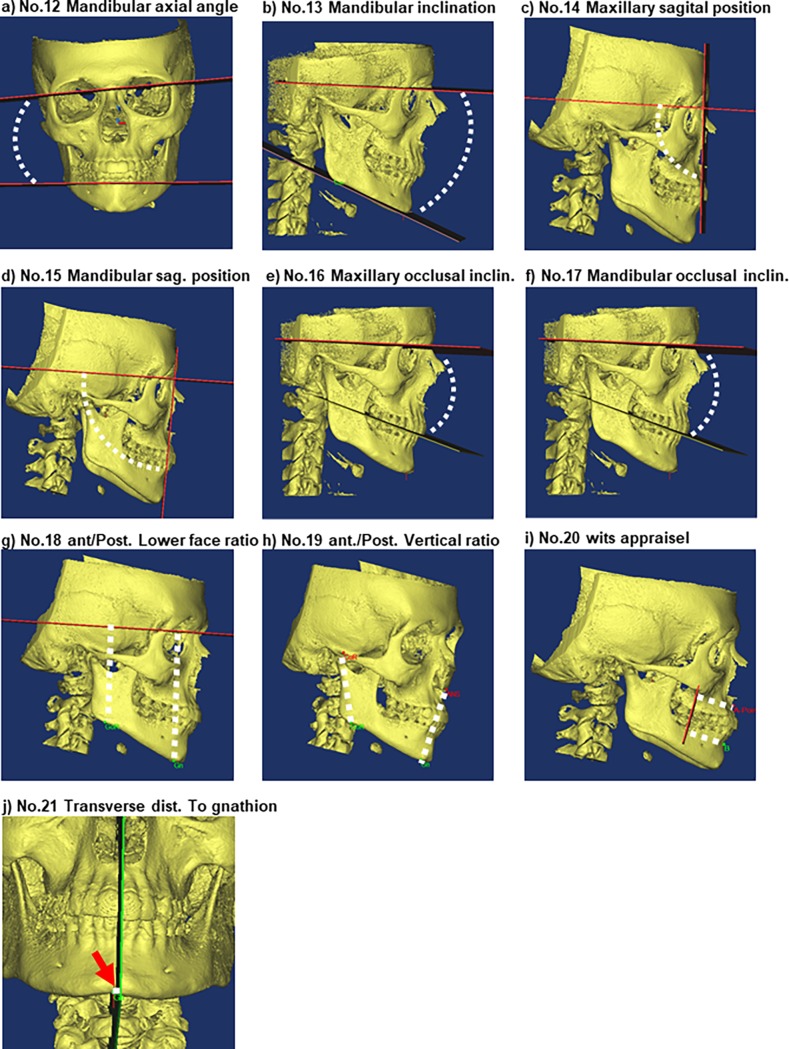
Patients with juvenile idiopathic arthritis (JIA) and involvement of the temporomandibular joint (TMJ) often experience abnormal facial growth. Three-dimensional (3D) assessment of dentofacial growth deviation has become more common with advancement and commercialization of imaging technologies. However, no standardized guidelines exist for interpretation of 3D imaging in patients with JIA. The aim of this study was to propose and validate morphometric measures for the 3D radiographic assessment of dentofacial growth deviation in patients with JIA to enhance: 1) Description of dentofacial growth deviation; 2) Treatment planning; 3) Longitudinal follow-up.
The study was conducted in a standardized sequential-phased approach involving: 1) Preliminary decision-making; 2) Item generation; 3) Test of content-validity; 4) Test of reliability; 5) Test of construct validity; 6) Establishment of final recommendations.
Twenty-one morphometric measures were evaluated. Based on results of reliability and validity-testing including subjects with JIA (n = 70) and non-JIA controls (n = 19), seven measures received a "high recommendation" score. Those measures were associated with posterior mandibular height, occlusal cant, mandibular asymmetry, mandibular inclination, and anterior/posterior lower face height. Nine other measures were "moderately recommended" and five received a "somewhat recommendation" score.
Seven morphometric measures were considered very useful in the 3D assessment of growth deviation in patients with TMJ disease associated with JIA. These variables can be used to standardize the description of dentofacial deformities and to plan corrective interventions.
患有幼年特发性关节炎(JIA)且颞下颌关节(TMJ)受累的患者常经历异常的面部生长。随着影像学技术的进步和商业化,对牙颌面生长偏差的三维(3D)评估变得越来越普遍。然而,目前尚无用于解释 JIA 患者 3D 成像的标准化指南。本研究旨在提出并验证用于 JIA 患者牙颌面生长偏差 3D 放射评估的形态测量方法,以增强:1)牙颌面生长偏差的描述;2)治疗计划;3)纵向随访。
该研究采用标准化顺序分阶段方法进行:1)初步决策;2)项目生成;3)内容有效性测试;4)可靠性测试;5)结构有效性测试;6)最终建议的制定。
评估了 21 项形态测量指标。基于可靠性和有效性测试的结果,包括 JIA 患者(n = 70)和非 JIA 对照组(n = 19),有 7 项测量指标获得了“高推荐”评分。这些措施与后下颌高度、咬合倾斜、下颌不对称、下颌倾斜和前后下颌面部高度有关。其他 9 项被评为“中度推荐”,5 项被评为“有些推荐”。
在与 JIA 相关的 TMJ 疾病患者的生长偏差的 3D 评估中,有 7 项形态测量指标被认为非常有用。这些变量可用于标准化牙颌面畸形的描述和计划矫正干预。