Department of Biomedical Engineering, Yale University, New Haven, CT 06511, USA.
Department of Genetics, Yale University School of Medicine, New Haven, CT 06520, USA.
Molecules. 2018 Mar 11;23(3):632. doi: 10.3390/molecules23030632.
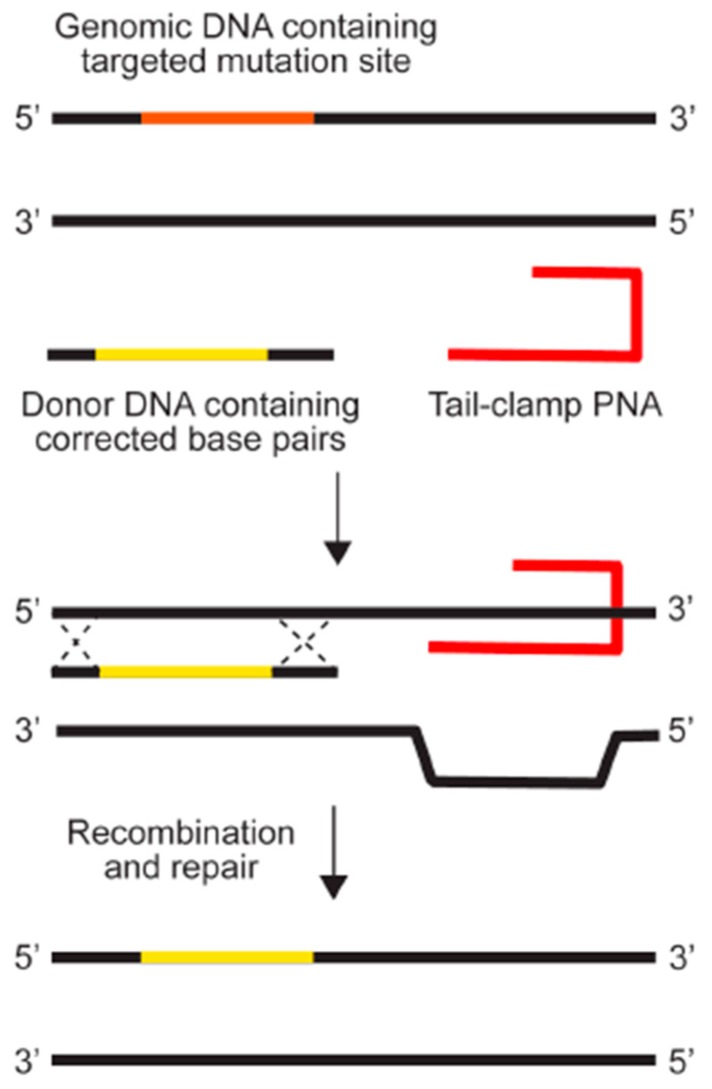
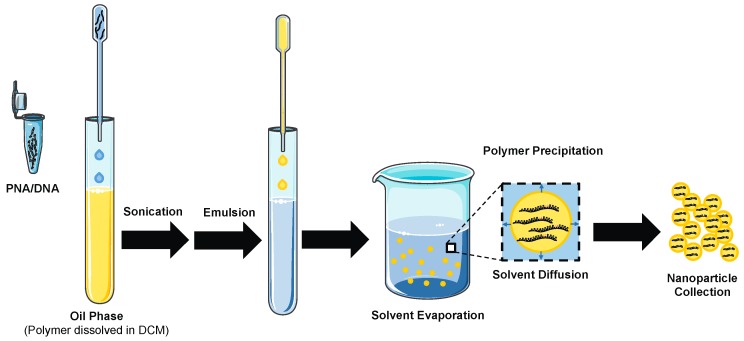
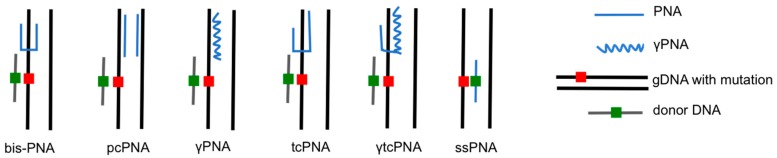
Peptide nucleic acids (PNAs) can bind duplex DNA in a sequence-targeted manner, forming a triplex structure capable of inducing DNA repair and producing specific genome modifications. Since the first description of PNA-mediated gene editing in cell free extracts, PNAs have been used to successfully correct human disease-causing mutations in cell culture and in vivo in preclinical mouse models. Gene correction via PNAs has resulted in clinically-relevant functional protein restoration and disease improvement, with low off-target genome effects, indicating a strong therapeutic potential for PNAs in the treatment or cure of genetic disorders. This review discusses the progress that has been made in developing PNAs as an effective, targeted agent for gene editing, with an emphasis on recent in vivo, nanoparticle-based strategies.
肽核酸(PNA)可以序列特异性地与双链 DNA 结合,形成能够诱导 DNA 修复并产生特定基因组修饰的三链结构。自 PNA 介导的无细胞提取物中的基因编辑首次描述以来,PNA 已被用于成功纠正细胞培养物中和临床前小鼠模型中的人类致病突变。通过 PNA 进行的基因校正导致具有临床相关功能蛋白恢复和疾病改善,并且脱靶基因组效应较低,这表明 PNA 在治疗或治愈遗传疾病方面具有很强的治疗潜力。本综述讨论了将 PNA 开发为有效、靶向基因编辑的试剂所取得的进展,重点介绍了最近的体内、基于纳米颗粒的策略。