Lee Wonsik, Do Truc, Zhang Ge, Kahne Daniel, Meredith Timothy C, Walker Suzanne
Department of Microbiology and Immunobiology , Harvard Medical School , 4 Blackfan Circle , Boston , Massachusetts 02115 , United States.
Department of Chemistry and Chemical Biology , Harvard University , 12 Oxford Street , Cambridge , Massachusetts 02138 , United States.
ACS Infect Dis. 2018 Jun 8;4(6):1007-1018. doi: 10.1021/acsinfecdis.8b00017. Epub 2018 Mar 23.
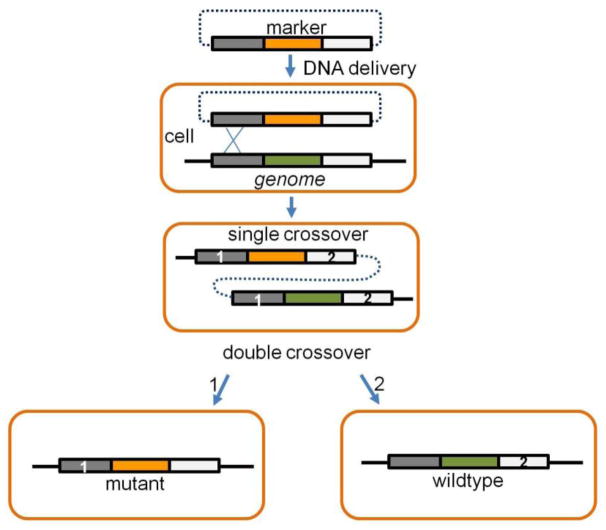
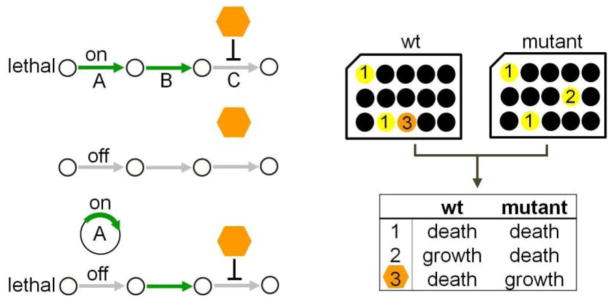
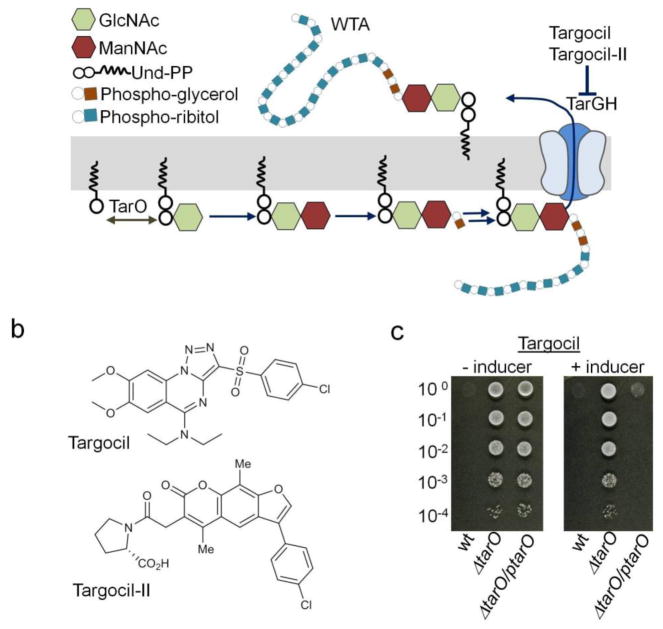
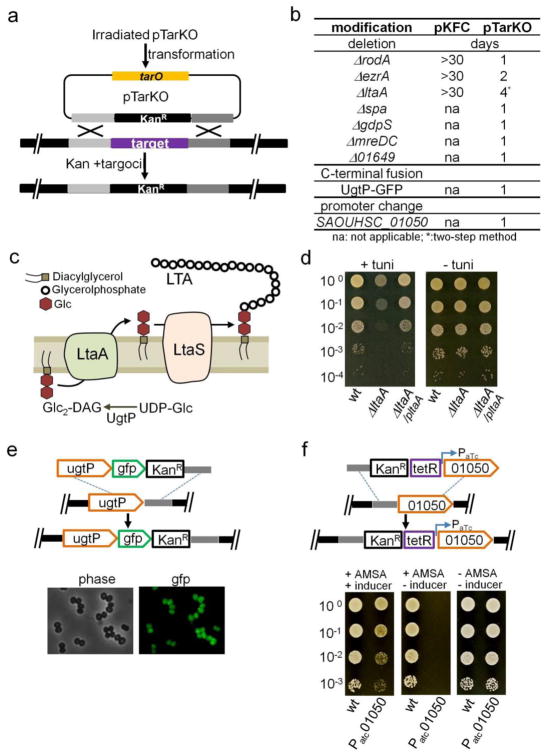
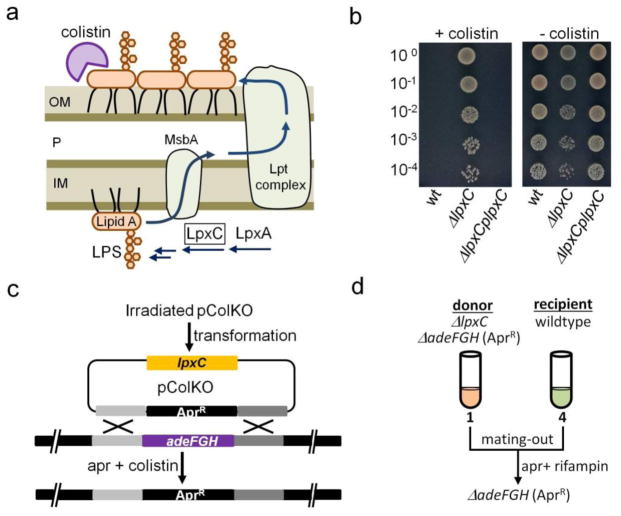
Targeted modification of bacterial chromosomes is necessary to understand new drug targets, investigate virulence factors, elucidate cell physiology, and validate results of -omics-based approaches. For some bacteria, reverse genetics remains a major bottleneck to progress in research. Here, we describe a compound-centric strategy that combines new negative selection markers with known positive selection markers to achieve simple, efficient one-step genome engineering of bacterial chromosomes. The method was inspired by the observation that certain nonessential metabolic pathways contain essential late steps, suggesting that antibiotics targeting a late step can be used to select for the absence of genes that control flux into the pathway. Guided by this hypothesis, we have identified antibiotic/counterselectable markers to accelerate reverse engineering of two increasingly antibiotic-resistant pathogens, Staphylococcus aureus and Acinetobacter baumannii. For S. aureus, we used wall teichoic acid biosynthesis inhibitors to select for the absence of tarO and for A. baumannii, we used colistin to select for the absence of lpxC. We have obtained desired gene deletions, gene fusions, and promoter swaps in a single plating step with perfect efficiency. Our method can also be adapted to generate markerless deletions of genes using FLP recombinase. The tools described here will accelerate research on two important pathogens, and the concept we outline can be readily adapted to any organism for which a suitable target pathway can be identified.
对细菌染色体进行靶向修饰对于理解新的药物靶点、研究毒力因子、阐明细胞生理学以及验证基于组学方法的结果是必要的。对于某些细菌而言,反向遗传学仍然是研究进展的主要瓶颈。在此,我们描述了一种以化合物为中心的策略,该策略将新的负选择标记与已知的正选择标记相结合,以实现细菌染色体的简单、高效的一步式基因组工程。该方法的灵感来源于以下观察结果:某些非必需代谢途径包含必需的后期步骤,这表明靶向后期步骤的抗生素可用于选择缺失控制该途径通量的基因。基于这一假设,我们已经确定了抗生素/反选择标记,以加速对两种耐药性日益增强的病原体——金黄色葡萄球菌和鲍曼不动杆菌的反向工程。对于金黄色葡萄球菌,我们使用壁磷壁酸生物合成抑制剂来选择缺失tarO的菌株;对于鲍曼不动杆菌,我们使用黏菌素来选择缺失lpxC的菌株。我们在单个平板步骤中以完美的效率获得了所需的基因缺失、基因融合和启动子交换。我们的方法还可以通过使用FLP重组酶来生成无标记的基因缺失。这里描述的工具将加速对这两种重要病原体的研究,并且我们概述的概念可以很容易地应用于任何能够识别合适靶标途径的生物体。