Biosciences Division, Oak Ridge National Laboratories, Oak Ridge, Tennessee, USA.
Department of Microbiology, University of Tennessee, Knoxville, Tennessee, USA.
mBio. 2018 Mar 13;9(2):e02061-17. doi: 10.1128/mBio.02061-17.
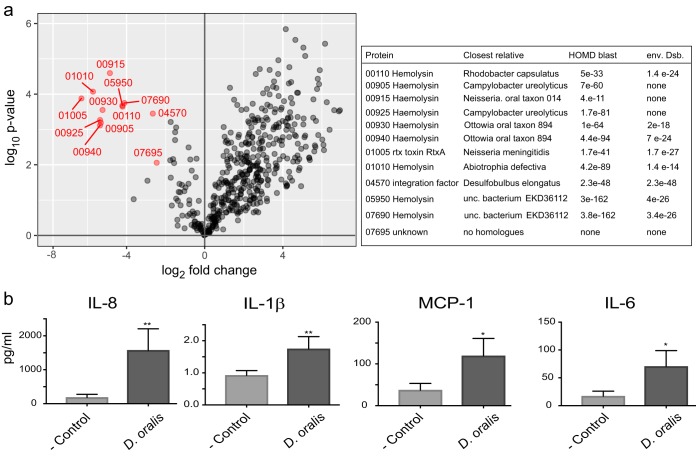
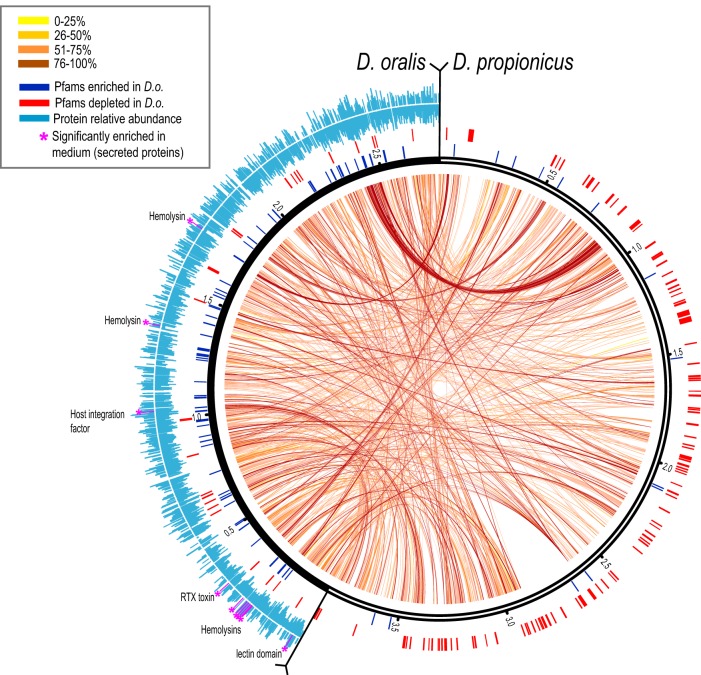
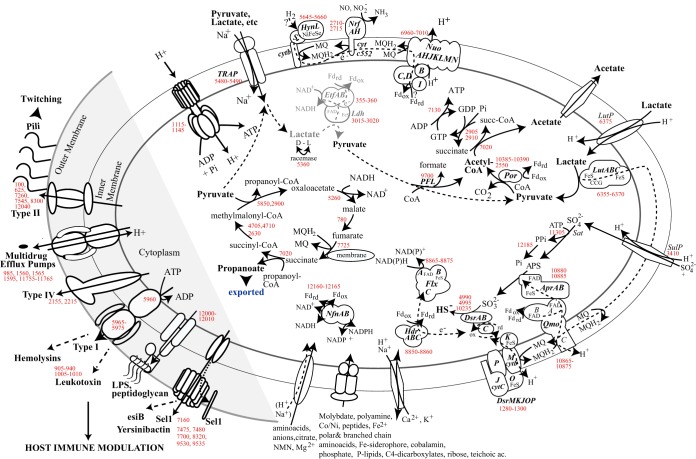
The human oral microbiota encompasses representatives of many bacterial lineages that have not yet been cultured. Here we describe the isolation and characterization of previously uncultured , the first human-associated representative of its genus. As mammalian-associated microbes rarely have free-living close relatives, provides opportunities to study how bacteria adapt and evolve within a host. This sulfate-reducing deltaproteobacterium has adapted to the human oral subgingival niche by curtailing its physiological repertoire, losing some biosynthetic abilities and metabolic independence, and by dramatically reducing environmental sensing and signaling capabilities. The genes that enable free-living to synthesize the potent neurotoxin methylmercury were also lost by , a notably positive outcome of host association. However, horizontal gene acquisitions from other members of the microbiota provided novel mechanisms of interaction with the human host, including toxins like leukotoxin and hemolysins. Proteomic and transcriptomic analysis revealed that most of those factors are actively expressed, including in the subgingival environment, and some are secreted. Similar to other known oral pathobionts, can trigger a proinflammatory response in oral epithelial cells, suggesting a direct role in the development of periodontal disease. Animal-associated microbiota likely assembled as a result of numerous independent colonization events by free-living microbes followed by coevolution with their host and other microbes. Through specific adaptation to various body sites and physiological niches, microbes have a wide range of contributions, from beneficial to disease causing. provides insights into genomic and physiological transformations associated with transition from an open environment to a host-dependent lifestyle and the emergence of pathogenicity. Through a multifaceted mechanism triggering a proinflammatory response, is a novel periodontal pathobiont. Even though culture-independent approaches can provide insights into the potential role of the human microbiome "dark matter," cultivation and experimental characterization remain important to studying the roles of individual organisms in health and disease.
人类口腔微生物群包含许多尚未培养的细菌谱系的代表。在这里,我们描述了先前未培养的 属的第一个人类相关代表的分离和特性。由于哺乳动物相关的微生物很少有自由生活的近亲, 提供了研究细菌如何在宿主中适应和进化的机会。这种硫酸盐还原的德尔塔变形菌通过限制其生理谱、失去一些生物合成能力和代谢独立性以及极大地降低环境感知和信号传递能力,适应了人类口腔龈下生态位。使 能够自由生活的合成强神经毒素甲基汞的基因也被 丢失了,这是宿主关联的一个显著积极结果。然而,从微生物群的其他成员获得的水平基因获取提供了与人类宿主相互作用的新机制,包括毒素如白细胞毒素和溶血素。蛋白质组学和转录组学分析表明,这些因素中的大多数都被积极表达,包括在龈下环境中,有些被分泌。与其他已知的口腔病原菌一样, 可以在口腔上皮细胞中引发炎症反应,表明其在牙周病发展中具有直接作用。动物相关的微生物群可能是由于自由生活的微生物多次独立定植,然后与宿主和其他微生物共同进化而形成的。通过对各种身体部位和生理小生境的特定适应,微生物在从开放环境到依赖宿主的生活方式和致病性的出现过程中具有广泛的贡献,从有益到致病。 通过触发炎症反应的多方面机制, 是一种新的牙周病原菌。尽管非培养方法可以提供对人类微生物组“暗物质”潜在作用的深入了解,但培养和实验表征对于研究个体生物在健康和疾病中的作用仍然很重要。