Xiao Yicai, Li Gaofeng, Chen Yujie, Zuo Yuchun, Rashid Kauthar, He Tibiao, Feng Hua, Zhang John H, Liu Fei
Department of Neurosurgery, The Third Xiangya Hospital, Central South University, Hunan, Changsha, China.
Departments of Oncology, Zhuzhou Central Hospital, Hunan, Zhuzhou, China.
Front Neurol. 2018 Feb 26;9:96. doi: 10.3389/fneur.2018.00096. eCollection 2018.
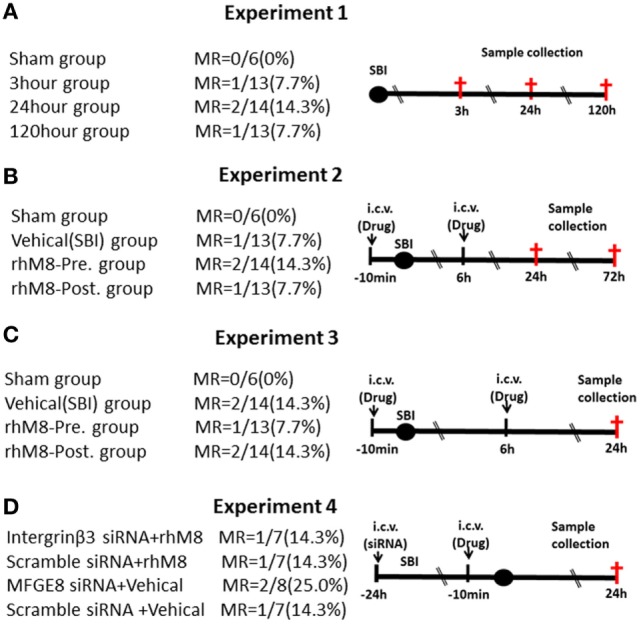
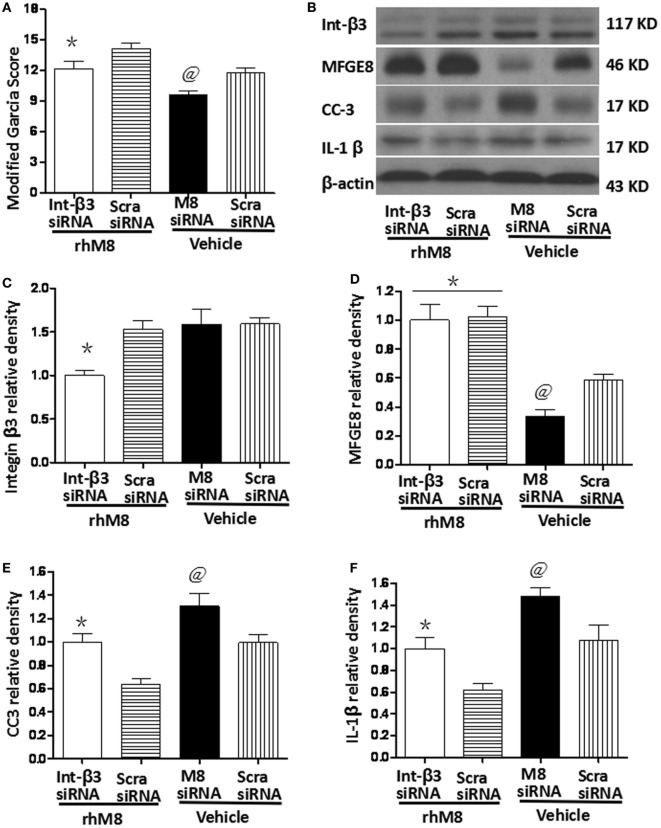
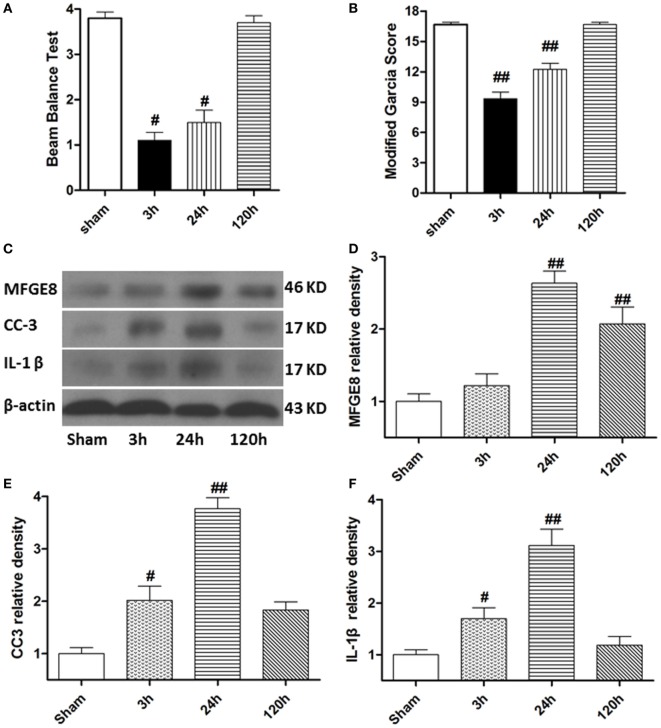
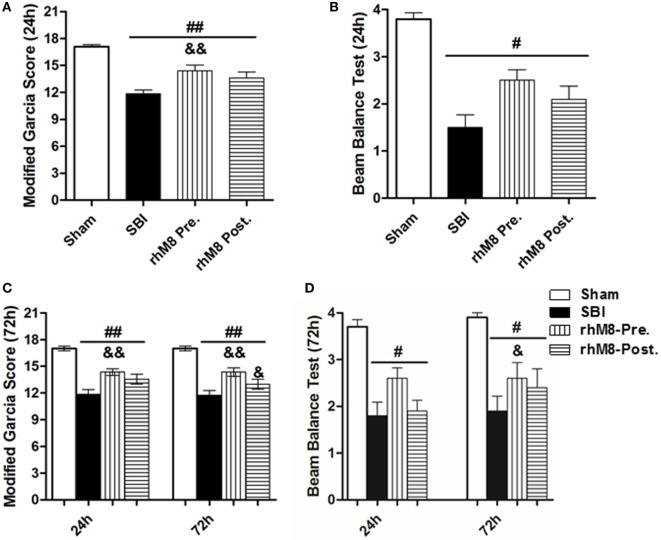
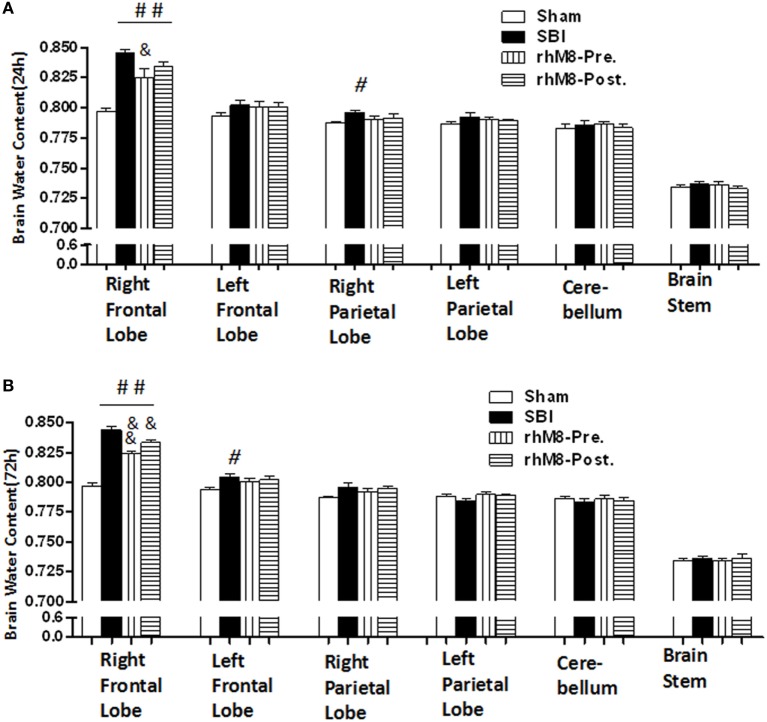
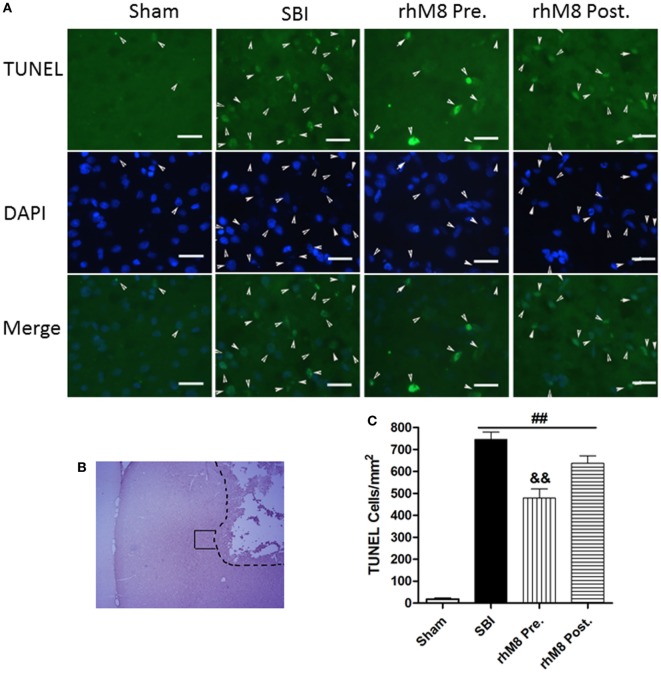
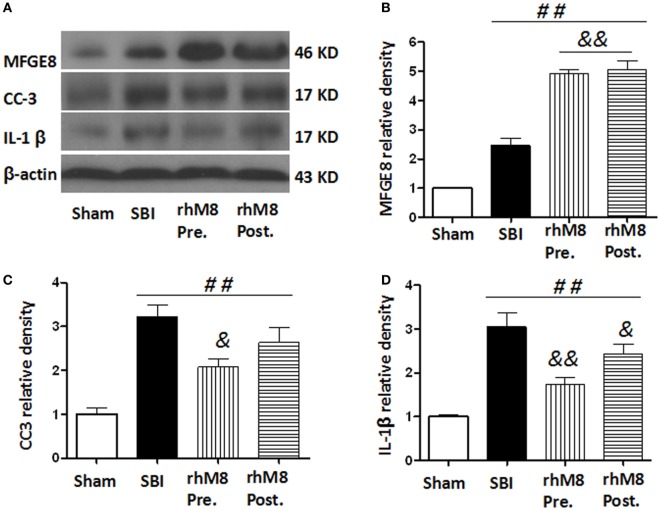
Iatrogenic brain injury inevitably occurs in neurosurgical operations, leading to brain edema, ischemia, intracranial hematoma, and other postoperative complications, eventually worsening neurological outcomes of patients. If apoptotic cells are not rapidly eliminated by phagocytic engulfment, they may communicate with surrounding cells to undergo secondary necrosis and releasing toxic signals. Recent studies have shown that milk fat globule-epidermal growth factor-8 (MFGE8), which promotes phagocytosis and inhibits inflammation, is an endogenous protective factor in response to brain infarction, Alzheimer's disease, subarachnoid hemorrhage, and prion disease. In the present study, we sought to investigate the different effects of both pretreated and posttreated recombinant milk fat globule-epidermal growth factor-8 (rhMFGE8) for the surgical brain injury (SBI) rat model and potential involvement of its receptor integrin β3 for apoptosis and neuroinflammation after SBI. One hundred and sixty-seven male rats were employed in the preset study. Experiment 1 was performed to evaluate neurological scores and MFGE8, cleaved caspase-3 (CC3), and interleukine-1 beta (IL-1β) levels at 3, 24, and 120 h after SBI. Experiment 2 was performed to evaluate the effects of rhMFGE8 pretreatment (10 min before SBI) and rhMFGE8 posttreatment (6 h after SBI) on brain edema at 24 and 72 h after SBI. Experiment 3 was performed to evaluate the potential anti-apoptotic and anti-inflammatory effects of rhMFGE8 pretreatment and posttreatment. Experiment 4 sought to investigate the involvement of the integrin-β3 signal in the effects of MFGE8 pretreatment. Our data showed rhMFGE8 pretreatment alleviated neurological deficits and decreased brain water content and apoptotic cells in the SBI model, which exhibited neurological dysfunction, apoptosis, and inflammation. Meanwhile, MFGE8 siRNA, which inhibited endogenous MFGE8 expression, significantly increased IL-1β, TUNEL positive cells, and CC3. Furthermore, knockdown of its receptor integrin β3 by siRNA abolished the effects of rhMFGE8 in the SBI model. In conclusion, we found that rhMFGE8 pretreatment effectively alleviated neurological deficits and decreased brain water content and apoptotic cells in the SBI model through the MFGE8/integrin-β3 pathway, and treatment time was an important factor in achieving curative effects. Therefore, MFGE8 pretreatment may serve as a promising therapeutic strategy for SBI patients.
医源性脑损伤在神经外科手术中不可避免地会发生,导致脑水肿、缺血、颅内血肿及其他术后并发症,最终使患者的神经功能预后恶化。如果凋亡细胞未被吞噬细胞迅速清除,它们可能会与周围细胞相互作用,进而发生继发性坏死并释放毒性信号。最近的研究表明,促进吞噬作用并抑制炎症的乳脂肪球-表皮生长因子8(MFGE8)是一种应对脑梗死、阿尔茨海默病、蛛网膜下腔出血和朊病毒病的内源性保护因子。在本研究中,我们试图探究预处理和后处理重组乳脂肪球-表皮生长因子8(rhMFGE8)对手术性脑损伤(SBI)大鼠模型的不同影响,以及其受体整合素β3在SBI后凋亡和神经炎症中的潜在作用。本研究使用了167只雄性大鼠。实验1旨在评估SBI后3、24和120小时的神经功能评分以及MFGE8、裂解的半胱天冬酶-3(CC3)和白细胞介素-1β(IL-1β)水平。实验2旨在评估rhMFGE8预处理(SBI前10分钟)和rhMFGE8后处理(SBI后6小时)对SBI后24和72小时脑水肿的影响。实验3旨在评估rhMFGE8预处理和后处理的潜在抗凋亡和抗炎作用。实验4试图探究整合素-β3信号在MFGE8预处理作用中的参与情况。我们的数据显示,rhMFGE8预处理减轻了SBI模型中的神经功能缺损,降低了脑含水量和凋亡细胞数量,该模型表现出神经功能障碍、凋亡和炎症。同时,抑制内源性MFGE8表达的MFGE8 siRNA显著增加了IL-1β、TUNEL阳性细胞和CC3。此外,通过siRNA敲低其受体整合素β3消除了rhMFGE8在SBI模型中的作用。总之,我们发现rhMFGE8预处理通过MFGE8/整合素-β3途径有效减轻了SBI模型中的神经功能缺损,降低了脑含水量和凋亡细胞数量,且治疗时间是实现疗效的一个重要因素。因此,MFGE8预处理可能是一种有前景的SBI患者治疗策略。