Paessler Slobodan, Veljkovic Veljko
Department of Pathology, Galveston National Laboratory, University of Texas Medical Branch, Galveston, TX, 77555, USA.
Biomed Protection, Galveston, TX, 77550, USA.
F1000Res. 2017 Nov 29;6:2067. doi: 10.12688/f1000research.13198.1. eCollection 2017.
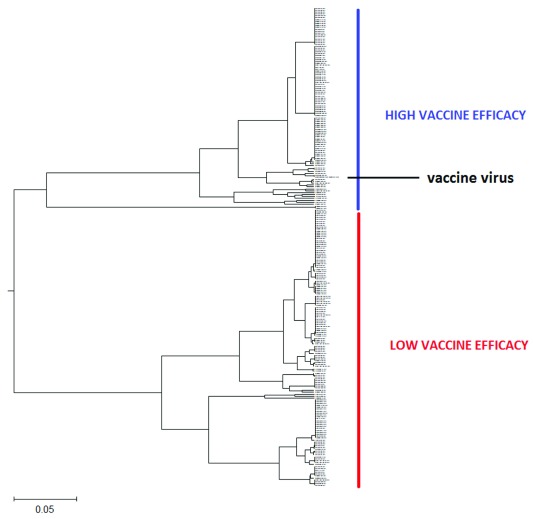
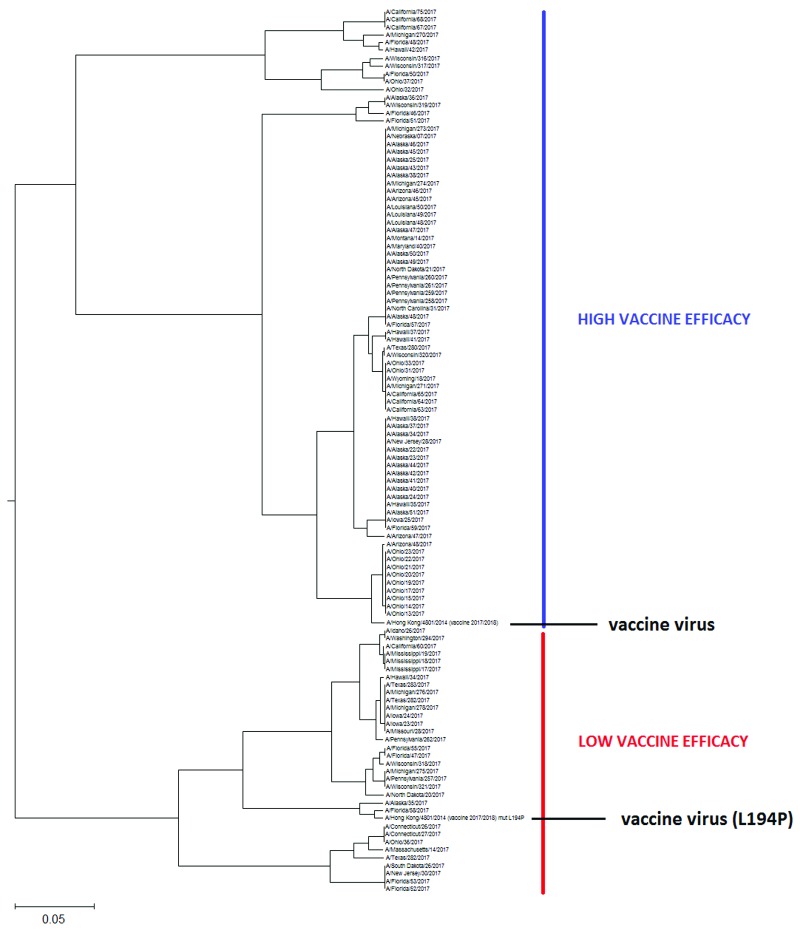
Vaccination against seasonal influenza viruses is the most effective way to prevent infection. A key factor in the effectiveness of the seasonal influenza vaccine is its immunological compatibility with the circulating viruses during the season. The high evolutionary rate, antigenic shift and antigenic drift of influenza viruses, represents the main obstacle for correct prediction of the vaccine effectiveness for an upcoming flu season. Conventional structural and phylogenetic approaches for assessment of vaccine effectiveness have had a limited success in prediction of vaccine efficacy in the past. Recently, a novel bioinformatics approach for assessment of effectiveness of seasonal influenza vaccine was proposed. Here, this approach was used for prediction of the vaccine effectiveness for the influenza season 2017/18 in US.
接种季节性流感病毒疫苗是预防感染的最有效方法。季节性流感疫苗有效性的一个关键因素是其在季节期间与流行病毒的免疫相容性。流感病毒的高进化率、抗原转变和抗原漂移是准确预测即将到来的流感季节疫苗有效性的主要障碍。过去,用于评估疫苗有效性的传统结构和系统发育方法在预测疫苗效力方面取得的成功有限。最近,有人提出了一种评估季节性流感疫苗有效性的新型生物信息学方法。在此,该方法被用于预测美国2017/18流感季节的疫苗有效性。