Sakhi Rafi, Theuns Dominic A M J, Bhagwandien Rohit E, Michels Michelle, Schinkel Arend F L, Szili-Torok Tamas, Zijlstra F, Roos-Hesselink Jolien W, Yap Sing-Chien
Department of Cardiology, Erasmus Medical Center, P.O. Box 2040, 3000 CA, Rotterdam, The Netherlands.
J Interv Card Electrophysiol. 2018 Jul;52(2):203-208. doi: 10.1007/s10840-018-0354-y. Epub 2018 Mar 13.
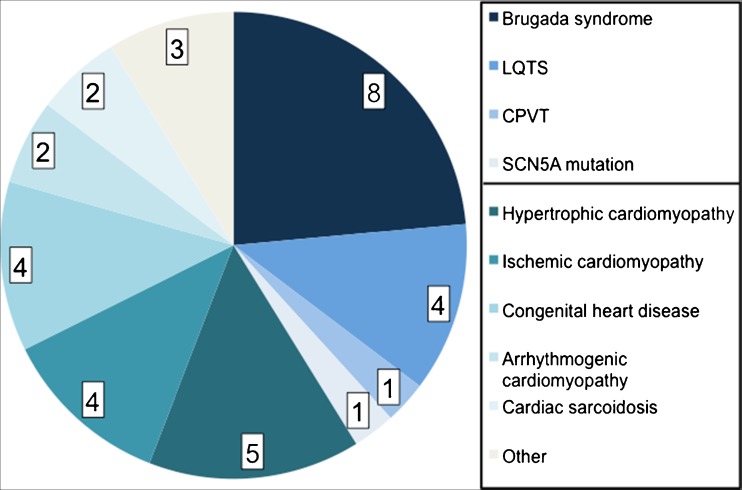
In patients with structural heart disease (SHD) or inherited primary arrhythmia syndrome (IPAS), the occurrence of unexplained syncope or palpitations can be worrisome as they are at increased risk of sudden cardiac death. An implantable loop recorder (ILR) can be a useful diagnostic tool. Our purpose was to compare the diagnostic yield, arrhythmia mechanism, and management in patients with SHD, patients with IPAS, and those without heart disease.
Retrospective single-center study in consecutive patients who underwent an ILR implantation.
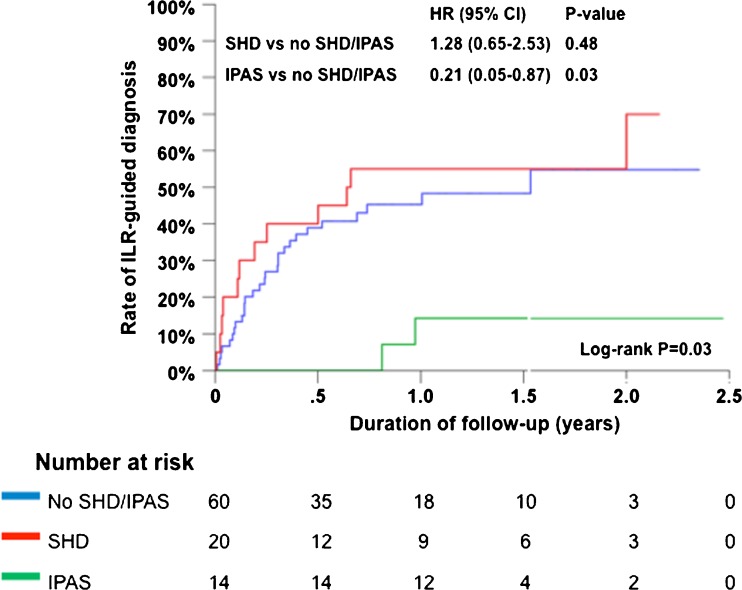
Between March 2013 and December 2016, a total of 94 patients received an ILR (SHD, n = 20; IPAS, n = 14; no SHD/IPAS, n = 60). The type of symptoms at the time of implantation was similar between groups. During a median follow-up of 10 months, 45% had an ILR-guided diagnosis. Patients with IPAS had a lower diagnostic yield (14%) in comparison to the other groups (no SHD/IPAS 47%, P = 0.03; SHD 60%, P = 0.01, respectively). Furthermore, patients with SHD had a higher incidence of nonsustained VT in comparison to patients without SHD/IPAS (30 versus 3%, P < 0.01). ILR-guided therapy was comparable between groups. In the SHD group, a high proportion (10%) received an implantable cardioverter-defibrillator; however, this was not statistically significantly higher than the other groups (no SHD/IPAS 3%, IPAS 0%, P = 0.08).
In comparison to patients without heart disease, the diagnostic yield of an ILR was lower in patients with IPAS and the prevalence of ILR-diagnosed nonsustained VT was higher in patients with SHD.
在患有结构性心脏病(SHD)或遗传性原发性心律失常综合征(IPAS)的患者中,不明原因的晕厥或心悸的发生可能令人担忧,因为他们的心源性猝死风险增加。植入式循环记录仪(ILR)可能是一种有用的诊断工具。我们的目的是比较SHD患者、IPAS患者和无心脏病患者的诊断率、心律失常机制及治疗情况。
对连续接受ILR植入的患者进行回顾性单中心研究。
2013年3月至2016年12月期间,共有94例患者接受了ILR植入(SHD患者20例;IPAS患者14例;无SHD/IPAS患者60例)。各组植入时的症状类型相似。在中位随访10个月期间,45%的患者获得了ILR指导下的诊断。与其他组相比,IPAS患者的诊断率较低(14%)(无SHD/IPAS组为47%,P = 0.03;SHD组为60%,P = 0.01)。此外,与无SHD/IPAS的患者相比,SHD患者非持续性室性心动过速的发生率更高(30%对3%,P < 0.01)。各组间ILR指导下的治疗情况相当。在SHD组中,有较高比例(10%)的患者接受了植入式心律转复除颤器;然而,这一比例在统计学上并不显著高于其他组(无SHD/IPAS组为3%,IPAS组为0%,P = 0.08)。
与无心脏病的患者相比,IPAS患者的ILR诊断率较低,而SHD患者经ILR诊断的非持续性室性心动过速的患病率较高。