• 文献检索
  • 文档翻译
  • 深度研究
  • 学术资讯
  • Suppr Zotero 插件Zotero 插件
  • 邀请有礼
  • 套餐&价格
  • 历史记录
应用&插件
Suppr Zotero 插件Zotero 插件浏览器插件Mac 客户端Windows 客户端微信小程序
定价
高级版会员购买积分包购买API积分包
服务
文献检索文档翻译深度研究API 文档MCP 服务
关于我们
关于 Suppr公司介绍联系我们用户协议隐私条款
关注我们

Suppr 超能文献

核心技术专利:CN118964589B侵权必究
粤ICP备2023148730 号-1Suppr @ 2026

文献检索

告别复杂PubMed语法,用中文像聊天一样搜索,搜遍4000万医学文献。AI智能推荐,让科研检索更轻松。

立即免费搜索

文件翻译

保留排版,准确专业,支持PDF/Word/PPT等文件格式,支持 12+语言互译。

免费翻译文档

深度研究

AI帮你快速写综述,25分钟生成高质量综述,智能提取关键信息,辅助科研写作。

立即免费体验

心脏植入式电子微型和微设备。

Cardiac Implantable Electronic Miniaturized and Micro Devices.

作者信息

Rav Acha Moshe, Soifer Elina, Hasin Tal

机构信息

Jesselson Integrated Heart Center, Shaare Zedek Medical Center, Hebrew University, Jerusalem 910000, Israel.

Vectorious Medical Technologies, Tel Aviv 610000, Israel.

出版信息

Micromachines (Basel). 2020 Sep 29;11(10):902. doi: 10.3390/mi11100902.

DOI:10.3390/mi11100902
PMID:33003460
原文链接:https://pmc.ncbi.nlm.nih.gov/articles/PMC7600795/
Abstract

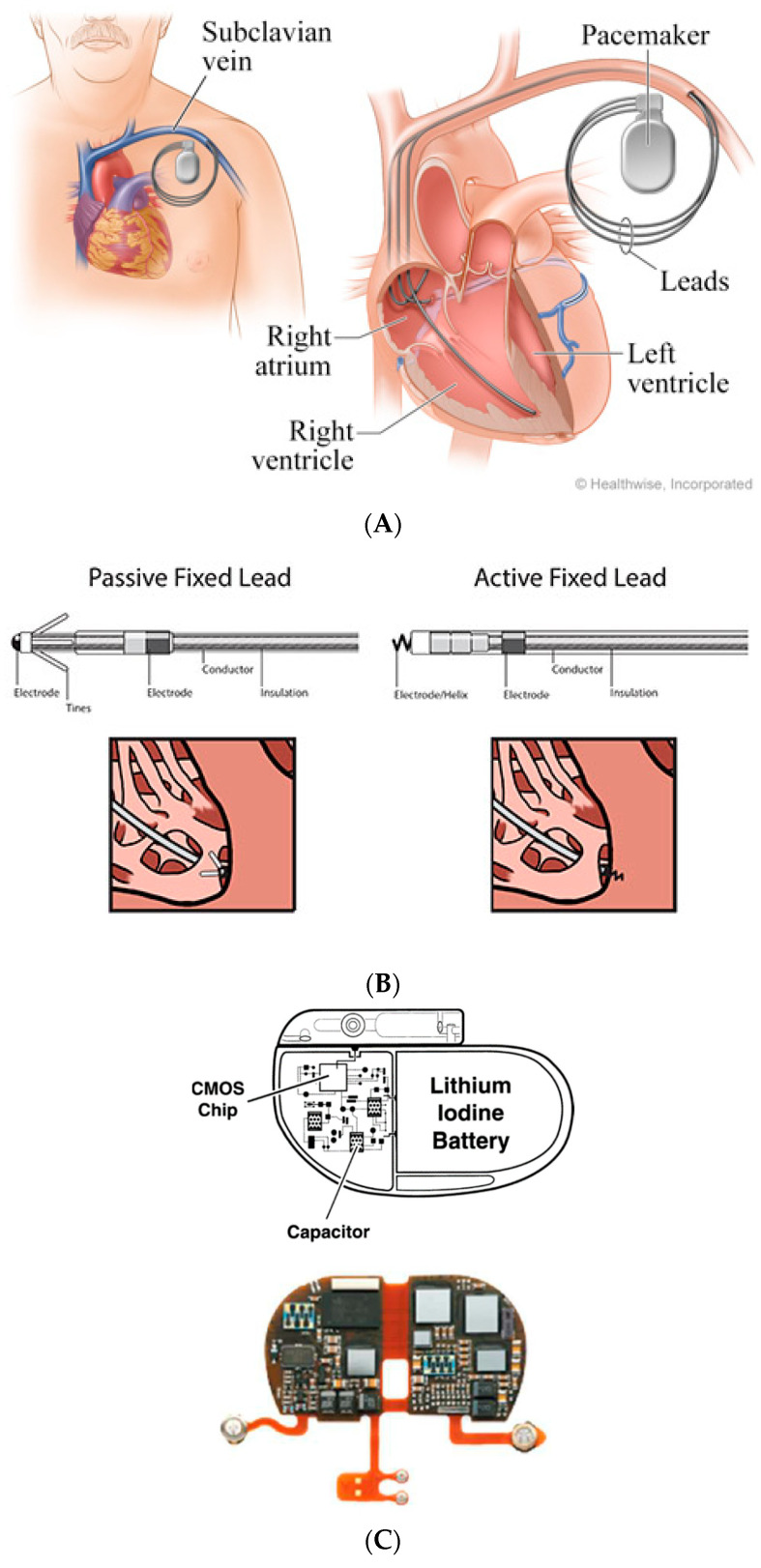
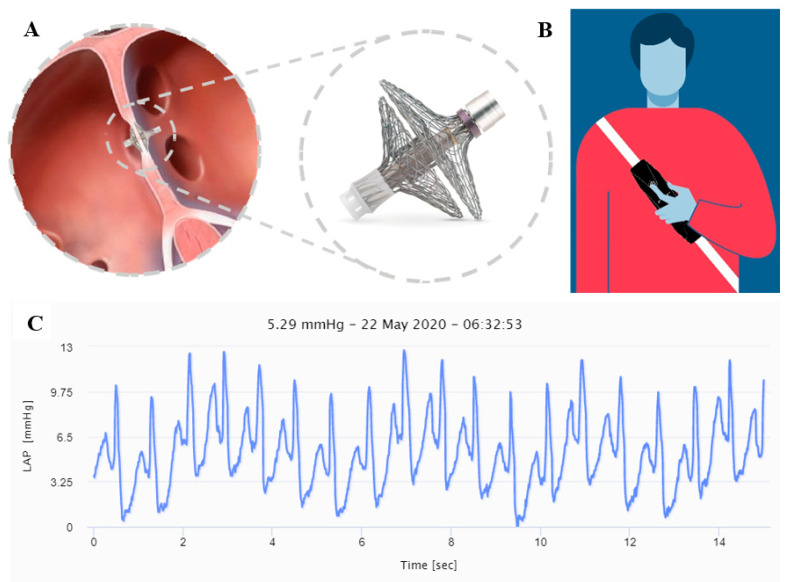
Advancement in the miniaturization of high-density power sources, electronic circuits, and communication technologies enabled the construction of miniaturized electronic devices, implanted directly in the heart. These include pacing devices to prevent low heart rates or terminate heart rhythm abnormalities ('arrhythmias'), long-term rhythm monitoring devices for arrhythmia detection in unexplained syncope cases, and heart failure (HF) hemodynamic monitoring devices, enabling the real-time monitoring of cardiac pressures to detect and alert for early fluid overload. These devices were shown to prevent HF hospitalizations and improve HF patients' life quality. Pacing devices include permanent pacemakers (PPM) that maintain normal heart rates, defibrillators that are capable of fast detection and the termination of life-threatening arrhythmias, and cardiac re-synchronization devices that improve cardiac function and the survival of HF patients. Traditionally, these devices are implanted via the venous system ('endovascular') using conductors ('endovascular leads/electrodes') that connect the subcutaneous device battery to the appropriate cardiac chamber. These leads are a potential source of multiple problems, including lead-failure and systemic infection resulting from the lifelong exposure of these leads to bacteria within the venous system. One of the important cardiac innovations in the last decade was the development of a leadless PPM functioning without venous leads, thus circumventing most endovascular PPM-related problems. Leadless PPM's consist of a single device, including a miniaturized power source, electronic chips, and fixating mechanism, directly implanted into the cardiac muscle. Only rare device-related problems and almost no systemic infections occur with these devices. Current leadless PPM's sense and pace only the ventricle. However, a novel leadless device that is capable of sensing both atrium and ventricle was recently FDA approved and miniaturized devices that are designed to synchronize right and left ventricles, using novel intra-body inner-device communication technologies, are under final experiments. This review will cover these novel implantable miniaturized cardiac devices and the basic algorithms and technologies that underlie their development. Advancement in the miniaturization of high-density power sources, electronic circuits, and communication technologies enabled the construction of miniaturized electronic devices, implanted directly in the heart. These include pacing devices to prevent low heart rates or terminate heart rhythm abnormalities ('arrhythmias'), long-term rhythm monitoring devices for arrhythmia detection in unexplained syncope cases, and heart failure (HF) hemodynamic monitoring devices, enabling the real-time monitoring of cardiac pressures to detect and alert early fluid overload. These devices were shown to prevent HF hospitalizations and improve HF patients' life quality. Pacing devices include permanent pacemakers (PPM) that maintain normal heart rates, defibrillators that are capable of fast detection and termination of life-threatening arrhythmias, and cardiac re-synchronization devices that improve cardiac function and survival of HF patients. Traditionally, these devices are implanted via the venous system ('endovascular') using conductors ('endovascular leads/electrodes') that connect the subcutaneous device battery to the appropriate cardiac chamber. These leads are a potential source of multiple problems, including lead-failure and systemic infection that result from the lifelong exposure of these leads to bacteria within the venous system. The development of a leadless PPM functioning without venous leads was one of the important cardiac innovations in the last decade, thus circumventing most endovascular PPM-related problems. Leadless PPM's consist of a single device, including a miniaturized power source, electronic chips, and fixating mechanism, implanted directly into the cardiac muscle. Only rare device-related problems and almost no systemic infections occur with these devices. Current leadless PPM's sense and pace only the ventricle. However, a novel leadless device that is capable of sensing both atrium and ventricle was recently FDA approved and miniaturized devices designed to synchronize right and left ventricles, using novel intra-body inner-device communication technologies, are under final experiments. This review will cover these novel implantable miniaturized cardiac devices and the basic algorithms and technologies that underlie their development.
https://cdn.ncbi.nlm.nih.gov/pmc/blobs/aa1d/7600795/ecbcca67879a/micromachines-11-00902-g006.jpg
https://cdn.ncbi.nlm.nih.gov/pmc/blobs/aa1d/7600795/228a64c0e1aa/micromachines-11-00902-g001.jpg
https://cdn.ncbi.nlm.nih.gov/pmc/blobs/aa1d/7600795/cb7beabdaf4b/micromachines-11-00902-g002.jpg
https://cdn.ncbi.nlm.nih.gov/pmc/blobs/aa1d/7600795/e6cf8c511cd3/micromachines-11-00902-g003.jpg
https://cdn.ncbi.nlm.nih.gov/pmc/blobs/aa1d/7600795/505cb9d78249/micromachines-11-00902-g004.jpg
https://cdn.ncbi.nlm.nih.gov/pmc/blobs/aa1d/7600795/cb39a165b003/micromachines-11-00902-g005.jpg
https://cdn.ncbi.nlm.nih.gov/pmc/blobs/aa1d/7600795/ecbcca67879a/micromachines-11-00902-g006.jpg
https://cdn.ncbi.nlm.nih.gov/pmc/blobs/aa1d/7600795/228a64c0e1aa/micromachines-11-00902-g001.jpg
https://cdn.ncbi.nlm.nih.gov/pmc/blobs/aa1d/7600795/cb7beabdaf4b/micromachines-11-00902-g002.jpg
https://cdn.ncbi.nlm.nih.gov/pmc/blobs/aa1d/7600795/e6cf8c511cd3/micromachines-11-00902-g003.jpg
https://cdn.ncbi.nlm.nih.gov/pmc/blobs/aa1d/7600795/505cb9d78249/micromachines-11-00902-g004.jpg
https://cdn.ncbi.nlm.nih.gov/pmc/blobs/aa1d/7600795/cb39a165b003/micromachines-11-00902-g005.jpg
https://cdn.ncbi.nlm.nih.gov/pmc/blobs/aa1d/7600795/ecbcca67879a/micromachines-11-00902-g006.jpg
摘要

高密度电源、电子电路和通信技术的小型化取得进展,使得能够构建直接植入心脏的小型电子设备。这些设备包括用于预防心率过低或终止心律异常(“心律失常”)的起搏装置、用于在不明原因晕厥病例中检测心律失常的长期心律监测装置以及心力衰竭(HF)血流动力学监测装置,后者能够实时监测心脏压力以检测并警示早期液体过载。这些设备已被证明可预防心力衰竭住院,并改善心力衰竭患者的生活质量。起搏装置包括维持正常心率的永久性起搏器(PPM)、能够快速检测并终止危及生命的心律失常的除颤器以及改善心脏功能和心力衰竭患者生存率的心脏再同步装置。传统上,这些设备通过静脉系统(“血管内”)植入,使用将皮下设备电池连接到适当心脏腔室的导体(“血管内导线/电极”)。这些导线是多种问题的潜在来源,包括导线故障以及由于这些导线长期暴露于静脉系统内的细菌而导致的全身感染。过去十年中重要的心脏创新之一是开发了无需静脉导线的无导线PPM,从而规避了大多数与血管内PPM相关的问题。无导线PPM由单个装置组成,包括小型化电源、电子芯片和固定机构,直接植入心肌。这些装置仅出现罕见的与设备相关的问题,几乎不会发生全身感染。目前的无导线PPM仅能感知和起搏心室。然而,一种能够同时感知心房和心室的新型无导线装置最近已获得美国食品药品监督管理局(FDA)批准,并且使用新型体内设备内通信技术设计用于使左右心室同步的小型化装置正在进行最终实验。本综述将涵盖这些新型可植入小型化心脏装置以及作为其发展基础的基本算法和技术。高密度电源、电子电路和通信技术的小型化取得进展,使得能够构建直接植入心脏的小型电子设备。这些设备包括用于预防心率过低或终止心律异常("心律失常")的起搏装置、用于在不明原因晕厥病例中检测心律失常的长期心律监测装置以及心力衰竭(HF)血流动力学监测装置,后者能够实时监测心脏压力以检测并警示早期液体过载。这些设备已被证明可预防心力衰竭住院,并改善心力衰竭患者的生活质量。起搏装置包括维持正常心率的永久性起搏器(PPM)、能够快速检测并终止危及生命的心律失常的除颤器以及改善心脏功能和心力衰竭患者生存率的心脏再同步装置。传统上,这些设备通过静脉系统("血管内")植入,使用将皮下设备电池连接到适当心脏腔室的导体("血管内导线/电极")。这些导线是多种问题的潜在来源,包括导线故障以及由于这些导线长期暴露于静脉系统内的细菌而导致的全身感染。过去十年中重要的心脏创新之一是开发了无需静脉导线的无导线PPM,从而规避了大多数与血管内PPM相关的问题。无导线PPM由单个装置组成,包括小型化电源、电子芯片和固定机构,直接植入心肌。这些装置仅出现罕见的与设备相关的问题,几乎不会发生全身感染。目前的无导线PPM仅能感知和起搏心室。然而,一种能够同时感知心房和心室的新型无导线装置最近已获得美国食品药品监督管理局(FDA)批准,并且使用新型体内设备内通信技术设计用于使左右心室同步的小型化装置正在进行最终实验。本综述将涵盖这些新型可植入小型化心脏装置以及作为其发展基础的基本算法和技术。

相似文献

1
Cardiac Implantable Electronic Miniaturized and Micro Devices.心脏植入式电子微型和微设备。
Micromachines (Basel). 2020 Sep 29;11(10):902. doi: 10.3390/mi11100902.
2
Biventricular pacing (cardiac resynchronization therapy): an evidence-based analysis.双心室起搏(心脏再同步治疗):基于证据的分析。
Ont Health Technol Assess Ser. 2005;5(13):1-60. Epub 2005 Sep 1.
3
Leadless Cardiac Pacemakers: The Next Evolution in Pacemaker Technology.无导线心脏起搏器:起搏器技术的下一次演进
R I Med J (2013). 2017 Nov 1;100(11):31-34.
4
Emerging Technologies in Electrophysiology: From Single-Chamber to Biventricular Leadless Pacemakers.电生理学中的新兴技术:从单腔到双腔无导线起搏器。
Cardiology. 2022;147(2):179-190. doi: 10.1159/000521976. Epub 2022 Jan 17.
5
[News techniques of pacing in congenital heart diseases].[先天性心脏病起搏的新技术]
Presse Med. 2017 Jun;46(6 Pt 1):594-605. doi: 10.1016/j.lpm.2017.05.015. Epub 2017 Jun 5.
6
Innovations in Cardiac Implantable Electronic Devices.心脏植入式电子设备的创新
Cardiovasc Drugs Ther. 2022 Aug;36(4):763-775. doi: 10.1007/s10557-021-07163-5. Epub 2021 Mar 2.
7
[Future of implantable electrical cardiac devices].[植入式心脏电子装置的未来]
Bull Acad Natl Med. 2014 Mar;198(3):473-87; discussion 487-8.
8
[Leadless pacemakers and subcutaneously implantable cardioverter defibrillators].[无导线起搏器和皮下植入式心律转复除颤器]
Internist (Berl). 2018 Oct;59(10):999-1010. doi: 10.1007/s00108-018-0476-4.
9
Leadless cardiac pacing systems: current status and future prospects.无导线心脏起搏系统:现状与未来展望。
Expert Rev Med Devices. 2019 Nov;16(11):923-930. doi: 10.1080/17434440.2019.1685870.
10
Different leadless pacemakers working in harmony (Aveir in the atrium/Micra AV2 in the ventricle) in a patient with dextrocardia and double outlet right ventricle after high-risk infected device extraction.心脏右移和双出口右心室患者高危感染器械取出术后,不同无导线起搏器和谐工作(房内的 Aveir/心室内的 Micra AV2)。
J Cardiovasc Electrophysiol. 2024 Mar;35(3):418-421. doi: 10.1111/jce.16173. Epub 2024 Jan 11.

引用本文的文献

1
Pacemakers in Modern Cardiology and Their Transition From Traditional to Leadless Models.现代心脏病学中的起搏器及其从传统模式向无导线模式的转变。
Cureus. 2025 Apr 13;17(4):e82182. doi: 10.7759/cureus.82182. eCollection 2025 Apr.
2
Comparison of Electrocardiogram Characteristics of Two Commercially Available Implantable Loop Monitors: Impact of These Characteristics in the Correct Adjudication of Recorded Events and Minimized Undersensing and Oversensing of Events.两种市售植入式循环记录仪的心电图特征比较:这些特征对记录事件正确判定的影响以及事件漏感知和过感知的最小化。
J Innov Card Rhythm Manag. 2025 Jan 15;16(1):6167-6172. doi: 10.19102/icrm.2025.16013. eCollection 2025 Jan.
3

本文引用的文献

1
Transvenous revision of leads with cardiac perforation following device implantation-Safety, outcome, and complications.经静脉导线调整术治疗心脏穿孔——安全性、结果和并发症。
Pacing Clin Electrophysiol. 2020 Nov;43(11):1325-1332. doi: 10.1111/pace.14056. Epub 2020 Sep 22.
2
Subcutaneous or Transvenous Defibrillator Therapy.皮下或经静脉除颤器治疗。
N Engl J Med. 2020 Aug 6;383(6):526-536. doi: 10.1056/NEJMoa1915932.
3
His-bundle Pacing to Left Bundle Branch Pacing: Evolution of His-Purkinje Conduction System Pacing.
Spinal cord stimulation in a patient with an implantable cardioverter defibrillator for managing chronic chest pain: a case report and literature review.
植入式心脏复律除颤器患者脊髓刺激治疗慢性胸痛:病例报告及文献综述
Pain Manag. 2024 Oct-Nov;14(10-11):535-540. doi: 10.1080/17581869.2024.2426971. Epub 2024 Nov 14.
4
Implementation of an epicardial implantable MEMS sensor for continuous and real-time postoperative assessment of left ventricular activity in adult minipigs over a short- and long-term period.一种用于成年小型猪左心室活动的短期和长期连续实时术后评估的心外膜植入式微机电系统传感器的实施。
APL Bioeng. 2024 Apr 16;8(2):026102. doi: 10.1063/5.0169207. eCollection 2024 Jun.
5
Evolution of Pacemakers and Implantable Cardioverter Defibrillators (ICDs) in Cardiology.心脏病学中起搏器和植入式心脏复律除颤器(ICD)的发展历程
Cureus. 2023 Oct 2;15(10):e46389. doi: 10.7759/cureus.46389. eCollection 2023 Oct.
6
Holistic Approaches to Arrhythmia Management: Combining Medication, Ablation, and Device Interventions.心律失常管理的整体方法:药物、消融和器械干预相结合
Cureus. 2023 Sep 25;15(9):e45958. doi: 10.7759/cureus.45958. eCollection 2023 Sep.
7
Chest X-ray Foreign Objects Detection Using Artificial Intelligence.利用人工智能进行胸部X光异物检测
J Clin Med. 2023 Sep 8;12(18):5841. doi: 10.3390/jcm12185841.
8
Impact of raising the upper extremity siding cardiac implantable electrical devices on postoperative safety.抬高上肢安置心脏植入式电子装置对术后安全性的影响。
J Arrhythm. 2023 Jun 15;39(4):586-595. doi: 10.1002/joa3.12884. eCollection 2023 Aug.
9
Risk of cardiac implantable device malfunction in cancer patients receiving proton therapy: an overview.接受质子治疗的癌症患者发生心脏植入式设备故障的风险:概述
Front Oncol. 2023 Jul 4;13:1181450. doi: 10.3389/fonc.2023.1181450. eCollection 2023.
10
The feasibility of leadless pacemaker implantation in nonagenarians: case report and literature review.百岁老人植入无导线起搏器的可行性:病例报告及文献综述
J Geriatr Cardiol. 2022 Aug 28;19(8):626-630. doi: 10.11909/j.issn.1671-5411.2022.08.008.
希氏束起搏至左束支起搏:希氏 - 浦肯野传导系统起搏的演变
J Innov Card Rhythm Manag. 2019 May 15;10(5):3668-3673. doi: 10.19102/icrm.2019.100504. eCollection 2019 May.
4
Left bundle branch pacing.左束支起搏
Herzschrittmacherther Elektrophysiol. 2020 Jun;31(2):124-134. doi: 10.1007/s00399-020-00694-8. Epub 2020 May 26.
5
Completely Leadless Cardiac Resynchronization Defibrillator System.完全无导线心脏再同步除颤器系统
JACC Clin Electrophysiol. 2020 May;6(5):588-589. doi: 10.1016/j.jacep.2020.02.012.
6
Real-world experience of leadless left ventricular endocardial cardiac resynchronization therapy: A multicenter international registry of the WiSE-CRT pacing system.无导线左心室心脏再同步治疗的真实世界经验:WiSE-CRT 起搏系统的多中心国际注册研究。
Heart Rhythm. 2020 Aug;17(8):1291-1297. doi: 10.1016/j.hrthm.2020.03.002. Epub 2020 Mar 9.
7
Outcomes of transvenous lead extraction in patients with lead perforation: A single-center experience.经静脉导线拔除术治疗导线穿孔患者的结局:单中心经验。
Clin Cardiol. 2020 Apr;43(4):386-393. doi: 10.1002/clc.23327. Epub 2020 Jan 6.
8
Multimodality Imaging in Infective Endocarditis: An Imaging Team Within the Endocarditis Team.感染性心内膜炎的多模态影像学:心内膜炎团队中的影像学团队。
Circulation. 2019 Nov 19;140(21):1753-1765. doi: 10.1161/CIRCULATIONAHA.119.040228. Epub 2019 Nov 18.
9
Detection of atrial fibrillation using an implantable loop recorder following cryptogenic stroke: implications for post-stroke electrocardiographic monitoring.使用植入式环路记录器检测隐源性卒中后心房颤动:对卒中后心电图监测的影响。
J Interv Card Electrophysiol. 2020 Jan;57(1):141-147. doi: 10.1007/s10840-019-00628-6. Epub 2019 Oct 14.
10
Leadless Pacemakers: Recent and Future Developments.无导线起搏器:近期及未来发展
Curr Treat Options Cardiovasc Med. 2019 Sep 5;21(10):54. doi: 10.1007/s11936-019-0763-y.