Department of Ecology & Evolutionary Biology, University of Colorado, Boulder, CO 80309-0334, USA.
Department of Plant & Microbial Biology, University of California, Berkeley, CA 94720-3102, USA.
Int J Mol Sci. 2018 Mar 15;19(3):872. doi: 10.3390/ijms19030872.
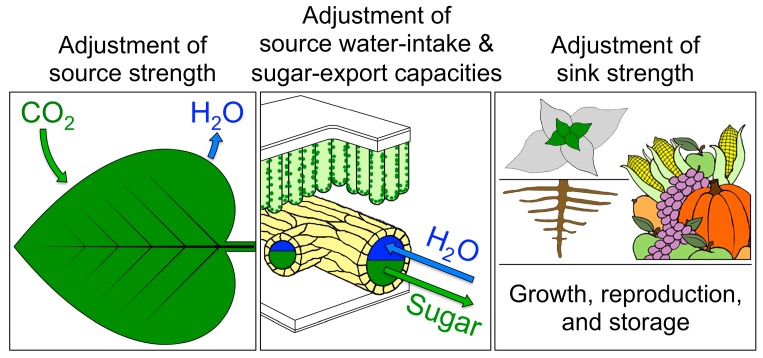
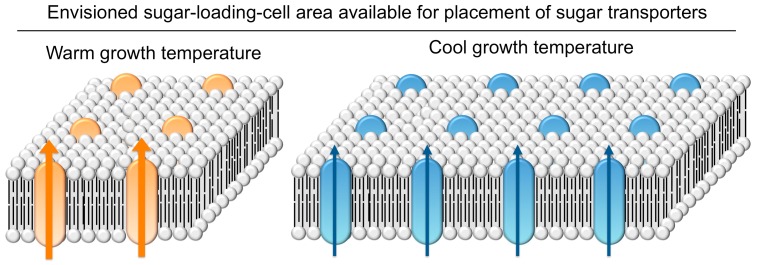
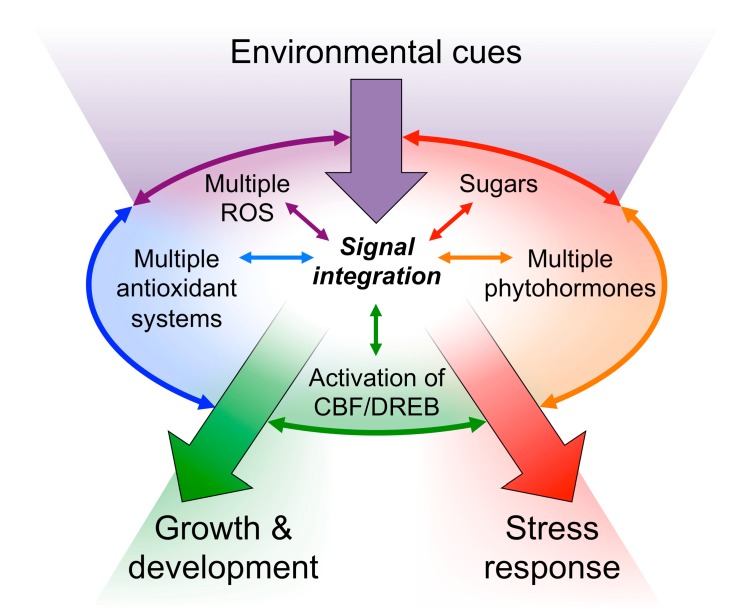
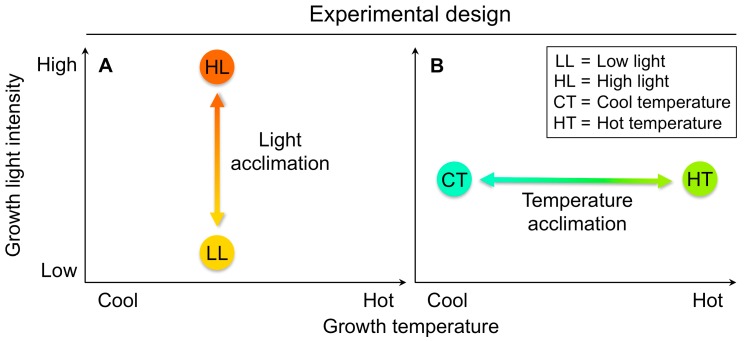
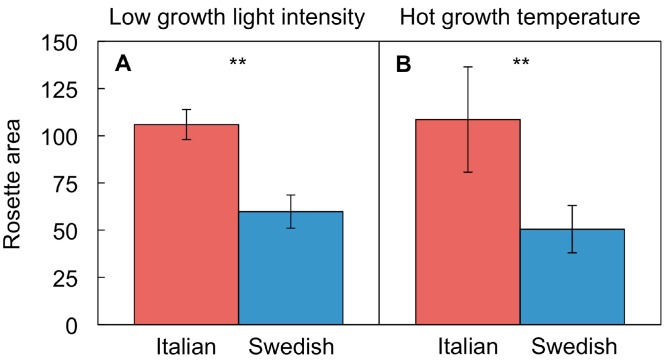
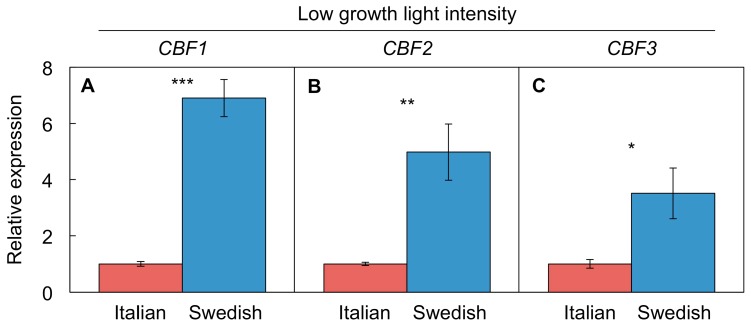
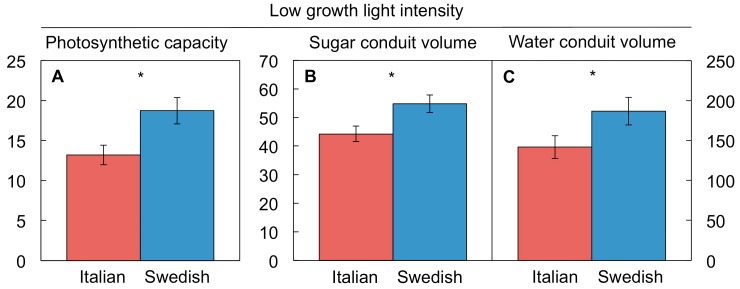
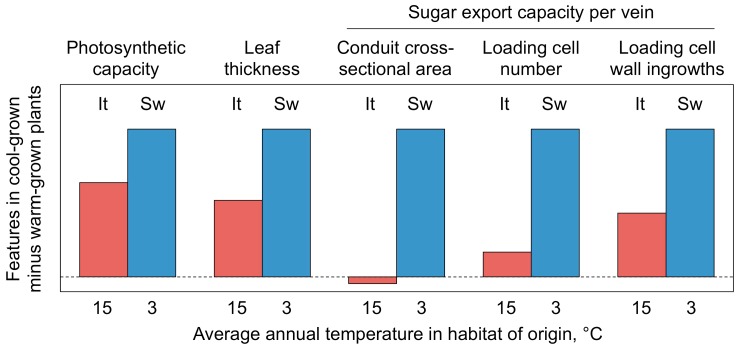
We review the role of a family of transcription factors and their regulons in maintaining high photosynthetic performance across a range of challenging environments with a focus on extreme temperatures and water availability. Specifically, these transcription factors include CBFs (C-repeat binding factors) and DREBs (dehydration-responsive element-binding), with CBF/DREB1 primarily orchestrating cold adaptation and other DREBs serving in heat, drought, and salinity adaptation. The central role of these modulators in plant performance under challenging environments is based on (i) interweaving of these regulators with other key signaling networks (plant hormones and redox signals) as well as (ii) their function in integrating responses across the whole plant, from light-harvesting and sugar-production in the leaf to foliar sugar export and water import and on to the plant's sugar-consuming sinks (growth, storage, and reproduction). The example of ecotypes from geographic origins with contrasting climates is used to describe the links between natural genetic variation in CBF transcription factors and the differential acclimation of plant anatomical and functional features needed to support superior photosynthetic performance in contrasting environments. Emphasis is placed on considering different temperature environments (hot versus cold) and light environments (limiting versus high light), on trade-offs between adaptations to contrasting environments, and on plant lines minimizing such trade-offs.
我们回顾了一类转录因子及其调控网络在多种挑战性环境中维持高光效的作用,重点关注极端温度和水分可用性。具体来说,这些转录因子包括 CBFs(C 重复结合因子)和 DREBs(干旱应答元件结合因子),CBF/DREB1 主要协调植物的抗寒适应,而其他 DREBs 则在耐热、耐旱和耐盐方面发挥作用。这些调节剂在植物应对挑战性环境中的核心作用基于以下几点:(i)这些调节剂与其他关键信号网络(植物激素和氧化还原信号)交织在一起,以及(ii)它们在整合整个植物的响应方面的功能,从叶片中的光捕获和糖产生到叶部糖输出以及水的导入,再到植物的糖消耗库(生长、储存和繁殖)。利用来自具有不同气候起源的地理生态型的例子,描述了 CBF 转录因子的自然遗传变异与植物解剖和功能特征的差异适应之间的联系,这些特征是在不同环境中支持优越光合作用所必需的。重点考虑了不同的温度环境(热与冷)和光照环境(限制与高光)、不同环境适应之间的权衡以及最小化这种权衡的植物系。