Department of Pharmacology, Yale School of Medicine, New Haven, CT 06520, USA.
Department of Pharmacology, Yale School of Medicine, New Haven, CT 06520, USA.
Trends Biochem Sci. 2018 May;43(5):380-394. doi: 10.1016/j.tibs.2018.02.009. Epub 2018 Mar 12.
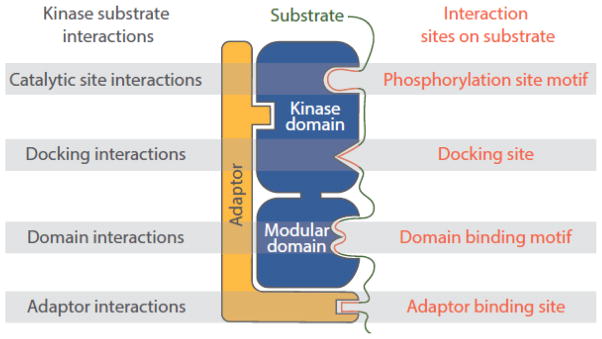
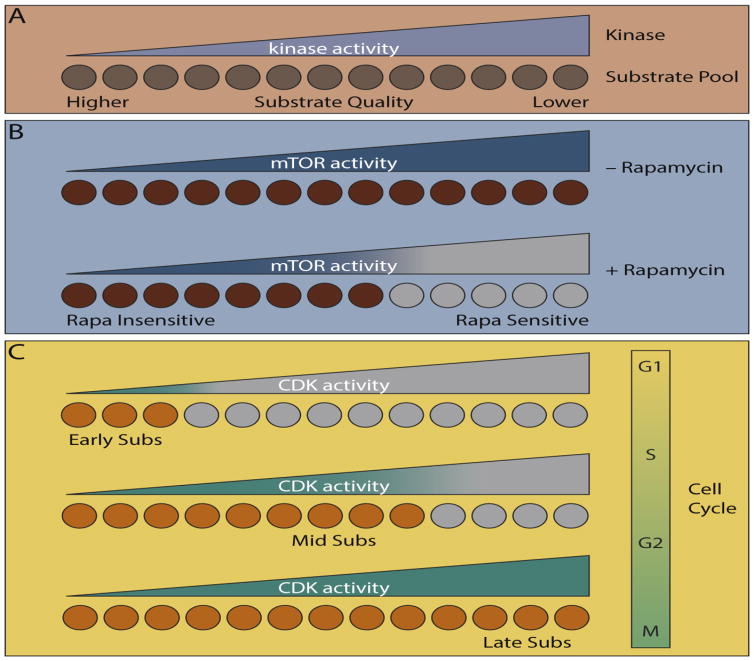
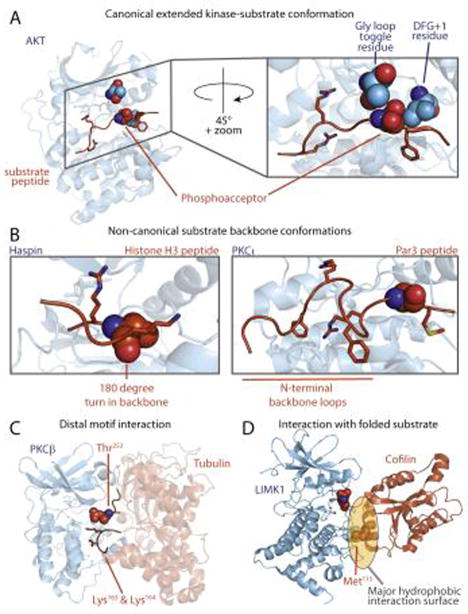
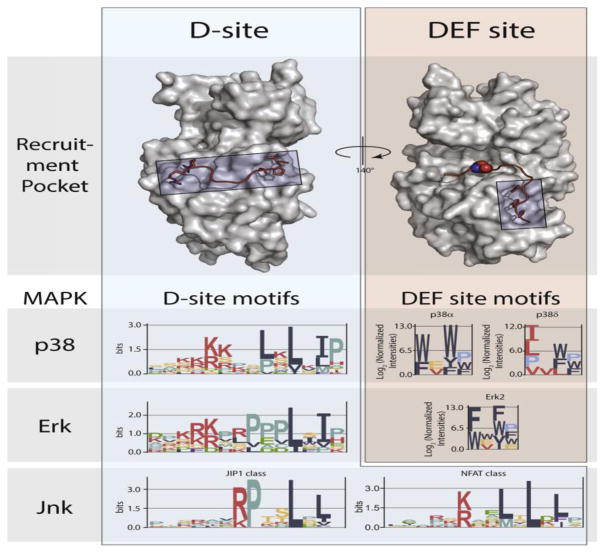
Protein phosphorylation is the most common reversible post-translational modification in eukaryotes. Humans have over 500 protein kinases, of which more than a dozen are established targets for anticancer drugs. All kinases share a structurally similar catalytic domain, yet each one is uniquely positioned within signaling networks controlling essentially all aspects of cell behavior. Kinases are distinguished from one another based on their modes of regulation and their substrate repertoires. Coupling specific inputs to the proper signaling outputs requires that kinases phosphorylate a limited number of sites to the exclusion of hundreds of thousands of off-target phosphorylation sites. Here, we review recent progress in understanding mechanisms of kinase substrate specificity and how they function to shape cellular signaling networks.
蛋白质磷酸化是真核生物中最常见的一种可逆转的翻译后修饰。人类有超过 500 种蛋白激酶,其中十几种是抗癌药物的既定靶点。所有的激酶都有一个结构相似的催化结构域,但每一个激酶都在控制细胞行为各个方面的信号网络中处于独特的位置。激酶之间的区别在于它们的调节模式和底物谱。将特定的输入与适当的信号输出相耦合,需要激酶将有限数量的位点磷酸化,而排除数十万的非靶标磷酸化位点。在这里,我们综述了理解激酶底物特异性机制的最新进展,以及它们如何作用于塑造细胞信号网络。