Zhu Jing, Xin Ying, Liu Xiaoliang, Wang Ying, Liu Ying
Department of Thoracic Oncology, Cancer Hospital of Jilin Province, Changchun, Jilin 130012, P.R. China.
Department of Blood Cancer, The First Affiliated Hospital of Jilin University, Changchun, Jilin 130021, P.R. China.
Exp Ther Med. 2018 Apr;15(4):3345-3351. doi: 10.3892/etm.2018.5856. Epub 2018 Feb 12.
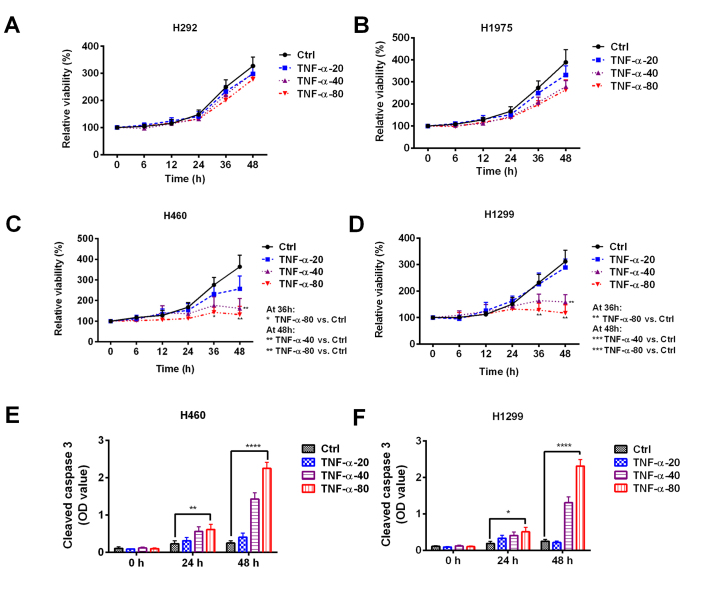
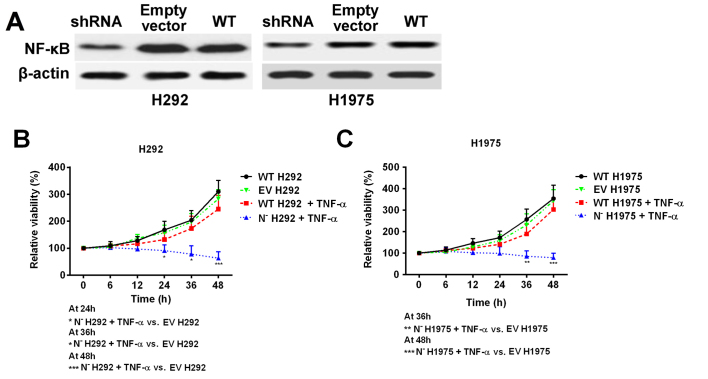
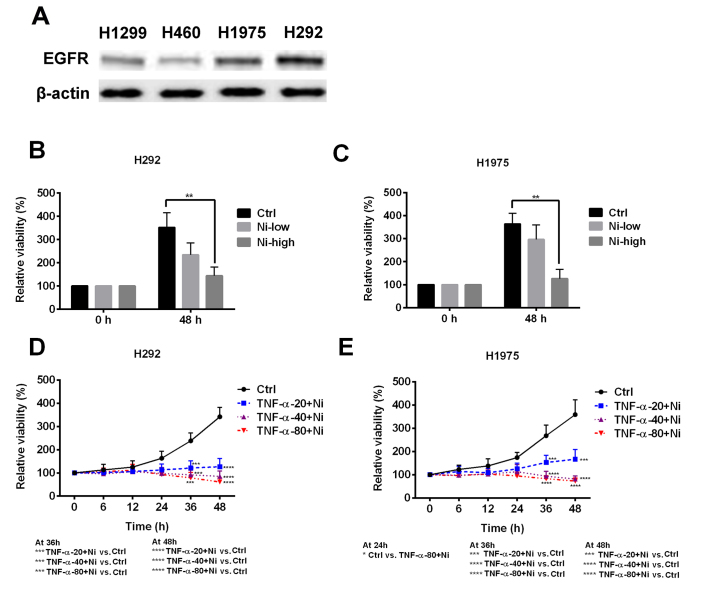
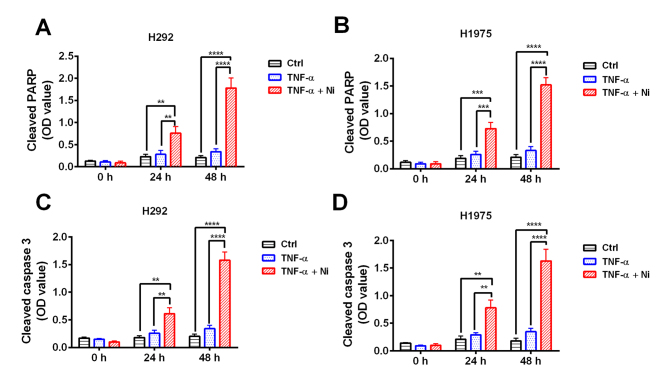
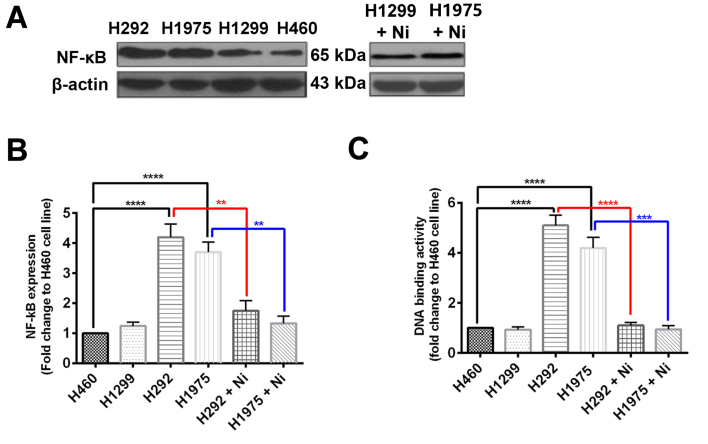
Non-small cell lung cancer (NSCLC) accounts for ~85% of lung cancer cases worldwide. Current guidelines recommend the use of epidermal growth factor receptor (EGFR) tyrosine kinase inhibitors for patients with NSCLC. The EGF/EGFR signaling pathway has been demonstrated to activate nuclear factor (NF)-κB, which may inhibit tumor necrosis factor (TNF)-α induced cell apoptosis. The aim of the present study was to investigate whether inhibiting the EGF/EGFR signaling pathway sensitizes NSCLC cell lines to TNF-α-induced apoptosis. The resistance of NSCLC cell lines to TNF-α was evaluated by cell viability assay. The effect of nimotuzumab (Ni) on NSCLC cell sensitivity to TNF-α, as well as the role of NF-κB in mediating resistance to TNF-α-induced apoptosis, was explored by western blot analysis, cell viability assay, apoptosis assay and an NF-κB DNA binding assay. It was demonstrated that EGFR protein expression was markedly higher in the H292 and H1975 cell lines compared with H460 and H1299 cell lines. H292 and H1975 also exhibited significantly increased TNF-α resistance compared with H460 and H1299 cells. Low dose Ni treatment slightly reduced the viability of H292 and H1975 cells; however, combined treatment with low dose Ni and TNF-α significantly inhibited H292 and H1299 cell viability compared with H460 and H1299 cells by inducing cell apoptosis. NF-κB protein expression and activity were also inhibited by the combination treatment. TNF-α treatment alone induced apoptosis in NF-κB deficient H292 and H1975 cells, similar to the effect of combination treatment in wild type H292 and H1975 cells. The results of the present study suggest that Ni sensitizes NSCLC cell lines to TNF-α-induced cell death by inhibiting NF-κB protein expression and activation, indicating a novel mechanism by which Ni suppresses the development of NSCLC.
非小细胞肺癌(NSCLC)占全球肺癌病例的约85%。当前指南推荐对非小细胞肺癌患者使用表皮生长因子受体(EGFR)酪氨酸激酶抑制剂。表皮生长因子/表皮生长因子受体(EGF/EGFR)信号通路已被证明可激活核因子(NF)-κB,这可能抑制肿瘤坏死因子(TNF)-α诱导的细胞凋亡。本研究的目的是调查抑制EGF/EGFR信号通路是否会使非小细胞肺癌细胞系对TNF-α诱导的凋亡敏感。通过细胞活力测定评估非小细胞肺癌细胞系对TNF-α的抗性。通过蛋白质免疫印迹分析、细胞活力测定、凋亡测定和NF-κB DNA结合测定,探讨了尼妥珠单抗(Ni)对非小细胞肺癌细胞对TNF-α敏感性的影响,以及NF-κB在介导对TNF-α诱导凋亡的抗性中的作用。结果表明,与H460和H1299细胞系相比,H292和H1975细胞系中的EGFR蛋白表达明显更高。与H460和H1299细胞相比,H292和H1975对TNF-α的抗性也显著增加。低剂量Ni处理略微降低了H292和H1975细胞的活力;然而,与H460和H1299细胞相比,低剂量Ni与TNF-α联合处理通过诱导细胞凋亡显著抑制了H292和H1299细胞的活力。联合处理也抑制了NF-κB蛋白表达和活性。单独的TNF-α处理在NF-κB缺陷的H292和H1975细胞中诱导凋亡,类似于联合处理在野生型H292和H1975细胞中的效果。本研究结果表明,Ni通过抑制NF-κB蛋白表达和激活使非小细胞肺癌细胞系对TNF-α诱导的细胞死亡敏感,这表明Ni抑制非小细胞肺癌发展的一种新机制。