Department of Endocrinology & Diabetes, University Hospitals Coventry and Warwickshire NHS Trust, Coventry, CV2 2DX, UK.
Centre for Applied Biological & Exercise Sciences, Coventry University, Coventry, CV1 5FB, UK.
Nutr Diabetes. 2018 Mar 7;8(1):11. doi: 10.1038/s41387-018-0020-6.
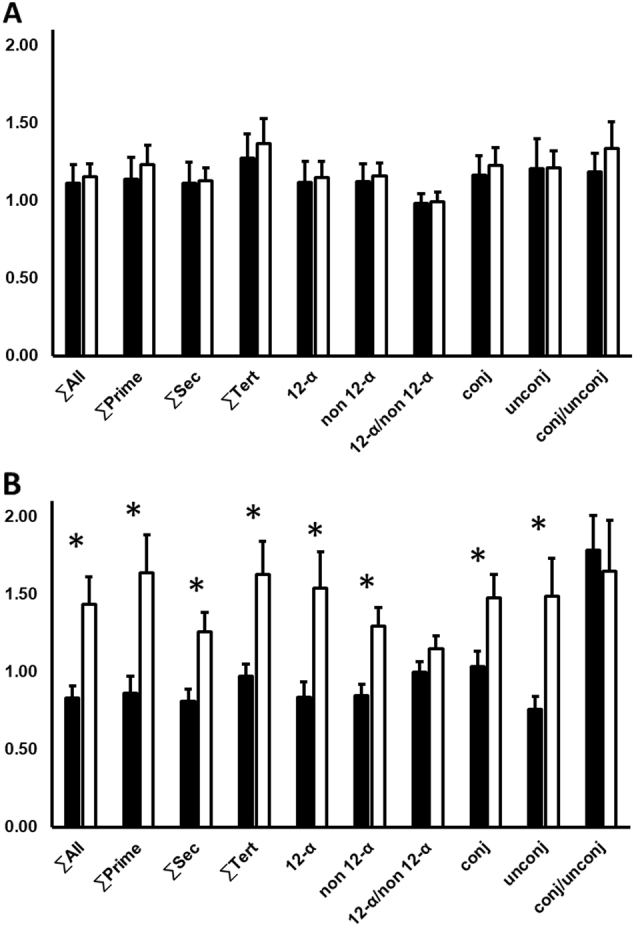
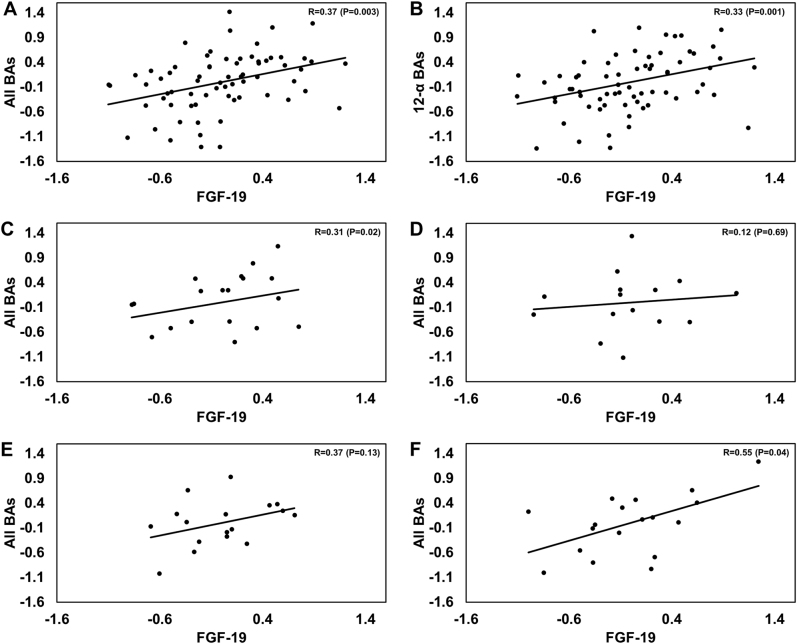
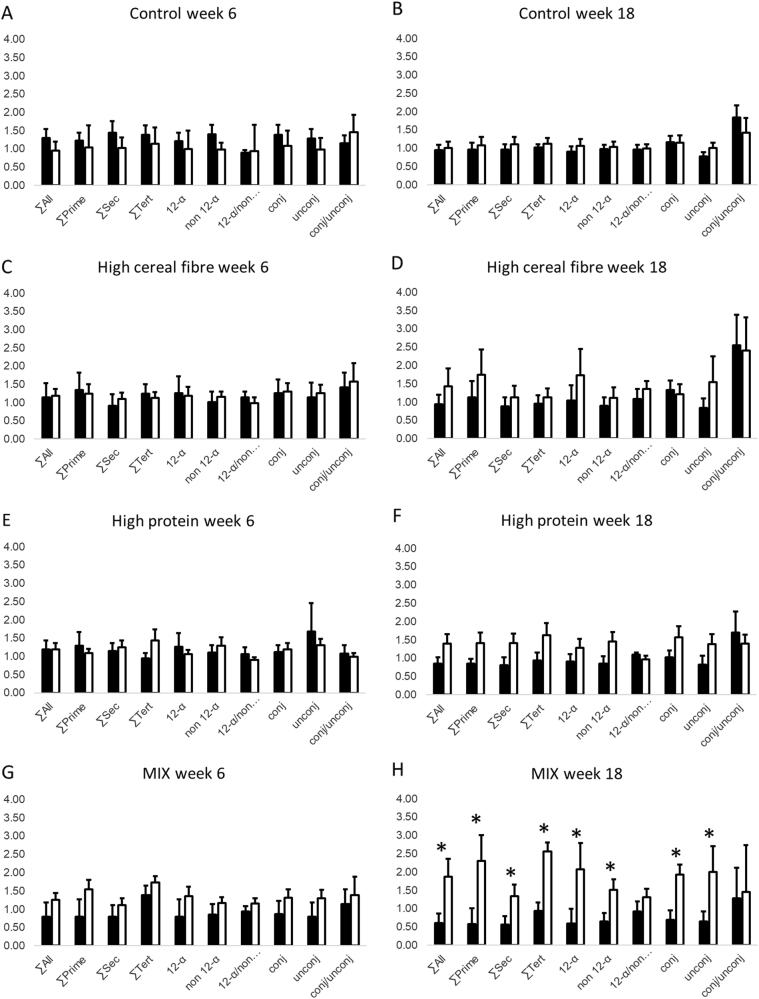
Bile acids (BA) are potent metabolic regulators influenced by diet. We studied effects of isoenergetic increases in the dietary protein and cereal-fiber contents on circulating BA and insulin resistance (IR) in overweight and obese adults. Randomized controlled nutritional intervention (18 weeks) in 72 non-diabetic participants (overweight/obese: 29/43) with at least one further metabolic risk factor. Participants were group-matched and allocated to four isoenergetic supplemented diets: control; high cereal fiber (HCF); high-protein (HP); or moderately increased cereal fiber and protein (MIX). Whole-body IR and insulin-mediated suppression of hepatic endogenous glucose production were measured using euglycaemic-hyperinsulinemic clamps with [6-6H] glucose infusion. Circulating BA, metabolic biomarkers, and IR were measured at 0, 6, and 18 weeks. Under isoenergetic conditions, HP-intake worsened IR in obese participants after 6 weeks (M-value: 3.77 ± 0.58 vs. 3.07 ± 0.44 mg/kg/min, p = 0.038), with partial improvement back to baseline levels after 18 weeks (3.25 ± 0.45 mg/kg/min, p = 0.089). No deleterious effects of HP-intake on IR were observed in overweight participants. HCF-diet improved IR in overweight participants after 6 weeks (M-value 4.25 ± 0.35 vs. 4.81 ± 0.31 mg/kg/min, p = 0.016), but did not influence IR in obese participants. Control and MIX diets did not influence IR. HP-induced, but not HCF-induced changes in IR strongly correlated with changes of BA profiles. MIX-diet significantly increased most BA at 18 weeks in obese, but not in overweight participants. BA remained unchanged in controls. Pooled BA concentrations correlated with fasting fibroblast growth factor-19 (FGF-19) plasma levels (r = 0.37; p = 0.003). Higher milk protein intake was the only significant dietary predictor for raised total and primary BA in regression analyses (total BA, p = 0.017; primary BA, p = 0.011). Combined increased intake of dietary protein and cereal fibers markedly increased serum BA concentrations in obese, but not in overweight participants. Possible mechanisms explaining this effect may include compensatory increases of the BA pool in the insulin resistant, obese state; or defective BA transport.
胆汁酸(BA)是受饮食影响的强效代谢调节剂。我们研究了增加饮食中蛋白质和谷物纤维含量对超重和肥胖成年人循环 BA 和胰岛素抵抗(IR)的影响。在 72 名非糖尿病参与者(超重/肥胖:29/43)中进行了随机对照营养干预(18 周),这些参与者至少有另外一个代谢危险因素。将参与者进行分组匹配,并分配到四种等能量补充饮食中:对照;高谷物纤维(HCF);高蛋白(HP);或适度增加谷物纤维和蛋白质(MIX)。使用[6-6H]葡萄糖输注的 Euglycemic-Hyperinsulinemic 钳夹测量全身 IR 和胰岛素介导的肝内源性葡萄糖产生抑制。在 0、6 和 18 周时测量循环 BA、代谢生物标志物和 IR。在等能量条件下,6 周后 HP 摄入使肥胖参与者的 IR 恶化(M 值:3.77±0.58 与 3.07±0.44mg/kg/min,p=0.038),18 周后部分恢复到基线水平(3.25±0.45mg/kg/min,p=0.089)。HP 摄入对超重参与者的 IR 没有有害影响。HCF 饮食在 6 周后改善了超重参与者的 IR(M 值为 4.25±0.35 与 4.81±0.31mg/kg/min,p=0.016),但对肥胖参与者的 IR 没有影响。对照和 MIX 饮食对 IR 没有影响。HP 诱导的,而不是 HCF 诱导的 IR 变化与 BA 谱的变化强烈相关。18 周时,MIX 饮食显著增加了肥胖参与者的大多数 BA,但在超重参与者中没有增加。对照饮食中 BA 保持不变。BA 浓度与空腹成纤维细胞生长因子 19(FGF-19)的血浆水平呈正相关(r=0.37,p=0.003)。回归分析中,较高的牛奶蛋白摄入量是升高总胆汁酸和初级胆汁酸的唯一显著饮食预测因素(总胆汁酸,p=0.017;初级胆汁酸,p=0.011)。饮食中蛋白质和谷物纤维的摄入量同时增加,显著增加了肥胖参与者而不是超重参与者的血清 BA 浓度。解释这种效应的可能机制包括在胰岛素抵抗的肥胖状态下胆汁酸池的代偿性增加;或 BA 转运的缺陷。