Department of Tropical Infectious Diseases, Second Military Medical University, Shanghai, China.
Horae Gene Therapy Center, University of Massachusetts Medical School, Worcester, Massachusetts, United States of America.
PLoS Pathog. 2018 Mar 19;14(3):e1006957. doi: 10.1371/journal.ppat.1006957. eCollection 2018 Mar.
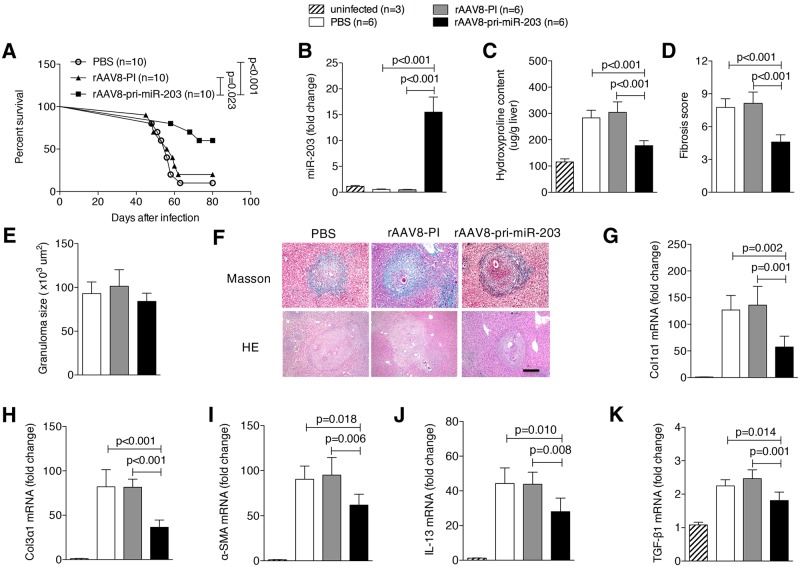
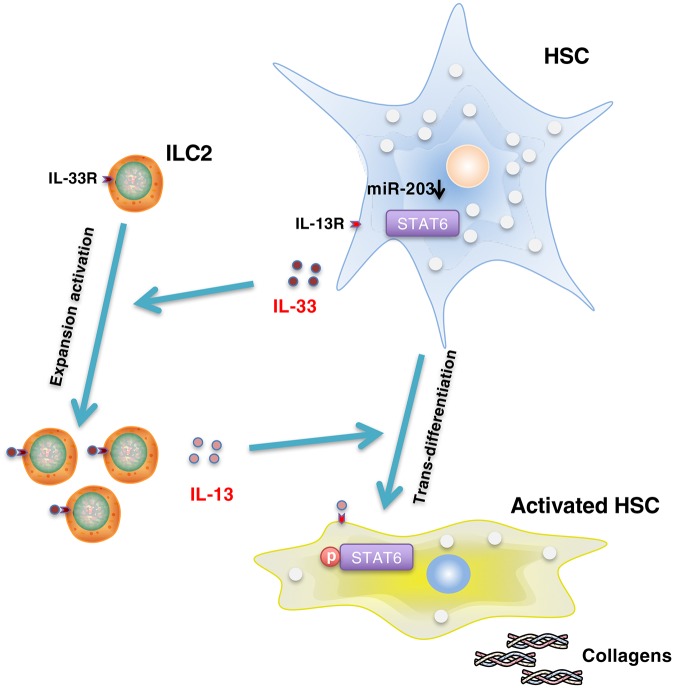
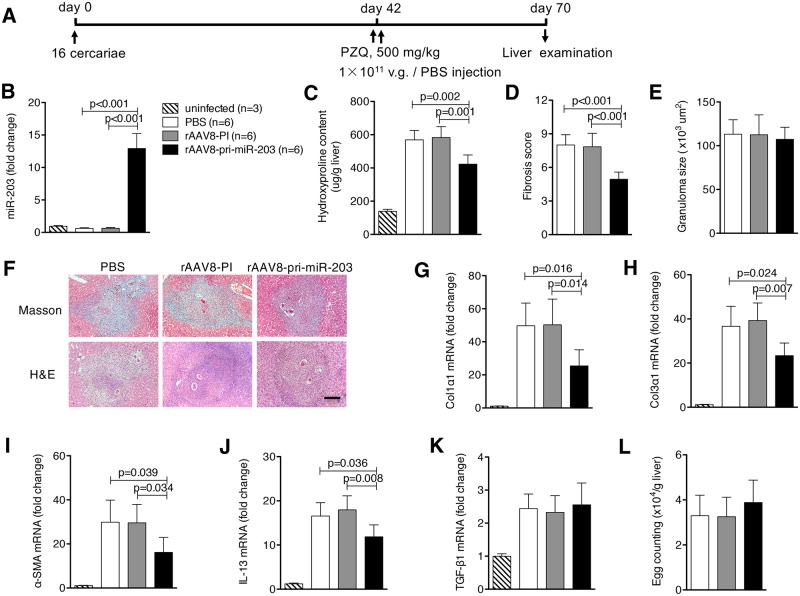
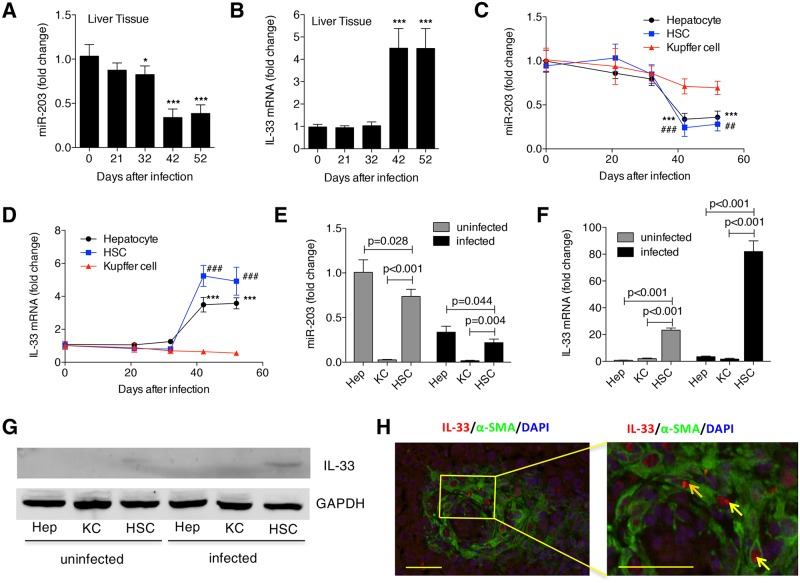
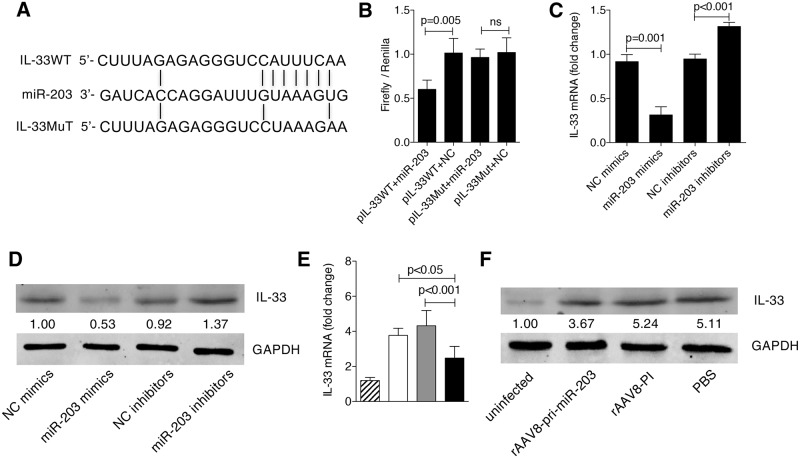
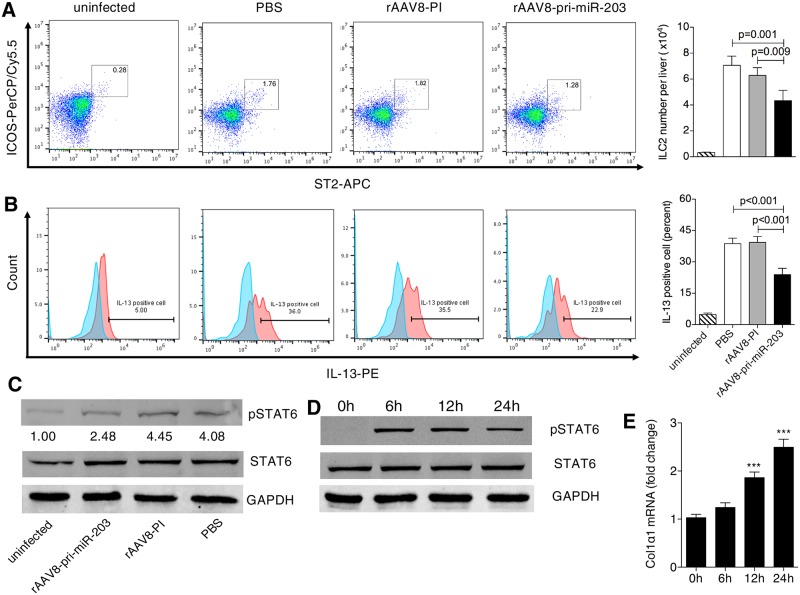
The type 2 immune response is the central mechanism of disease progression in schistosomiasis, but the signals that induce it after infection remain elusive. Aberrant microRNA (miRNA) expression is a hallmark of human diseases including schistosomiasis, and targeting the deregulated miRNA can mitigate disease outcomes. Here, we demonstrate that efficient and sustained elevation of miR-203-3p in liver tissues, using the highly hepatotropic recombinant adeno-associated virus serotype 8 (rAAV8), protects mice against lethal schistosome infection by alleviating hepatic fibrosis. We show that miR-203-3p targets interleukin-33 (IL-33), an inducer of type 2 immunity, in hepatic stellate cells to regulate the expansion and IL-13 production of hepatic group 2 innate lymphoid cells during infection. Our study highlights the potential of rAAV8-mediated miR-203-3p elevation as a therapeutic intervention for fibrotic diseases.
2 型免疫反应是血吸虫病疾病进展的核心机制,但感染后诱导它的信号仍然难以捉摸。异常的 microRNA(miRNA)表达是包括血吸虫病在内的人类疾病的标志,靶向失调的 miRNA 可以减轻疾病的结果。在这里,我们证明了使用高度嗜肝的重组腺相关病毒血清型 8(rAAV8),在肝组织中有效且持续地升高 miR-203-3p 可以通过减轻肝纤维化来保护小鼠免受致命的血吸虫感染。我们表明 miR-203-3p 靶向肝星状细胞中的白细胞介素 33(IL-33),IL-33 是 2 型免疫的诱导剂,以调节感染期间肝 2 型固有淋巴细胞的扩增和 IL-13 产生。我们的研究强调了 rAAV8 介导的 miR-203-3p 升高作为纤维化疾病治疗干预的潜力。