Movement System Injury and Repair Research Center, Xiangya Hospital, Central South University, Changsha, Hunan, 410008, China.
Department of Spine Surgery, Xiangya Hospital, Central South University, Changsha, Hunan, 410008, China.
Theranostics. 2018 Feb 7;8(6):1607-1623. doi: 10.7150/thno.22958. eCollection 2018.
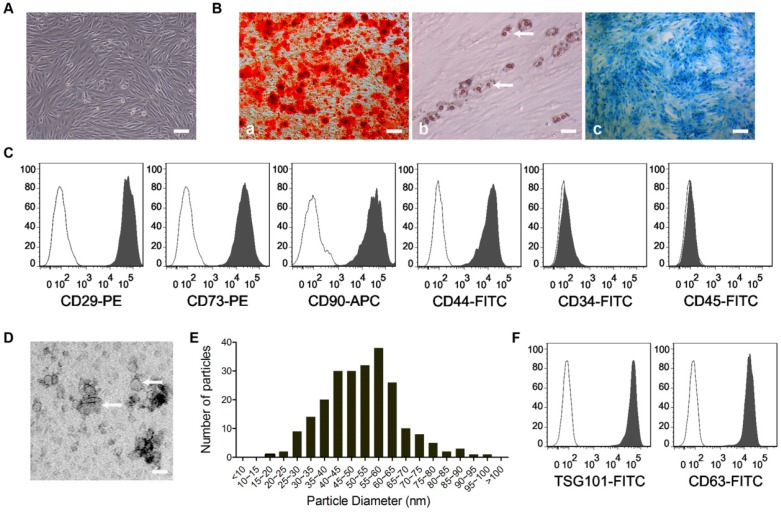
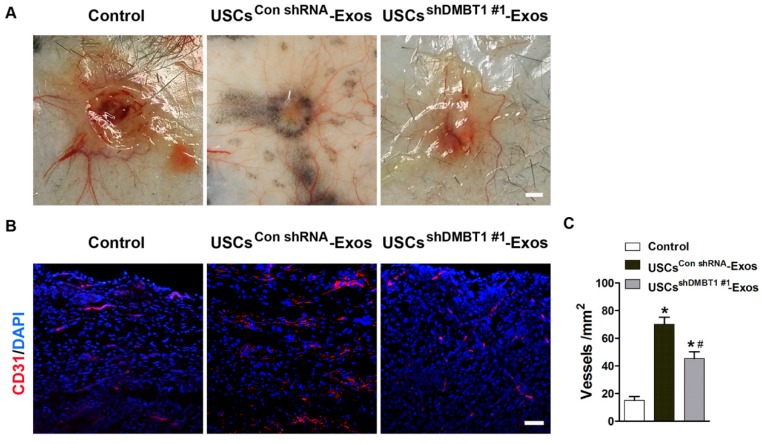
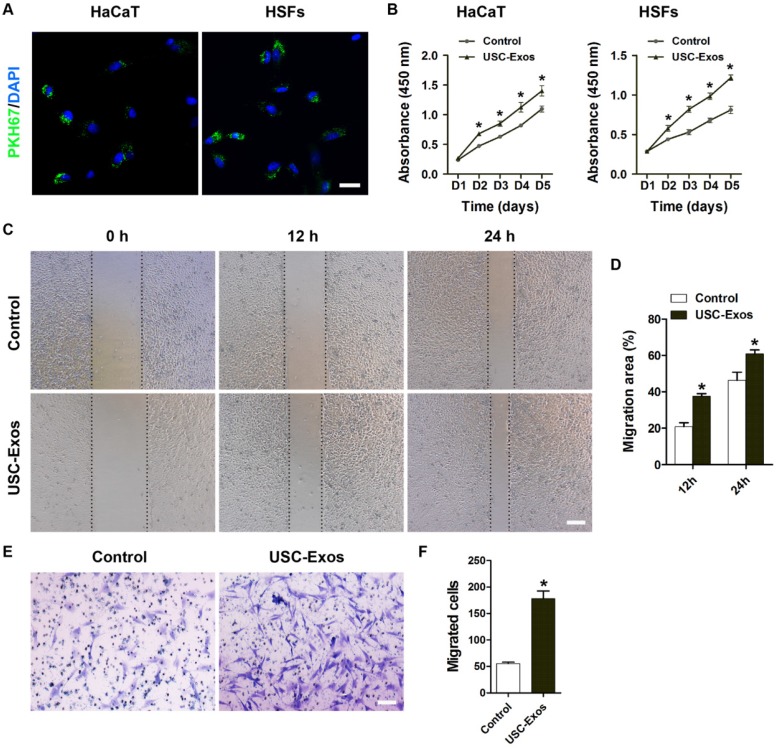
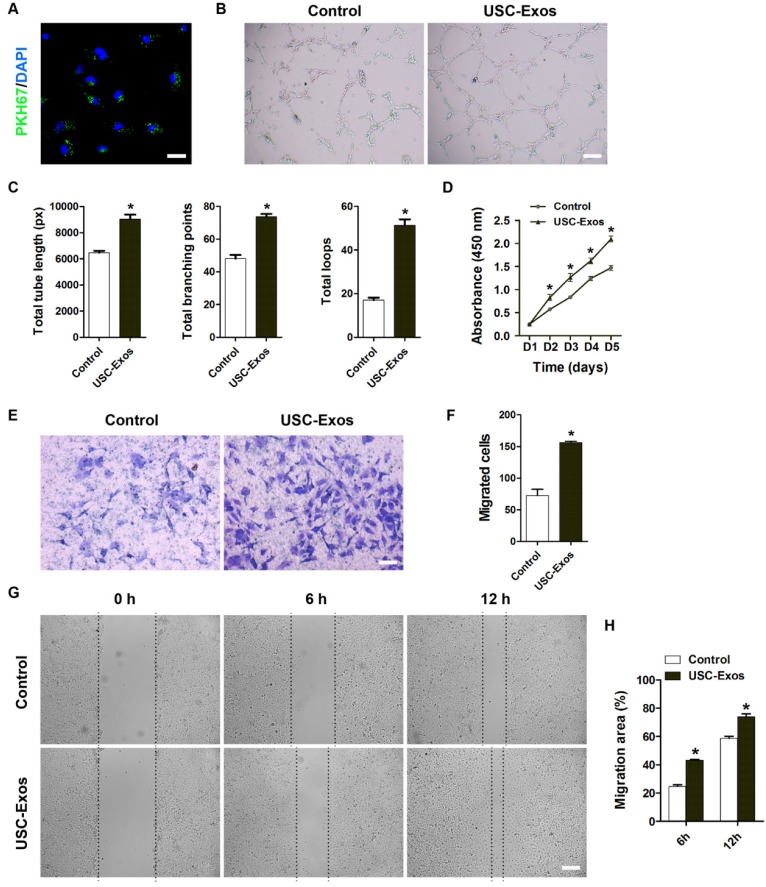
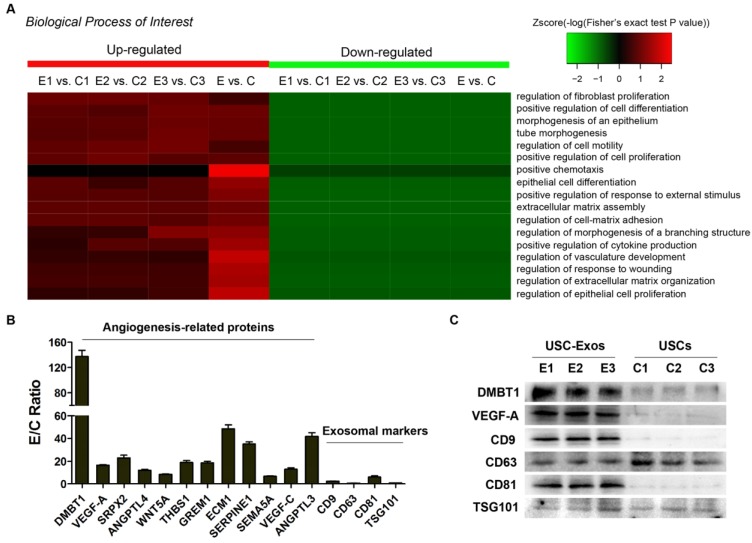
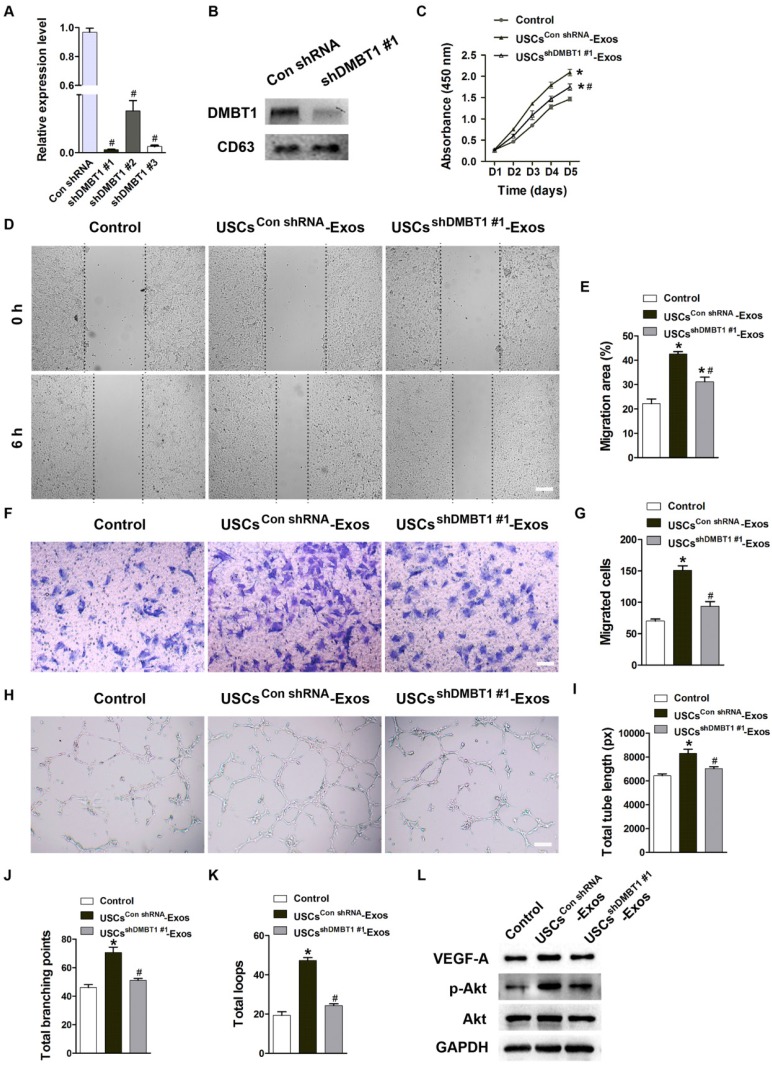
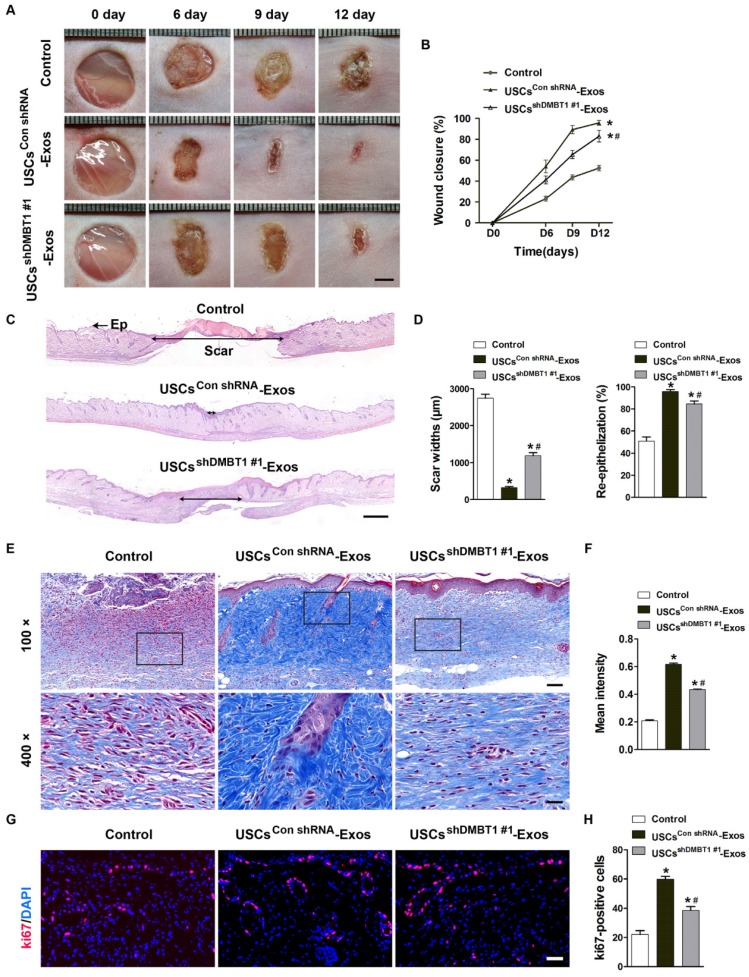
Chronic non-healing wounds represent one of the most common complications of diabetes and need advanced treatment strategies. Exosomes are key mediators of cell paracrine action and can be directly utilized as therapeutic agents for tissue repair and regeneration. Here, we explored the effects of exosomes from human urine-derived stem cells (USC-Exos) on diabetic wound healing and the underlying mechanism. USCs were characterized by flow cytometry and multipotent differentiation potential analyses. USC-Exos were isolated from the conditioned media of USCs and identified by transmission electron microscopy and flow cytometry. A series of functional assays in vitro were performed to assess the effects of USC-Exos on the activities of wound healing-related cells. Protein profiles in USC-Exos and USCs were examined to screen the candidate molecules that mediate USC-Exos function. The effects of USC-Exos on wound healing in streptozotocin-induced diabetic mice were tested by measuring wound closure rates, histological and immunofluorescence analyses. Meanwhile, the role of the candidate protein in USC-Exos-induced regulation of angiogenic activities of endothelial cells and diabetic wound healing was assessed. USCs were positive for CD29, CD44, CD73 and CD90, but negative for CD34 and CD45. USCs were able to differentiate into osteoblasts, adipocytes and chondrocytes. USC-Exos exhibited a cup- or sphere-shaped morphology with a mean diameter of 51.57 ± 2.93 nm and positive for CD63 and TSG101. USC-Exos could augment the functional properties of wound healing-related cells including the angiogenic activities of endothelial cells. USC-Exos were enriched in the proteins that are involved in regulation of wound healing-related biological processes. Particularly, a pro-angiogenic protein called deleted in malignant brain tumors 1 (DMBT1) was highly expressed in USC-Exos. Further functional assays showed that DMBT1 protein was required for USC-Exos-induced promotion of angiogenic responses of cultured endothelial cells, as well as angiogenesis and wound healing in diabetic mice. Our findings suggest that USC-Exos may represent a promising strategy for diabetic soft tissue wound healing by promoting angiogenesis via transferring DMBT1 protein.
慢性难愈性创面是糖尿病最常见的并发症之一,需要采用先进的治疗策略。外泌体是细胞旁分泌作用的关键介质,可直接用作组织修复和再生的治疗剂。在这里,我们探讨了人尿液来源的干细胞(USC-Exos)来源的外泌体对糖尿病创面愈合的影响及其潜在机制。通过流式细胞术和多能分化潜能分析对 USCs 进行了特征描述。从 USCs 的条件培养基中分离出 USC-Exos,并通过透射电子显微镜和流式细胞术进行鉴定。体外进行了一系列功能测定,以评估 USC-Exos 对与伤口愈合相关的细胞活性的影响。检测 USC-Exos 和 USCs 中的蛋白图谱,以筛选介导 USC-Exos 功能的候选分子。通过测量伤口闭合率、组织学和免疫荧光分析,检测 USC-Exos 在链脲佐菌素诱导的糖尿病小鼠伤口愈合中的作用。同时,评估候选蛋白在 USC-Exos 诱导的内皮细胞血管生成活性和糖尿病伤口愈合中的作用。USCs 对 CD29、CD44、CD73 和 CD90 呈阳性,但对 CD34 和 CD45 呈阴性。USCs 能够分化为成骨细胞、脂肪细胞和成软骨细胞。USC-Exos 呈杯状或球状形态,平均直径为 51.57±2.93nm,对 CD63 和 TSG101 呈阳性。USC-Exos 可增强与伤口愈合相关的细胞的功能特性,包括内皮细胞的血管生成活性。USC-Exos 富含参与调节伤口愈合相关生物过程的蛋白质。特别是,一种称为恶性脑肿瘤缺失 1(DMBT1)的促血管生成蛋白在 USC-Exos 中高度表达。进一步的功能测定表明,DMBT1 蛋白是 USC-Exos 诱导培养的内皮细胞血管生成反应以及糖尿病小鼠的血管生成和伤口愈合所必需的。我们的研究结果表明,通过转移 DMBT1 蛋白促进血管生成,USC-Exos 可能成为治疗糖尿病软组织伤口愈合的一种有前途的策略。