Hunan Provincial Key Laboratory of Microbial Molecular Biology, State Key Laboratory of Developmental Biology of Freshwater Fish, College of Life Science, Hunan Normal University, Changsha 410081, P.R. China.
Department of Medical Imaging, Jinling Hospital, School of Medicine, Nanjing University, Nanjing 210002 Jiangsu, P.R. China.
Theranostics. 2018 Feb 12;8(6):1690-1705. doi: 10.7150/thno.21575. eCollection 2018.
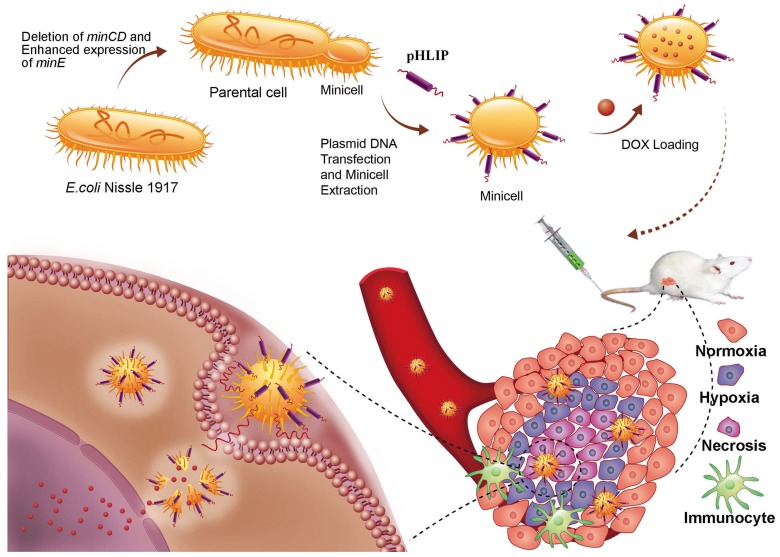
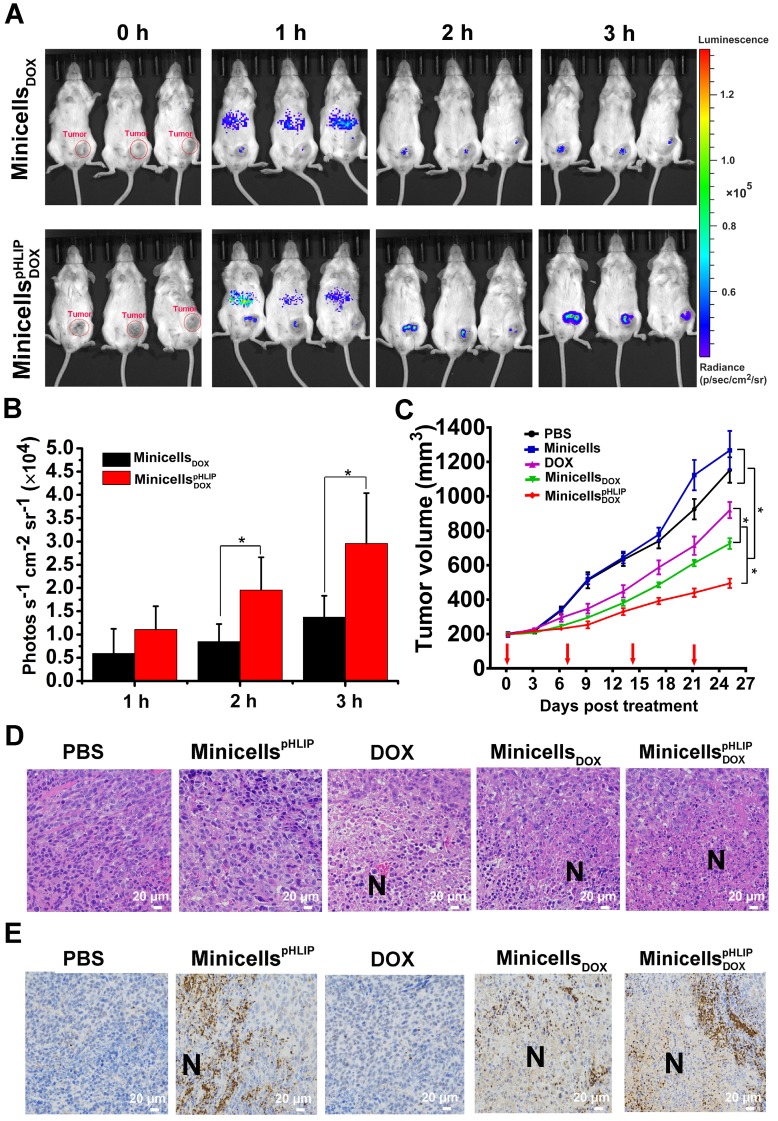
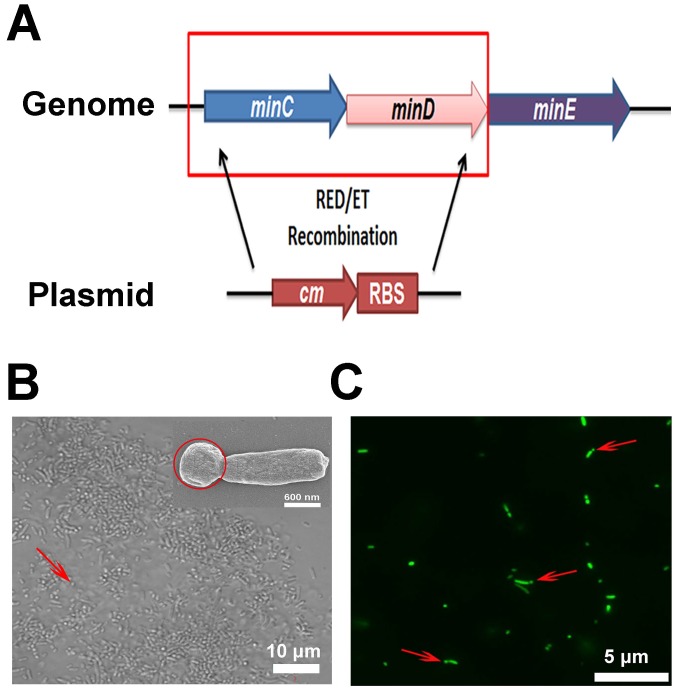
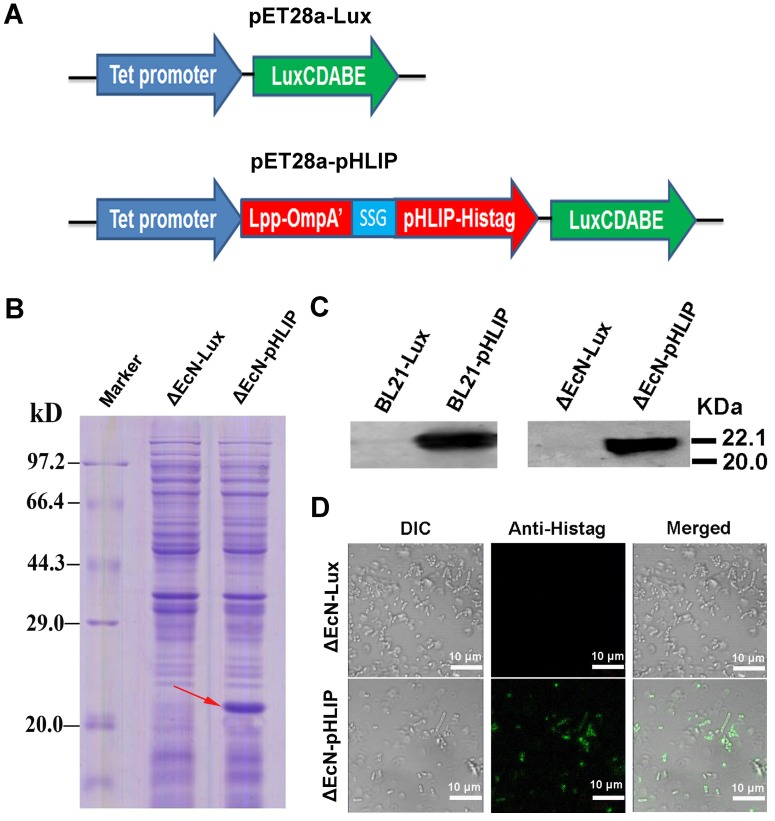
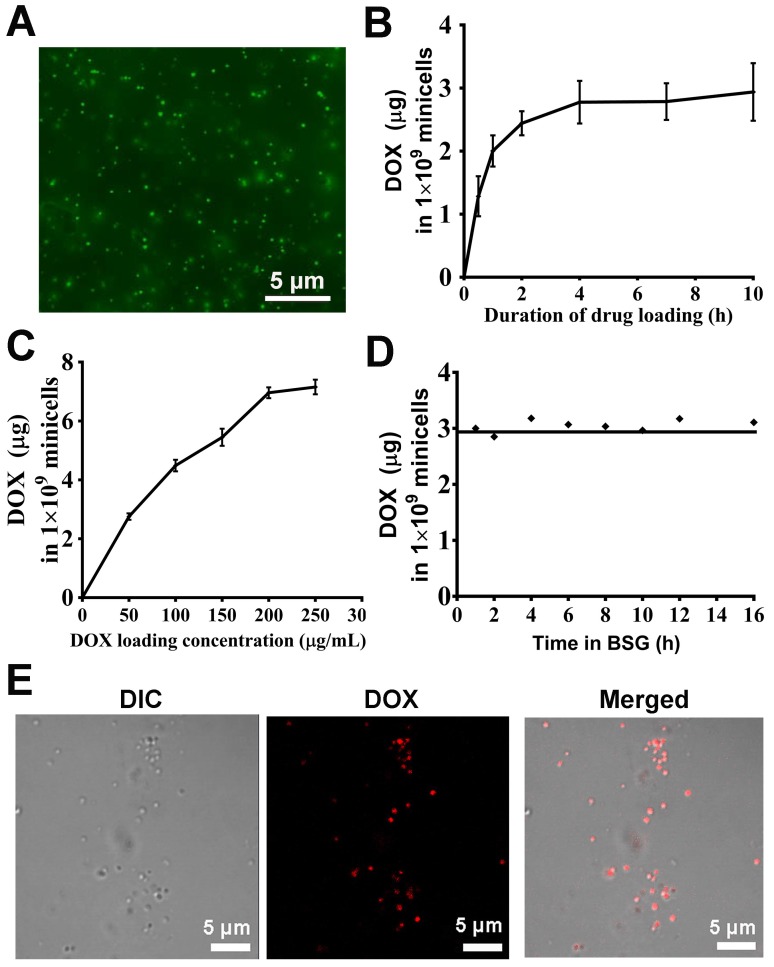
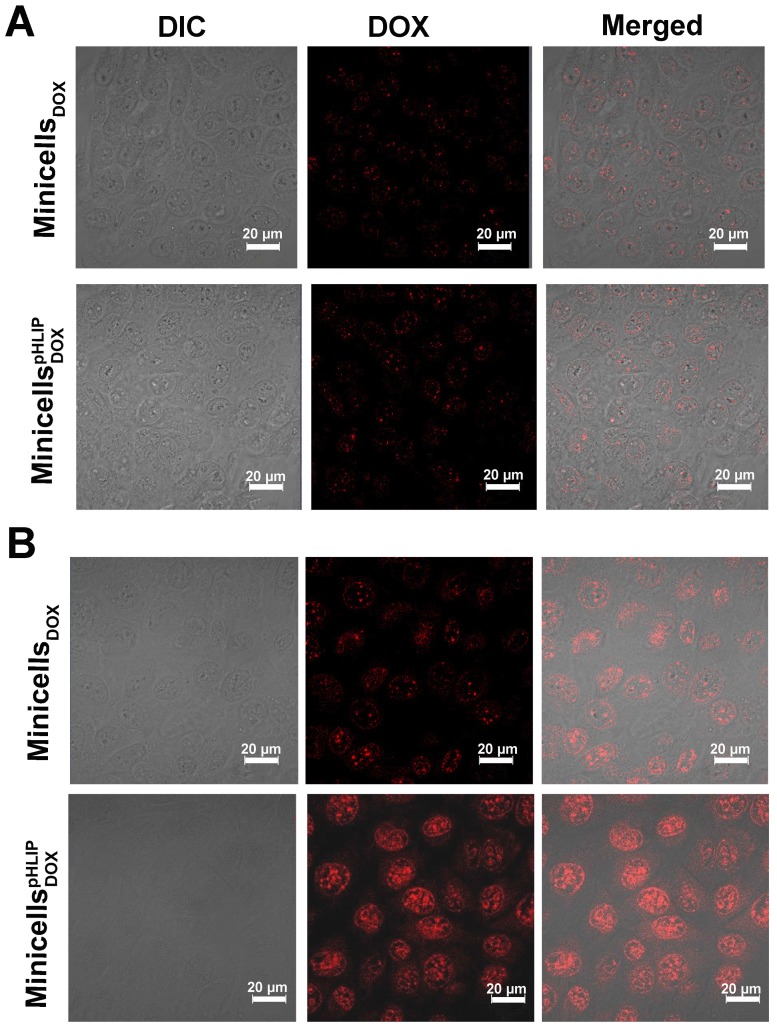
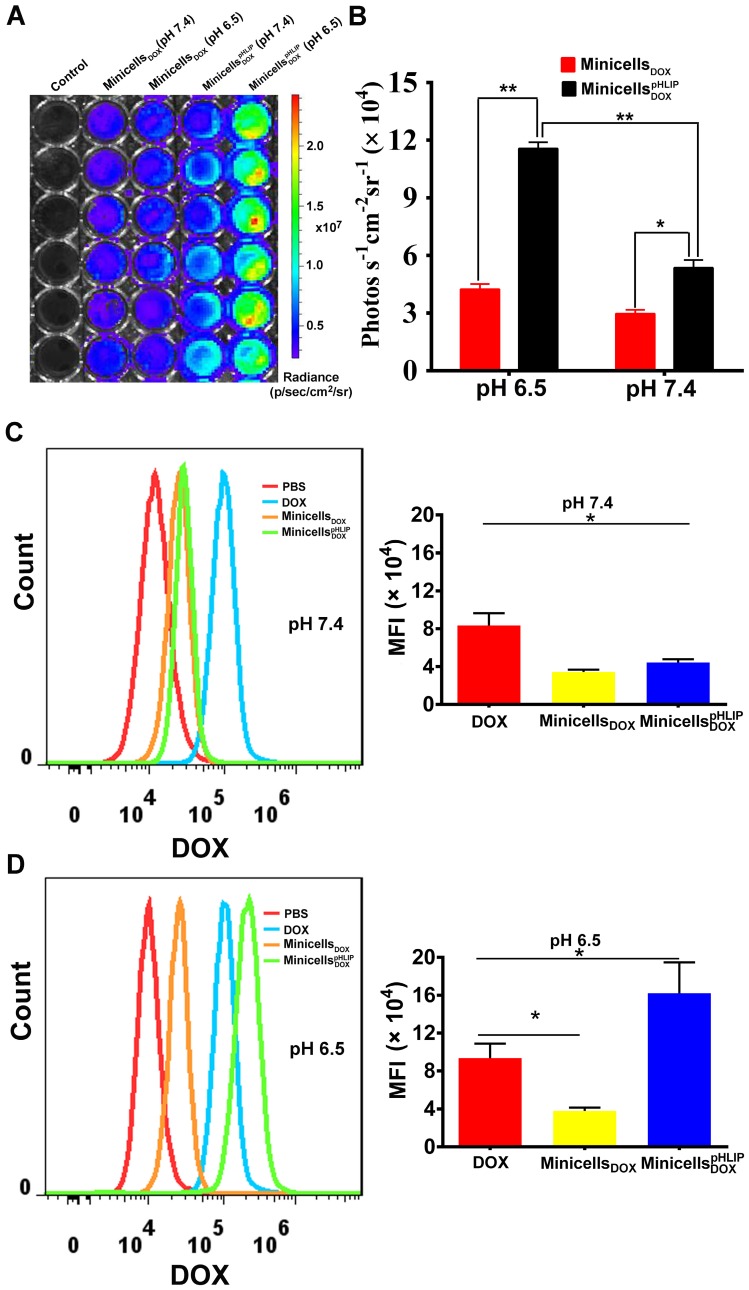
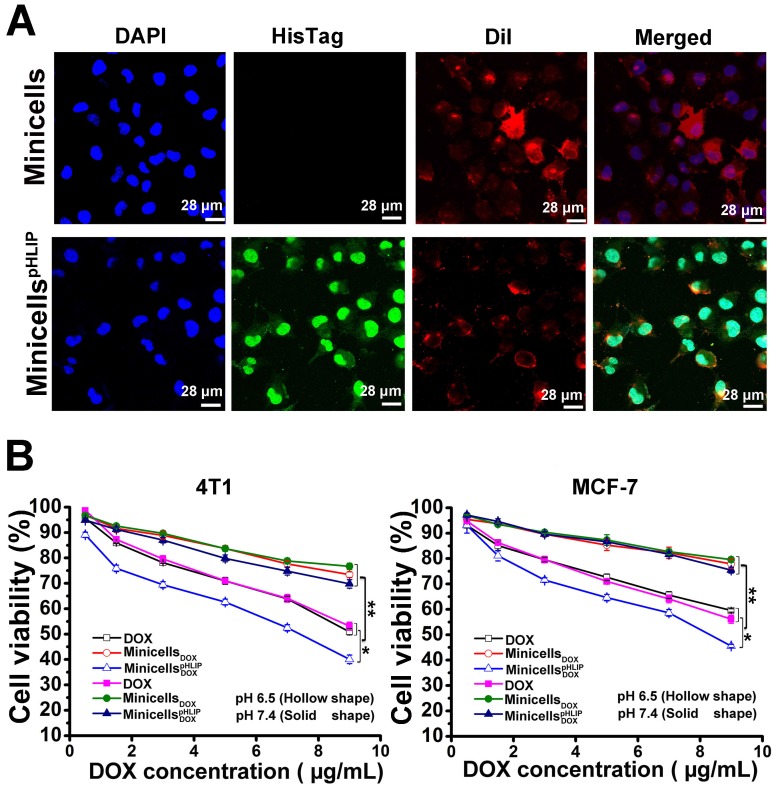
Systemic administration of free chemotherapeutic drugs leads to severe toxic effects, and physiological characteristics of solid tumors restrain the drugs from reaching the hypoxic regions. Nissle 1917 (EcN) has been known to penetrate the barrier and proliferate in the interface between the viable and necrotic regions of tumors. This study aimed to fabricate a nanoscale minicell via genetic engineering of EcN for targeted delivery of chemotherapeutic drugs to the hypoxic regions of tumors for cancer therapy. A large number of minicells were produced by knocking out the gene and enhancing the expression in EcN. Then, a pH (low) insertion peptide (pHLIP) was displayed on the membrane surface through protein display technology to endow the cells with the ability to target the acidic microenvironments of tumors. The acidic-microenvironment targeting ability and therapeutic effect of the engineered minicells with chemotherapeutic drugs was thoroughly evaluated by using breast cancer cells and an orthotopic model of breast tumor. The EcN-derived minicells displaying pHLIP could be directly extracted from the fermentation broth and used for delivering chemotherapeutic drugs without any further modification. Targeting of doxorubicin (DOX)-loaded minicells to cancer cells via pHLIP resulted in rapid internalization and drug release in acidic media. Importantly, the pHLIP-mosaic minicells successfully invaded the necrotic and hypoxic regions of orthotopic breast cancers where free chemotherapeutic drugs could never get to because of vascular insufficiency and high interstitial fluid pressure. This invasion resulted in significant regression of an orthotopic breast tumor in a mouse model, while no seriously pathogenic effects were observed during the animal experiments. This study provides a novel strategy for the fabrication of tumor-targeting carriers via genetic engineering based on biomaterials with the ability to penetrate hypoxic regions of tumors, high biocompatibility and low toxicity.
全身给予游离化疗药物会导致严重的毒副作用,而实体瘤的生理特性会限制药物到达缺氧区域。已知尼森 1917(EcN)能够穿透屏障,并在肿瘤的存活区和坏死区之间的界面处增殖。本研究旨在通过基因工程构建 EcN 的纳米级微细胞,将化疗药物靶向递送至肿瘤缺氧区域,用于癌症治疗。通过敲除 基因并增强 EcN 中的 表达,大量生产微细胞。然后,通过蛋白质展示技术在膜表面展示 pH(低)插入肽(pHLIP),赋予细胞靶向肿瘤酸性微环境的能力。通过乳腺癌细胞和原位乳腺癌模型,彻底评估了载有化疗药物的工程化微细胞的酸性微环境靶向能力和治疗效果。具有 pH 低插入肽(pHLIP)的 EcN 衍生微细胞可以直接从发酵液中提取出来,并用于递送化疗药物,无需进一步修饰。通过 pHLIP 使载有阿霉素(DOX)的微细胞靶向癌细胞,导致在酸性介质中快速内化和药物释放。重要的是,pHLIP 镶嵌微细胞成功侵入原位乳腺癌的坏死和缺氧区域,游离化疗药物由于血管不足和高间质液压力而无法到达这些区域。这一入侵导致了小鼠模型中原位乳腺癌的显著消退,而在动物实验中没有观察到严重的致病作用。本研究为基于能够穿透肿瘤缺氧区域、具有高生物相容性和低毒性的生物材料的肿瘤靶向载体的基因工程设计提供了一种新策略。