Department of Nuclear Medicine, Seoul National University Hospital, Seoul, Republic of Korea.
Cheonan Public Health Center, Chungnam, Republic of Korea.
Theranostics. 2018 Feb 15;8(7):1956-1965. doi: 10.7150/thno.23767. eCollection 2018.
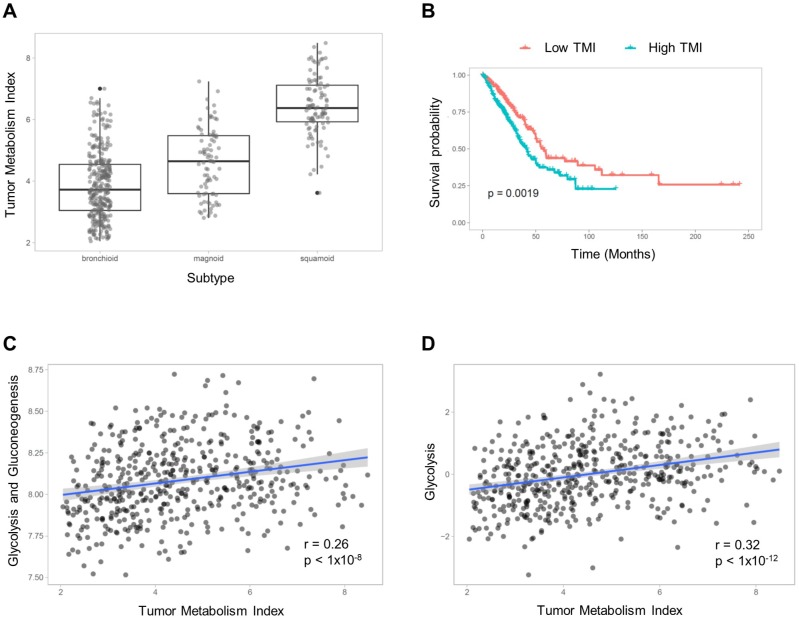
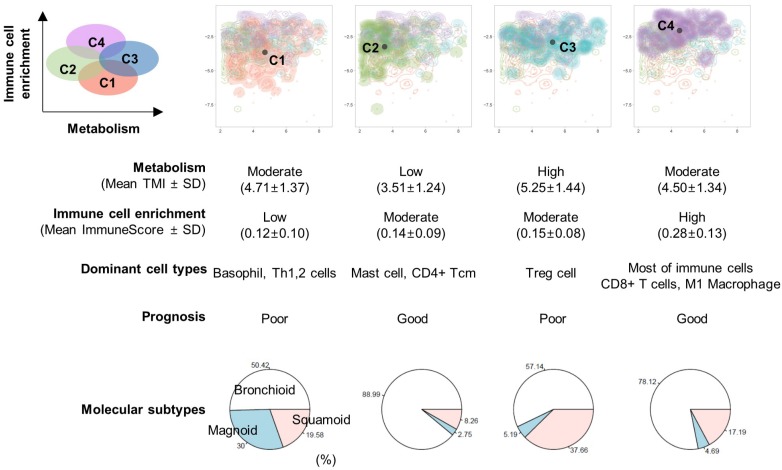
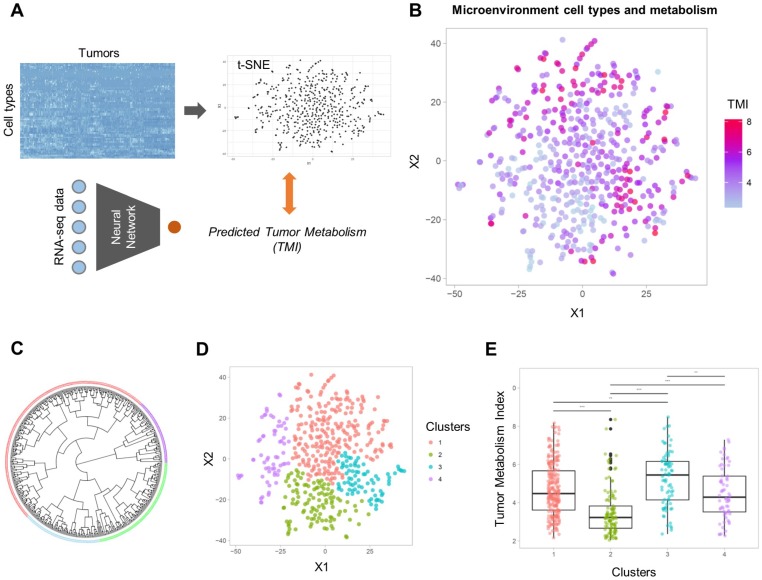
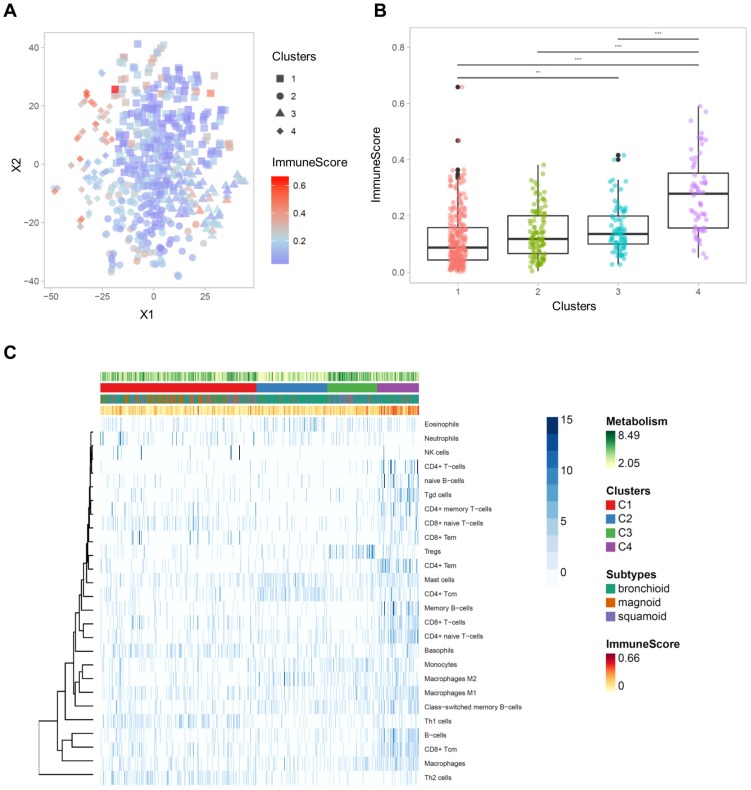
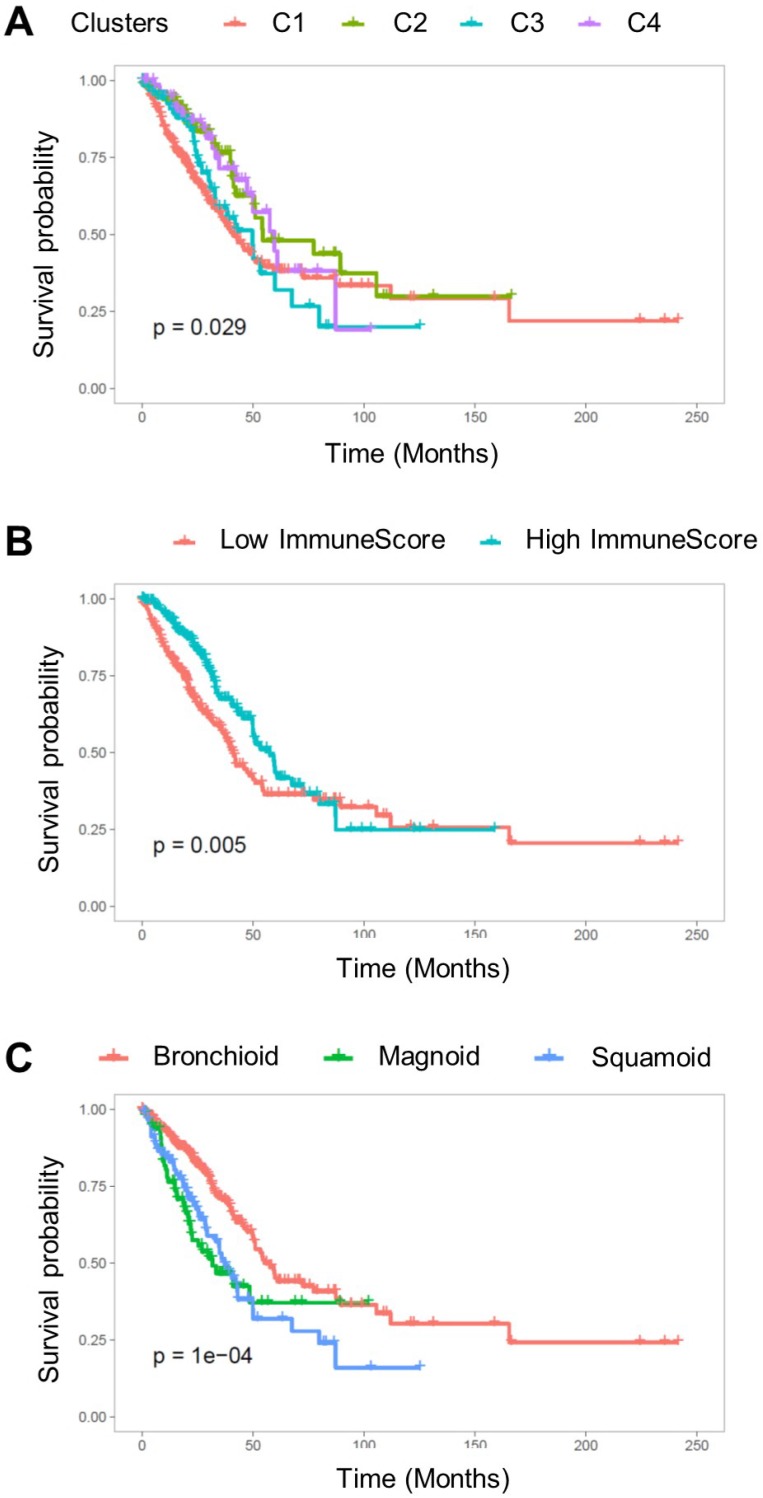
Although metabolic modulation in the tumor microenvironment (TME) is one of the key mechanisms of cancer immune escape, there is a lack of understanding of the comprehensive immune landscape of the TME and its association with tumor metabolism based on clinical evidence. We aimed to investigate the relationship between the immune landscape in the TME and tumor glucose metabolism in lung adenocarcinoma. Using RNA sequencing and image data, we developed a transcriptome-based tumor metabolism estimation model. The comprehensive TME cell types enrichment scores and overall immune cell enrichment (ImmuneScore) were estimated. Subjects were clustered by cellular heterogeneity in the TME and the clusters were characterized by tumor glucose metabolism and immune cell composition. Moreover, the prognostic value of ImmuneScore, tumor metabolism and the cell type-based clusters was also evaluated. Four clusters were identified based on the cellular heterogeneity in the TME. They showed distinct immune cell composition, different tumor metabolism, and close relationship with overall survival. A cluster with high regulatory T cells showed relative hypermetabolism and poor prognosis. Another cluster with high mast cells and CD4+ central memory T cells showed relative hypometabolism and favorable prognosis. A cluster with high ImmuneScore showed favorable prognosis. Multivariate Cox analysis demonstrated that ImmuneScore was a predictive prognostic factor independent of other clinical features. Our results showed the association between predicted tumor metabolism and immune cell composition in the TME. Our studies also suggest that tumor glucose metabolism and immune cell infiltration in the TME can be clinically applicable for developing a prognostic stratification model.
尽管肿瘤微环境(TME)中的代谢调节是癌症免疫逃逸的关键机制之一,但基于临床证据,人们对 TME 的全面免疫景观及其与肿瘤代谢的关系仍缺乏了解。我们旨在研究肺腺癌 TME 中的免疫景观与肿瘤葡萄糖代谢之间的关系。
我们使用 RNA 测序和图像数据开发了一种基于转录组的肿瘤代谢估计模型。估计了全面的 TME 细胞类型富集评分和整体免疫细胞富集(ImmuneScore)。根据 TME 中的细胞异质性对受试者进行聚类,并通过肿瘤葡萄糖代谢和免疫细胞组成对聚类进行特征描述。此外,还评估了 ImmuneScore、肿瘤代谢和基于细胞类型的聚类的预后价值。
根据 TME 中的细胞异质性,我们确定了四个聚类。它们显示出不同的免疫细胞组成、不同的肿瘤代谢,并且与总生存期密切相关。具有高调节性 T 细胞的聚类表现出相对的代谢亢进和不良预后。另一个聚类具有高肥大细胞和 CD4+中央记忆 T 细胞,表现出相对的代谢低下和良好的预后。具有高 ImmuneScore 的聚类表现出良好的预后。多变量 Cox 分析表明,ImmuneScore 是独立于其他临床特征的预测预后因素。
我们的结果显示了预测肿瘤代谢与 TME 中免疫细胞组成之间的关联。我们的研究还表明,肿瘤葡萄糖代谢和 TME 中的免疫细胞浸润可以为开发预后分层模型提供临床应用。