Department of Radiology, Stanford University School of Medicine, Stanford, California.
Division of Thoracic Surgery, Department of Cardiothoracic Surgery, Stanford University School of Medicine, Stanford, California.
Cancer Res. 2018 Jul 1;78(13):3445-3457. doi: 10.1158/0008-5472.CAN-17-2928. Epub 2018 May 14.
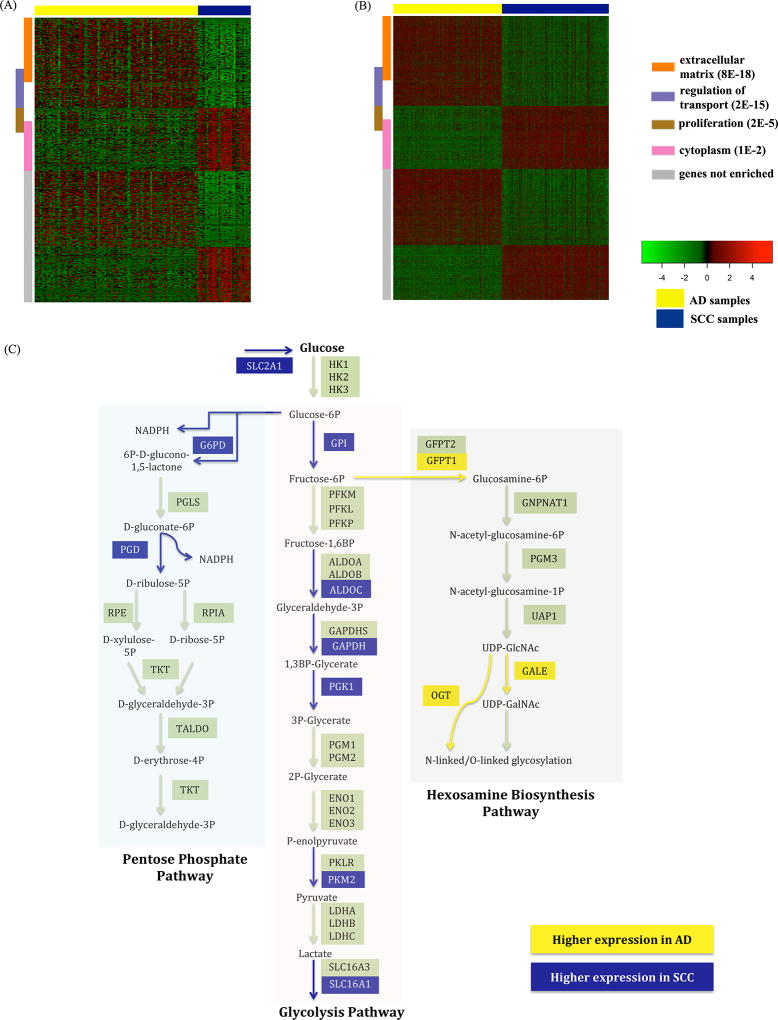
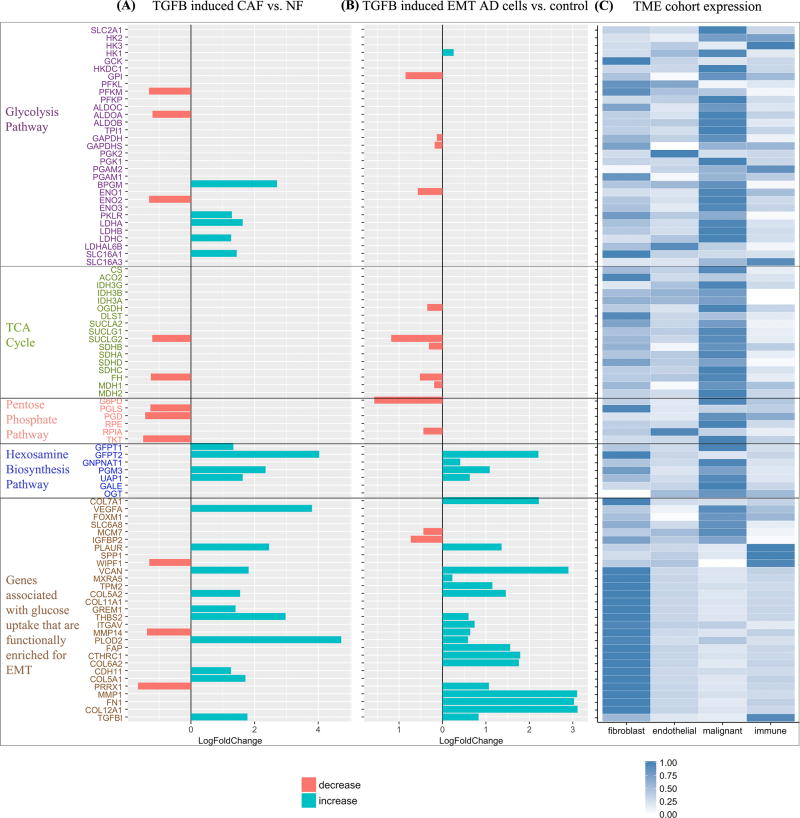
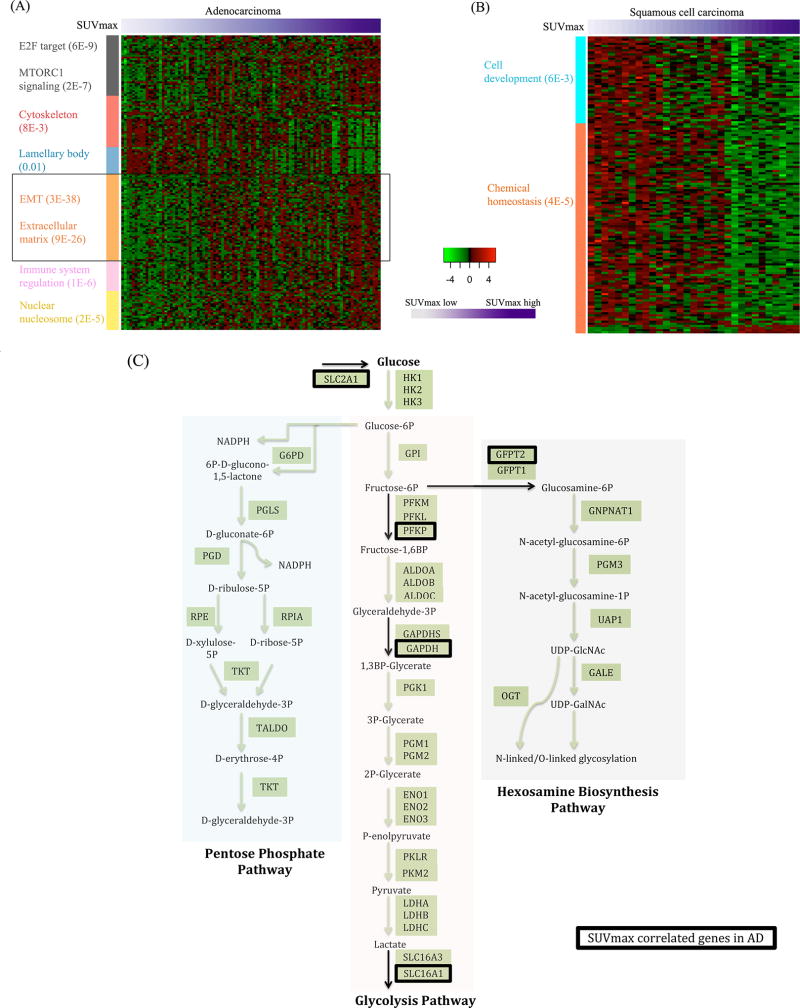
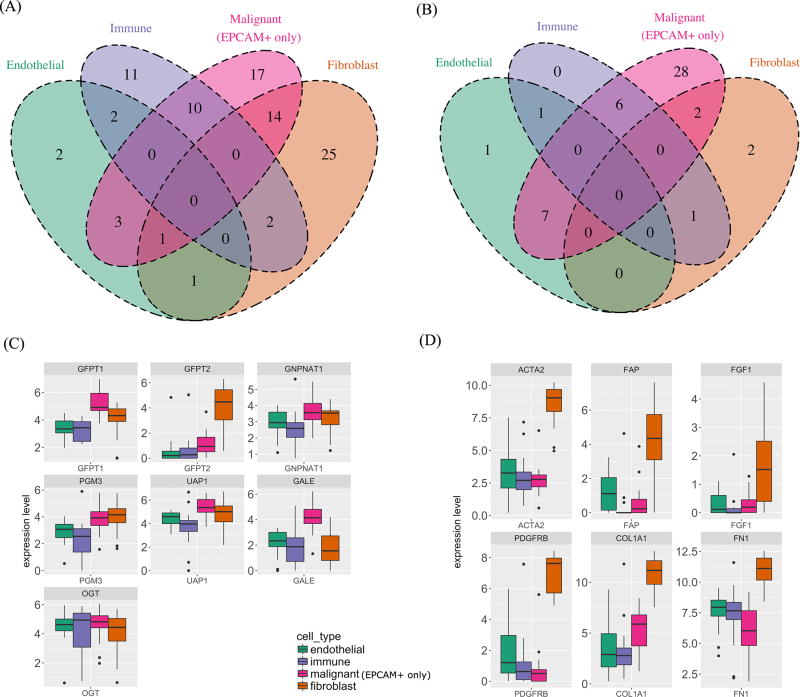
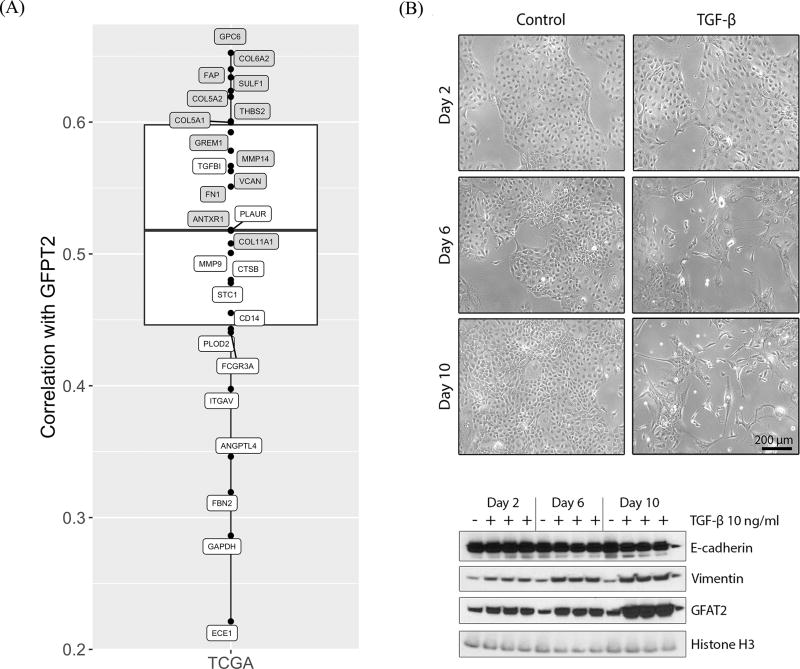
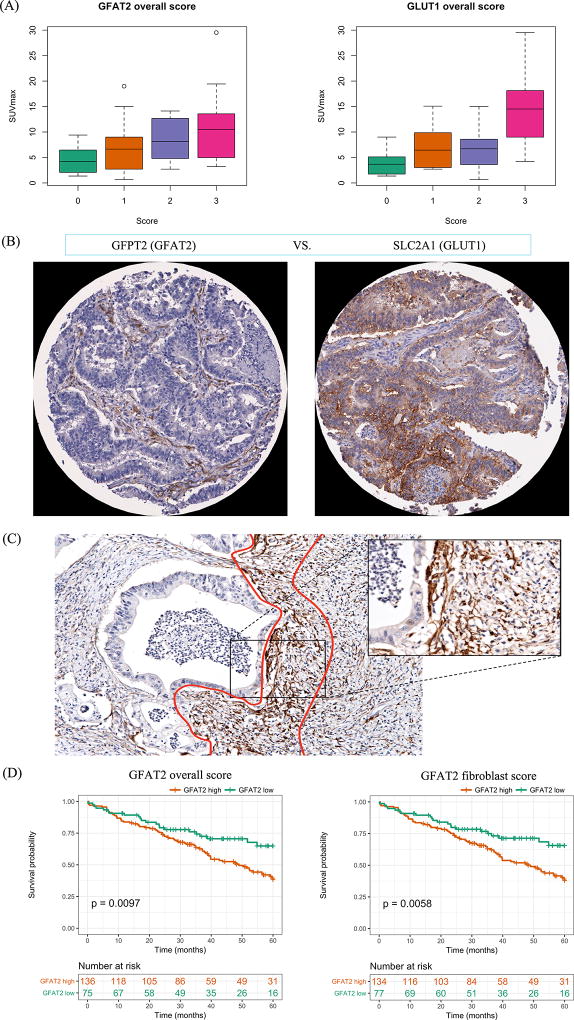
Metabolic reprogramming of the tumor microenvironment is recognized as a cancer hallmark. To identify new molecular processes associated with tumor metabolism, we analyzed the transcriptome of bulk and flow-sorted human primary non-small cell lung cancer (NSCLC) together with FDG-PET scans, which provide a clinical measure of glucose uptake. Tumors with higher glucose uptake were functionally enriched for molecular processes associated with invasion in adenocarcinoma and cell growth in squamous cell carcinoma (SCC). Next, we identified genes correlated to glucose uptake that were predominately overexpressed in a single cell-type comprising the tumor microenvironment. For SCC, most of these genes were expressed by malignant cells, whereas in adenocarcinoma, they were predominately expressed by stromal cells, particularly cancer-associated fibroblasts (CAF). Among these adenocarcinoma genes correlated to glucose uptake, we focused on glutamine-fructose-6-phosphate transaminase 2 (), which codes for the glutamine-fructose-6-phosphate aminotransferase 2 (GFAT2), a rate-limiting enzyme of the hexosamine biosynthesis pathway (HBP), which is responsible for glycosylation. was predictive of glucose uptake independent of GLUT1, the primary glucose transporter, and was prognostically significant at both gene and protein level. We confirmed that normal fibroblasts transformed to CAF-like cells, following TGFβ treatment, upregulated HBP genes, including , with less change in genes driving glycolysis, pentose phosphate pathway, and TCA cycle. Our work provides new evidence of histology-specific tumor stromal properties associated with glucose uptake in NSCLC and identifies as a critical regulator of tumor metabolic reprogramming in adenocarcinoma. These findings implicate the hexosamine biosynthesis pathway as a potential new therapeutic target in lung adenocarcinoma. .
肿瘤微环境的代谢重编程被认为是癌症的一个标志。为了确定与肿瘤代谢相关的新分子过程,我们分析了批量和流式分选的人类原发性非小细胞肺癌(NSCLC)的转录组,以及提供葡萄糖摄取临床测量的 FDG-PET 扫描。葡萄糖摄取较高的肿瘤在功能上富集了与腺癌侵袭和鳞状细胞癌(SCC)细胞生长相关的分子过程。接下来,我们确定了与葡萄糖摄取相关的基因,这些基因在构成肿瘤微环境的单个细胞类型中主要过表达。对于 SCC,这些基因中的大多数由恶性细胞表达,而在腺癌中,它们主要由基质细胞表达,特别是癌相关成纤维细胞(CAF)表达。在这些与葡萄糖摄取相关的腺癌基因中,我们重点关注谷氨酰胺-果糖-6-磷酸氨基转移酶 2(),它编码谷氨酰胺-果糖-6-磷酸氨基转移酶 2(GFAT2),这是己糖胺生物合成途径(HBP)的限速酶,负责糖基化。独立于主要葡萄糖转运蛋白 GLUT1,是葡萄糖摄取的预测因子,在基因和蛋白水平均具有预后意义。我们证实,TGFβ处理后,正常成纤维细胞转化为 CAF 样细胞,HBP 基因上调,包括,而糖酵解、戊糖磷酸途径和 TCA 循环的基因变化较小。我们的工作为 NSCLC 中与葡萄糖摄取相关的组织学特异性肿瘤基质特性提供了新的证据,并确定为腺癌中肿瘤代谢重编程的关键调节因子。这些发现表明己糖胺生物合成途径可能成为肺腺癌的一个新的潜在治疗靶点。