Tang Chao-Liang, Li Juan, Zhang Zhe-Tao, Zhao Bo, Wang Shu-Dong, Zhang Hua-Ming, Shi Si, Zhang Yang, Xia Zhong-Yuan
Department of Anesthesiology, Renmin Hospital of Wuhan University, Wuhan, Hubei Province, China.
Department of Anesthesiology, Anhui Provincial Hospital of Anhui Medical University, Hefei, Anhui Provence, China.
Neural Regen Res. 2018 Feb;13(2):280-288. doi: 10.4103/1673-5374.226399.
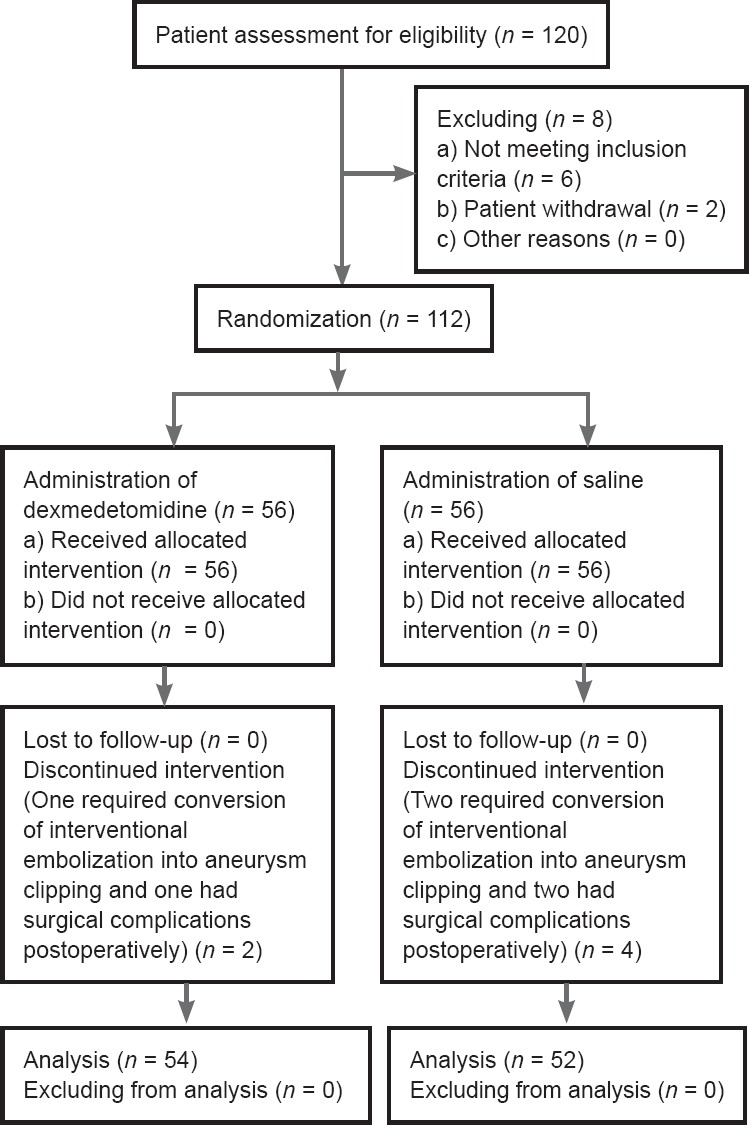
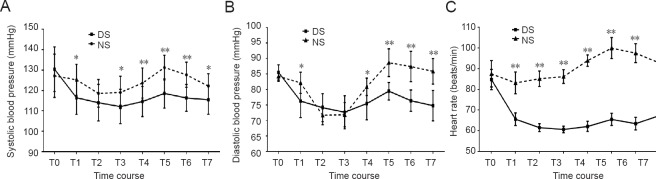
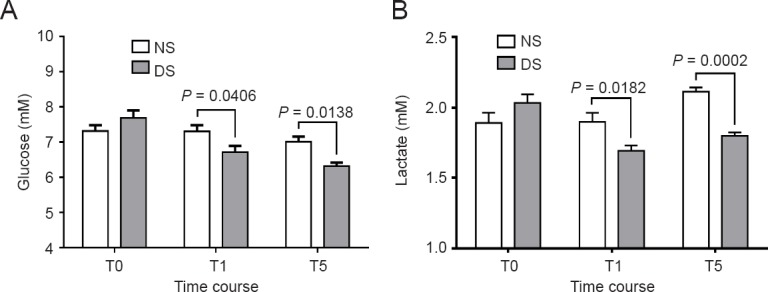
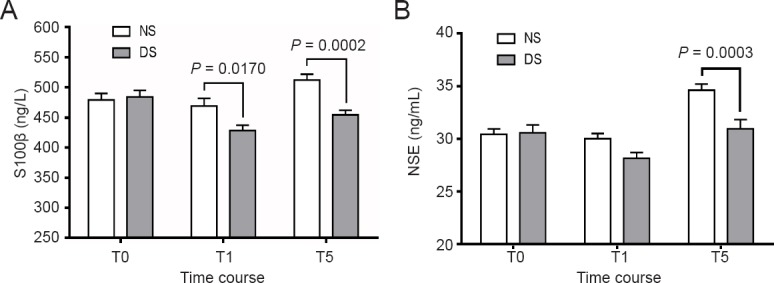
Dexmedetomidine has sedative, anxiolytic, analgesic, anti-sympathetic, and anti-shivering effects. Dexmedetomidine might be effective in combination with sevoflurane for anesthesia, but prospective randomized controlled clinical trials with which to verify this hypothesis are lacking. In total, 120 patients who underwent embolization of an intracranial aneurysm were recruited from Anhui Provincial Hospital and Renmin Hospital of Wuhan University of China and randomly allocated to two groups. After intraoperative administration of 2% to 3% sevoflurane inhalation, one group of patients received pump-controlled intravenous injection of 1.0 μg/kg dexmedetomidine for 15 minutes followed by maintenance with 0.3 μg/kg/h until the end of surgery; the other group of patients only underwent pump-controlled infusion of saline. Bispectral index monitoring revealed that dexmedetomidine-assisted anesthesia can shorten the recovery time of spontaneous breathing, time to eye opening, and time to laryngeal mask removal. Before anesthetic induction and immediately after laryngeal mask airway removal, the glucose and lactate levels were low, the S100β and neuron-specific enolase levels were low, the perioperative blood pressure and heart rate were stable, and postoperative delirium was minimal. These findings indicate that dexmedetomidine can effectively assist sevoflurane for anesthesia during surgical embolization of intracranial aneurysms, shorten the time to consciousness and extubation, reduce the stress response and energy metabolism, stabilize hemodynamic parameters, and reduce adverse reactions, thereby reducing the damage to the central nervous system. This trial was registered at the Chinese Clinical Trial Registry (http://www.chictr.org.cn/) (registration number: ChiCTR-IPR-16008113).
右美托咪定具有镇静、抗焦虑、镇痛、抗交感神经和抗寒战作用。右美托咪定与七氟醚联合用于麻醉可能有效,但缺乏验证该假设的前瞻性随机对照临床试验。总共从中国安徽省立医院和武汉大学人民医院招募了120例行颅内动脉瘤栓塞术的患者,并随机分为两组。术中给予2%至3%七氟醚吸入后,一组患者接受泵控静脉注射1.0μg/kg右美托咪定15分钟,随后以0.3μg/kg/h维持至手术结束;另一组患者仅接受泵控输注生理盐水。脑电双频指数监测显示,右美托咪定辅助麻醉可缩短自主呼吸恢复时间、睁眼时间和喉罩拔除时间。麻醉诱导前和喉罩拔除后即刻,血糖和乳酸水平较低,S100β和神经元特异性烯醇化酶水平较低,围手术期血压和心率稳定,术后谵妄轻微。这些结果表明,右美托咪定可有效辅助七氟醚用于颅内动脉瘤手术栓塞期间的麻醉,缩短意识恢复和拔管时间,减轻应激反应和能量代谢,稳定血流动力学参数,减少不良反应,从而减轻对中枢神经系统的损伤。本试验在中国临床试验注册中心(http://www.chictr.org.cn/)注册(注册号:ChiCTR-IPR-16008113)。