Department of Physiology and Pathophysiology, the Regenerative Medicine Program, the Spinal Cord Research Center, University of Manitoba, 629-Basic Medical Sciences Building, 745 Bannatyne Avenue, Winnipeg, MB, R3E 0J9, Canada.
Department of Neuroscience, Case Western Reserve University School of Medicine, Cleveland, OH, 44106, USA.
J Neuroinflammation. 2018 Mar 20;15(1):90. doi: 10.1186/s12974-018-1128-2.
Traumatic spinal cord injury (SCI) results in upregulation of chondroitin sulfate proteoglycans (CSPGs) by reactive glia that impedes repair and regeneration in the spinal cord. Degradation of CSPGs is known to be beneficial in promoting endogenous repair mechanisms including axonal sprouting/regeneration, oligodendrocyte replacement, and remyelination, and is associated with improvements in functional outcomes after SCI. Recent evidence suggests that CSPGs may regulate secondary injury mechanisms by modulating neuroinflammation after SCI. To date, the role of CSPGs in SCI neuroinflammation remains largely unexplored. The recent discovery of CSPG-specific receptors, leukocyte common antigen-related (LAR) and protein tyrosine phosphatase-sigma (PTPσ), allows unraveling the cellular and molecular mechanisms of CSPGs in SCI. In the present study, we have employed parallel in vivo and in vitro approaches to dissect the role of CSPGs and their receptors LAR and PTPσ in modulating the inflammatory processes in the acute and subacute phases of SCI.
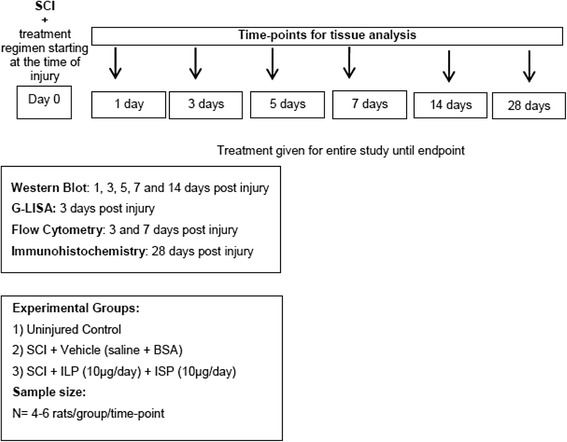
In a clinically relevant model of compressive SCI in female Sprague Dawley rats, we targeted LAR and PTPσ by two intracellular functionally blocking peptides, termed ILP and ISP, respectively. We delivered ILP and ISP treatment intrathecally to the injured spinal cord in a sustainable manner by osmotic mini-pumps for various time-points post-SCI. We employed flow cytometry, Western blotting, and immunohistochemistry in rat SCI, as well as complementary in vitro studies in primary microglia cultures to address our questions.
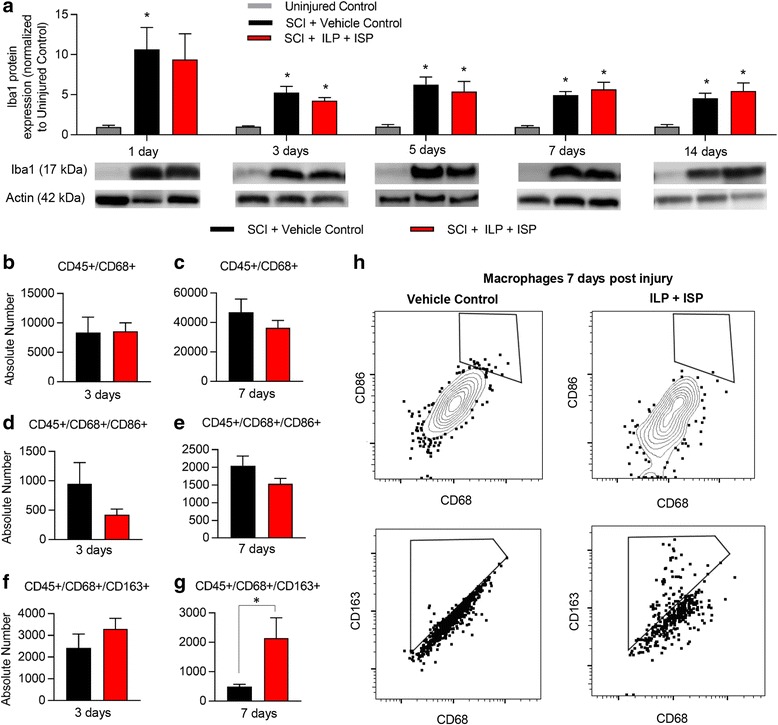
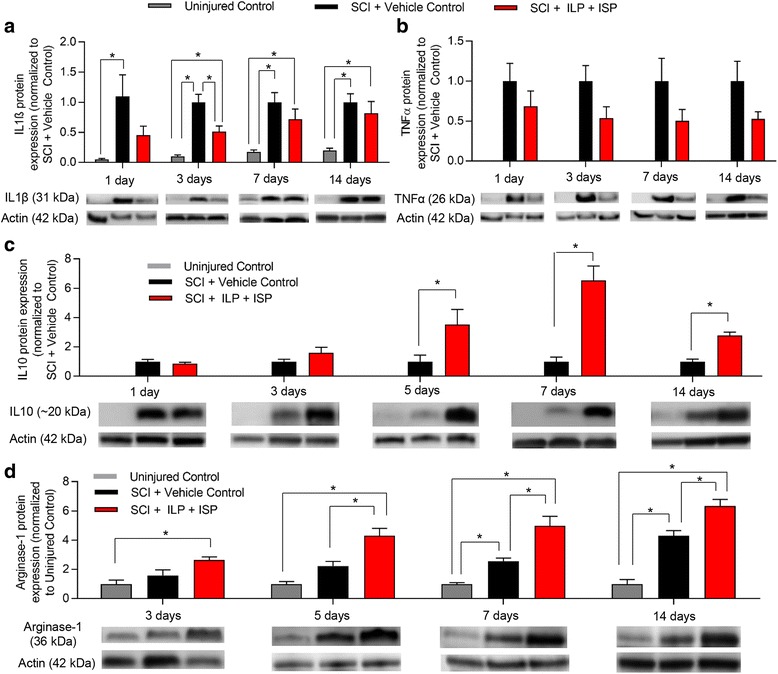
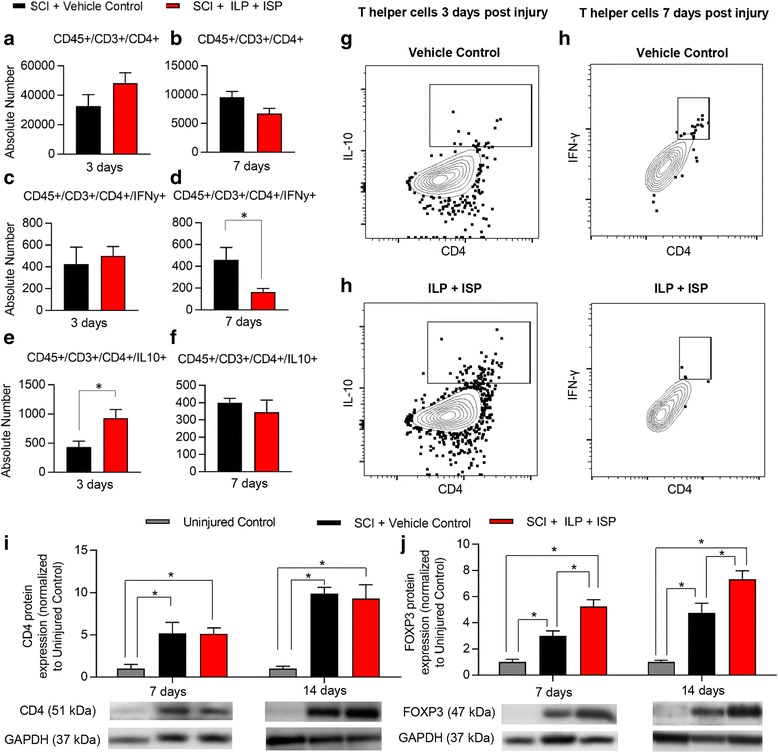
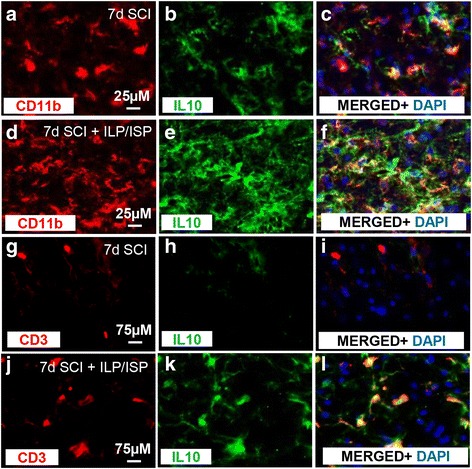
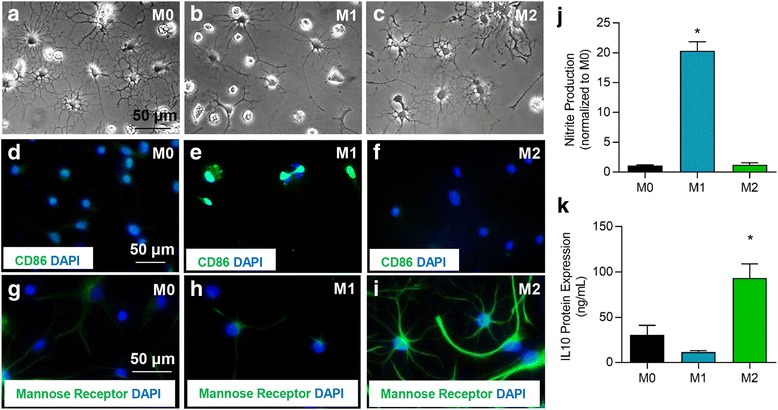
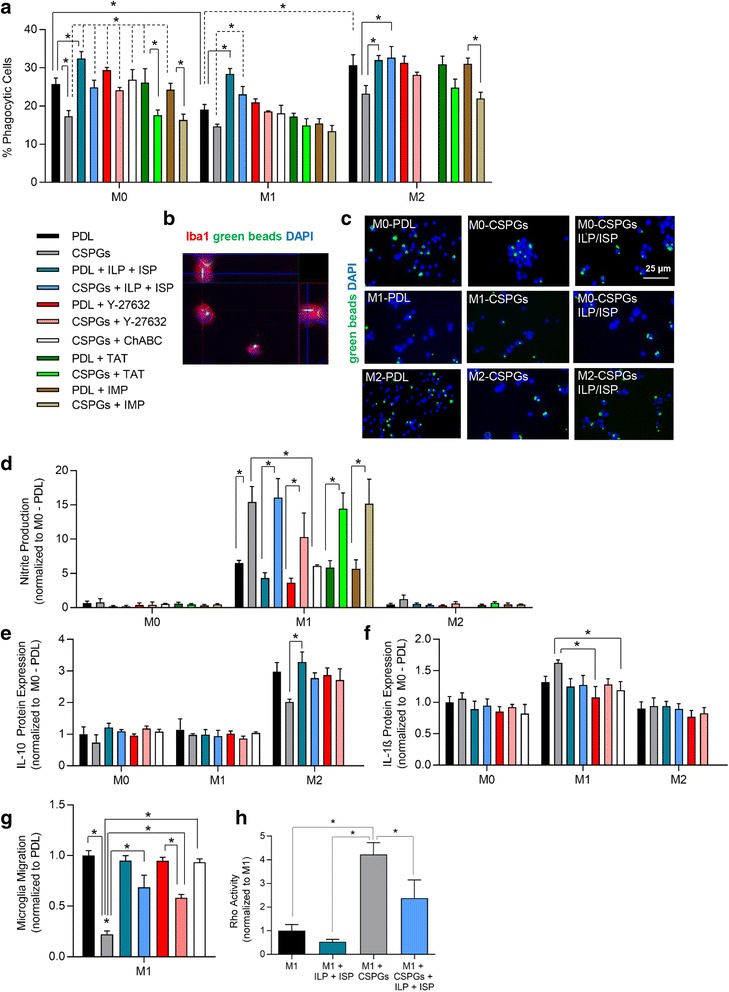
We provide novel evidence that signifies a key immunomodulatory role for LAR and PTPσ receptors in SCI. We show that blocking LAR and PTPσ reduces the population of classically activated M1 microglia/macrophages, while promoting alternatively activated M2 microglia/macrophages and T regulatory cells. This shift was associated with a remarkable elevation in pro-regenerative immune mediators, interleukin-10 (IL-10), and Arginase-1. Our parallel in vitro studies in microglia identified that while CSPGs do not induce an M1 phenotype per se, they promote a pro-inflammatory phenotype. Interestingly, inhibiting LAR and PTPσ in M1 and M2 microglia positively modulates their inflammatory response in the presence of CSPGs, and harnesses their ability for phagocytosis and mobilization. Interestingly, our findings indicate that CSPGs regulate microglia, at least in part, through the activation of the Rho/ROCK pathway downstream of LAR and PTPσ.
We have unveiled a novel role for LAR and PTPσ in regulating neuroinflammation in traumatic SCI. Our findings provide new insights into the mechanisms by which manipulation of CSPG signaling can promote recovery from SCI. More importantly, this work introduces the potential of ILP/ISP as a viable strategy for modulating the immune response following SCI and other neuroinflammatory conditions of the central nervous system.
创伤性脊髓损伤(SCI)导致反应性胶质细胞中软骨素硫酸盐蛋白聚糖(CSPGs)上调,从而阻碍脊髓内的修复和再生。已知 CSPGs 的降解有利于促进内源性修复机制,包括轴突发芽/再生、少突胶质细胞替代和髓鞘形成,并与 SCI 后的功能结果改善相关。最近的证据表明,CSPGs 可能通过调节 SCI 后的神经炎症来调节继发性损伤机制。迄今为止,CSPGs 在 SCI 神经炎症中的作用在很大程度上仍未得到探索。最近发现 CSPG 特异性受体白细胞共同抗原相关(LAR)和蛋白酪氨酸磷酸酶-σ(PTPσ),使得能够揭示 CSPGs 在 SCI 中的细胞和分子机制。在本研究中,我们采用了平行的体内和体外方法来剖析 CSPGs 及其受体 LAR 和 PTPσ 在调节 SCI 急性和亚急性期炎症过程中的作用。
在雌性 Sprague Dawley 大鼠中具有临床相关性的压迫性 SCI 模型中,我们通过两种细胞内功能阻断肽分别靶向 LAR 和 PTPσ,分别称为 ILP 和 ISP。我们通过鞘内渗透微型泵以可持续的方式向受伤的脊髓递送 ILP 和 ISP 治疗,时间点为 SCI 后不同时间。我们在大鼠 SCI 中使用流式细胞术、Western blot 和免疫组织化学,以及在原代小胶质细胞培养物中进行补充的体外研究来解决我们的问题。
我们提供了新的证据,表明 LAR 和 PTPσ 受体在 SCI 中具有重要的免疫调节作用。我们表明,阻断 LAR 和 PTPσ 可减少经典激活的 M1 小胶质细胞/巨噬细胞的数量,同时促进替代激活的 M2 小胶质细胞/巨噬细胞和 T 调节细胞。这种转变与促再生免疫介质白细胞介素 10(IL-10)和精氨酸酶-1 的显著升高有关。我们在小胶质细胞中的平行体外研究表明,尽管 CSPGs 本身不会诱导 M1 表型,但它们会促进炎症表型。有趣的是,在存在 CSPGs 的情况下,抑制 M1 和 M2 小胶质细胞中的 LAR 和 PTPσ 可正向调节其炎症反应,并发挥其吞噬和动员能力。有趣的是,我们的发现表明,CSPGs 通过 LAR 和 PTPσ 下游的 Rho/ROCK 途径调节小胶质细胞,至少在一定程度上是这样。
我们揭示了 LAR 和 PTPσ 在调节创伤性 SCI 中的神经炎症中的新作用。我们的研究结果为 CSPG 信号转导的操纵如何促进 SCI 恢复提供了新的见解。更重要的是,这项工作介绍了 ILP/ISP 作为调节 SCI 后免疫反应和中枢神经系统其他神经炎症状态的可行策略的潜力。