Meng Yingying, Zhang Jing, Yuan Cong, Zhang Fenglin, Fu Qin, Su Han, Zhu Xiaotong, Wang Lina, Gao Ping, Shu Gang, Jiang Qingyan, Wang Songbo
Guangdong Provincial Key Laboratory of Animal Nutrition Control, College of Animal Science, South China Agricultural University, Guangzhou 510642, P. R. China.
National Engineering Research Center for Breeding Swine Industry and UBT Lipid Suite Functional Fatty Acids Research Center, South China Agricultural University, Guangzhou 510642, P. R. China.
Oncotarget. 2018 Jan 12;9(16):12982-12994. doi: 10.18632/oncotarget.24204. eCollection 2018 Feb 27.
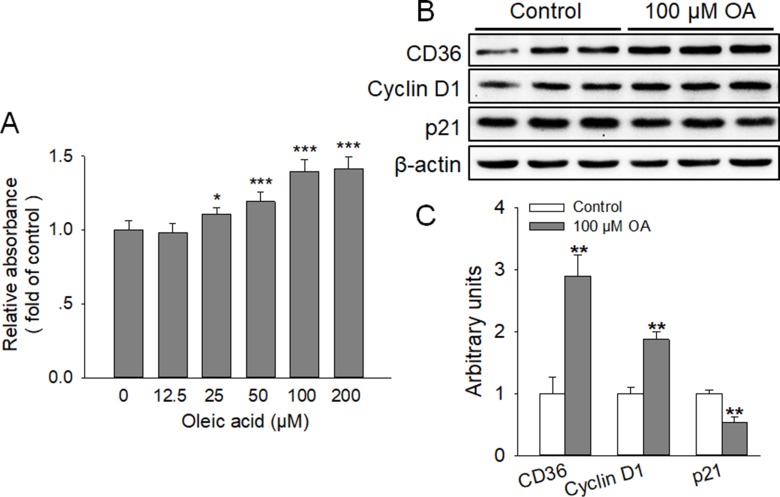
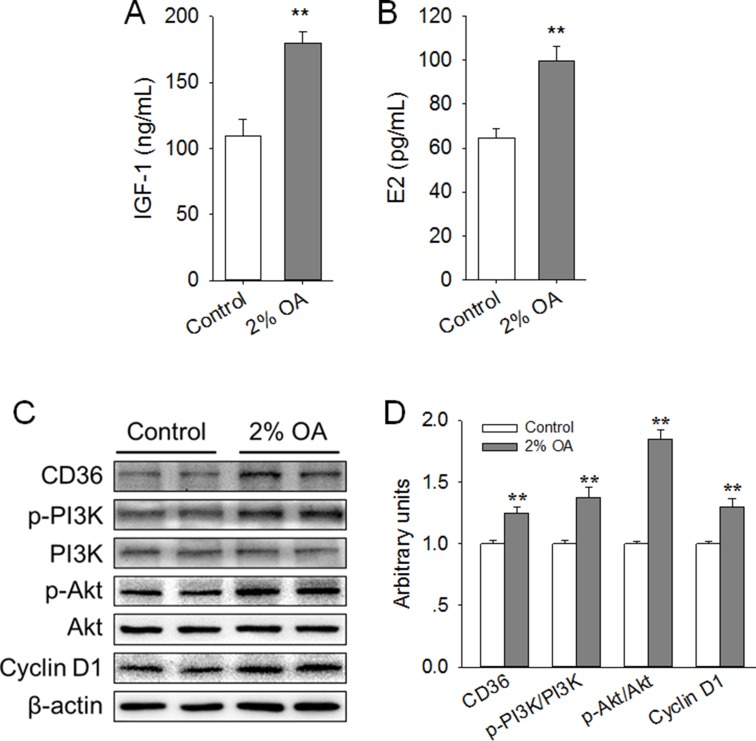
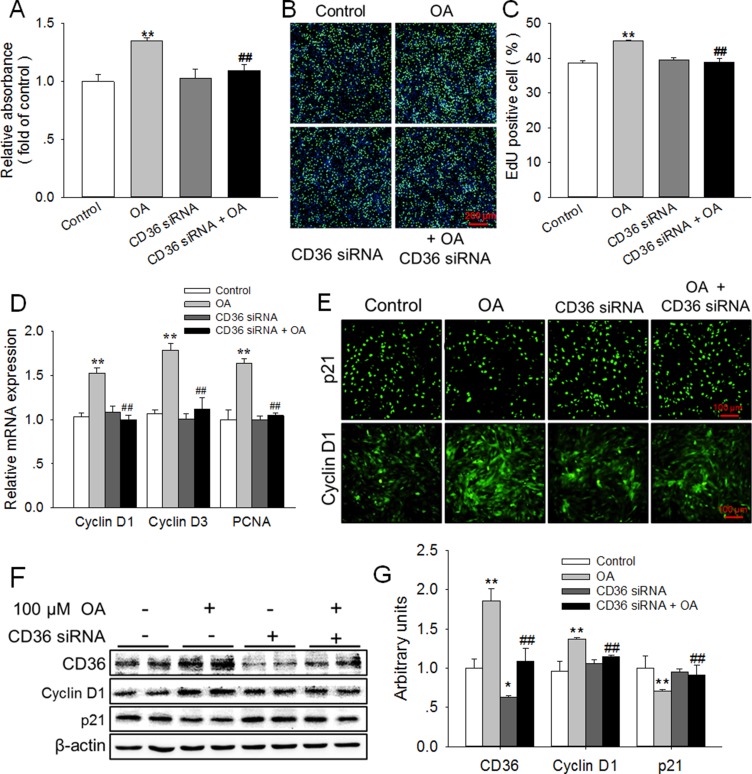
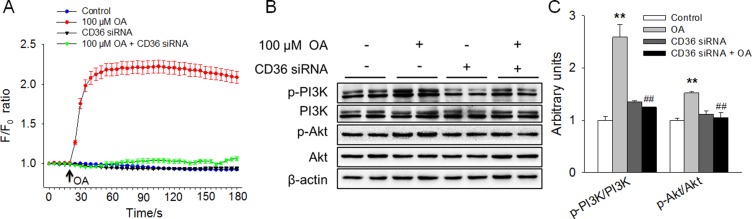
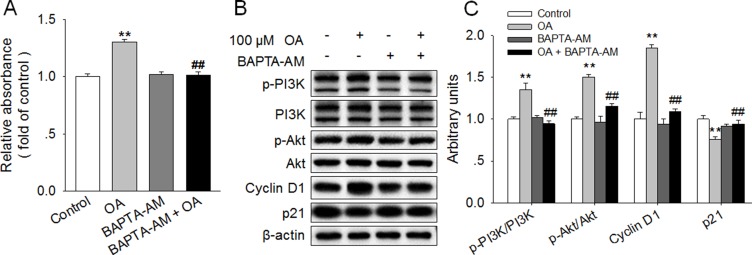
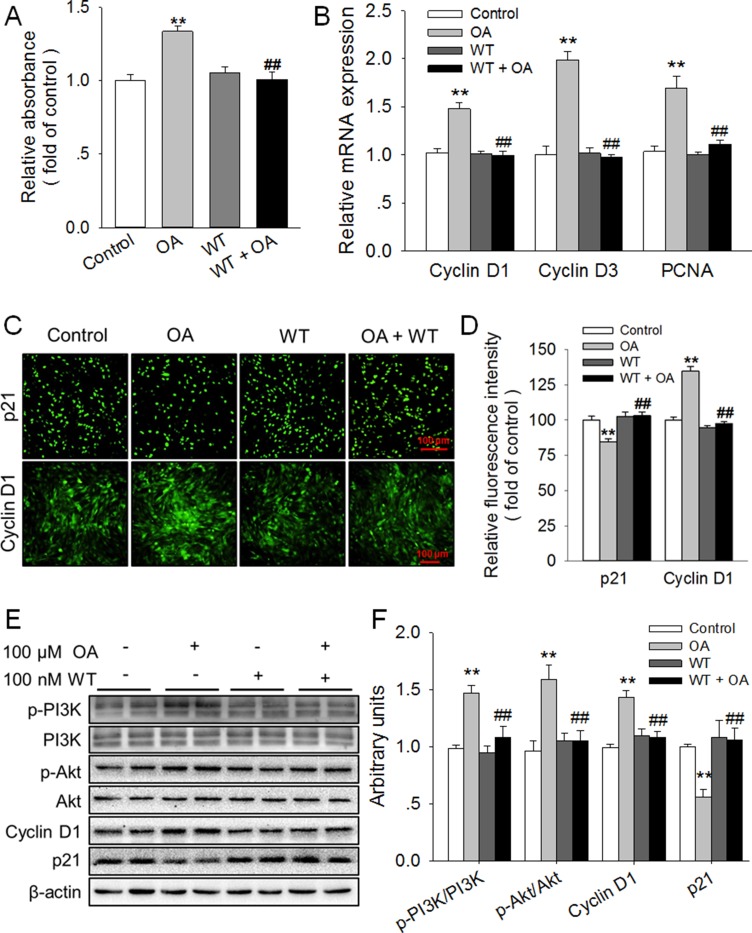
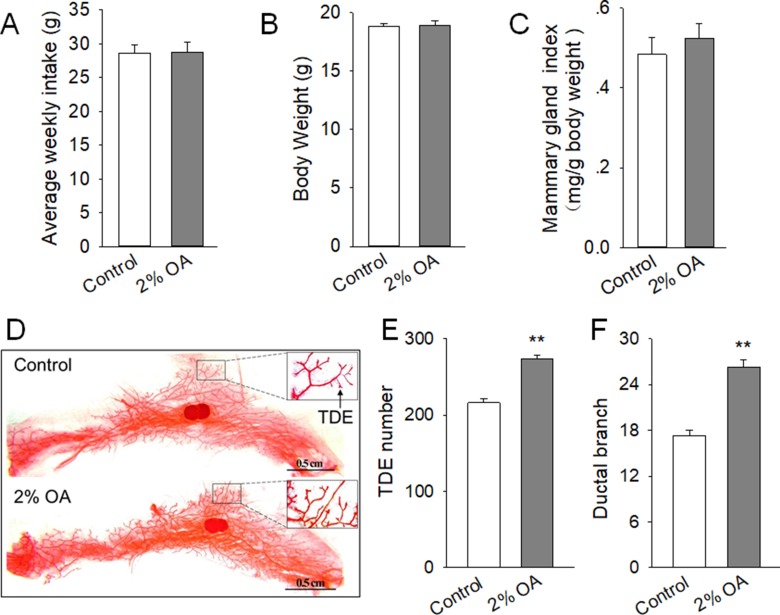
This study aimed to investigate the effects of oleic acid (OA), a monounsaturated fatty acid, on HC11 mammary epithelial cells proliferation and peripubertal mammary gland development and explore the underlying mechanisms. HC11 cells and C57BL/6J mice were treated with OA. HC11 proliferation, peripubertal mammary gland development, and the involvement of CD36 and PI3K/Akt were assessed. , 100 μM OA significantly promoted HC11 proliferation by increasing Cyclin D1/3 and PCNA expression and decreasing p21 expression. Meanwhile, OA enhanced CD36 expression, elevated [Ca] and activated PI3K/Akt signaling pathway. However, knockdown of CD36, chelation of [Ca] or inhibition of PI3K eliminated the OA-induced promotion of HC11 proliferation and change in proliferative markers expression. , peripubertal exposure to diet containing 2% OA stimulated mammary duct development, with increased terminal duct end (TDE) and ductal branch. Moreover, dietary OA increased the serum levels of IGF-1 and E2, enhanced the expression of CD36 and Cyclin D1, and activated PI3K/Akt pathway in mammary glands. In conclusion, OA stimulated HC11 cells proliferation and mammary gland development in peripubertal mice, which was associated with activation of CD36-[Ca] and PI3K/Akt signaling pathway. These data provided new insights into the stimulation of mammary gland development by dietary oleic acid.
本研究旨在探讨单不饱和脂肪酸油酸(OA)对HC11乳腺上皮细胞增殖及青春期前乳腺发育的影响,并探究其潜在机制。用OA处理HC11细胞和C57BL/6J小鼠。评估HC11细胞增殖、青春期前乳腺发育以及CD36和PI3K/Akt的参与情况。结果显示,100μM OA通过增加细胞周期蛋白D1/3和增殖细胞核抗原(PCNA)表达以及降低p21表达,显著促进HC11细胞增殖。同时,OA增强CD36表达,升高[Ca]并激活PI3K/Akt信号通路。然而,敲低CD36、螯合[Ca]或抑制PI3K可消除OA诱导的HC11细胞增殖促进作用以及增殖标志物表达的变化。此外,青春期前小鼠食用含2% OA的饮食可刺激乳腺导管发育,终末导管末端(TDE)和导管分支增加。而且,饮食中的OA可提高血清中胰岛素样生长因子-1(IGF-1)和雌二醇(E2)水平,增强乳腺中CD36和细胞周期蛋白D1的表达,并激活PI3K/Akt通路。总之,OA可刺激青春期前小鼠的HC11细胞增殖和乳腺发育,这与CD36-[Ca]和PI3K/Akt信号通路的激活有关。这些数据为饮食中油酸刺激乳腺发育提供了新的见解。