Rijeesh K, Hashim P K, Noro Shin-Ichiro, Tamaoki Nobuyuki
Research Institute for Electronic Science , Hokkaido University , N20, W10, Kita-Ku , Sapporo 001-0020 , Hokkaido , Japan . Email:
Chem Sci. 2015 Feb 1;6(2):973-980. doi: 10.1039/c4sc01993h. Epub 2014 Oct 30.
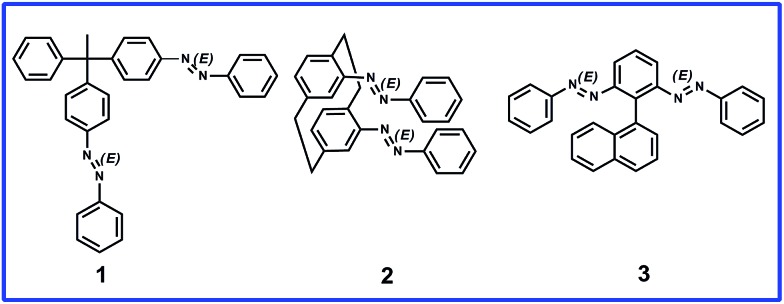
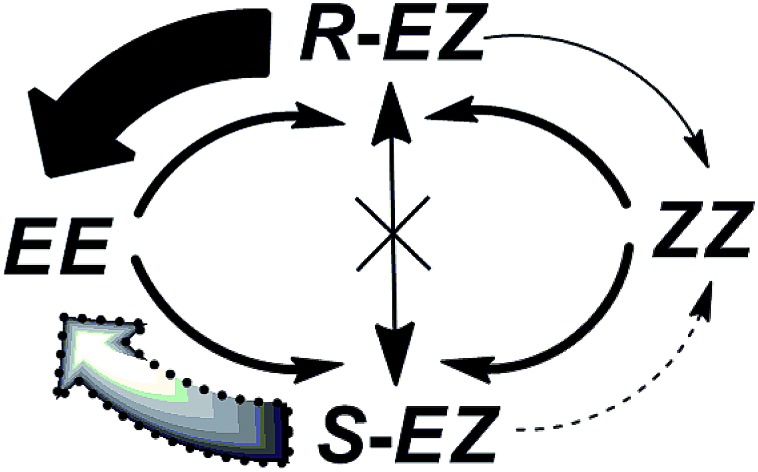
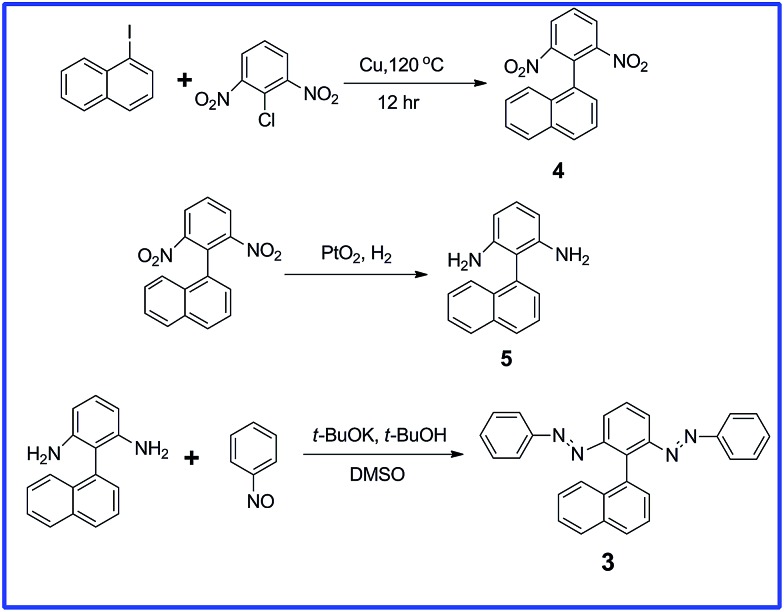
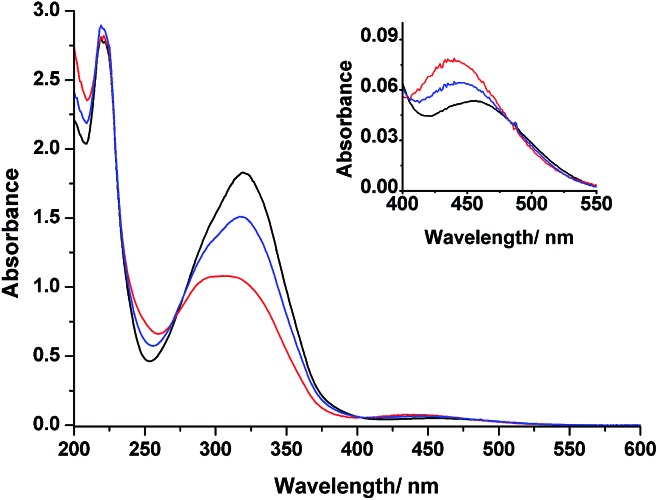
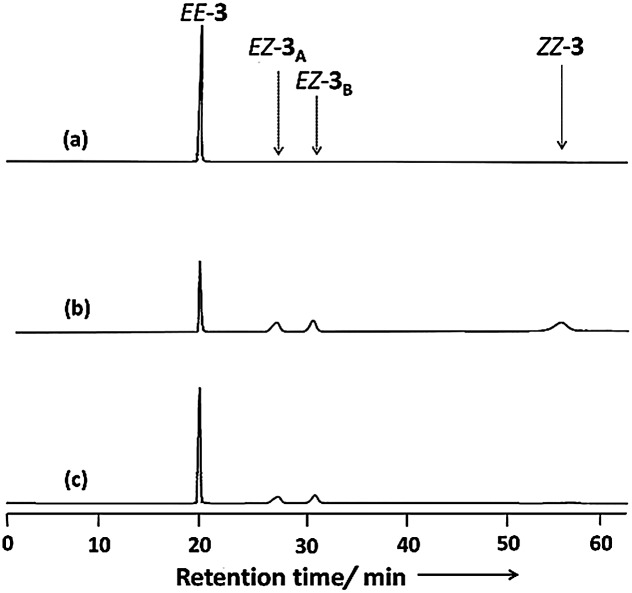
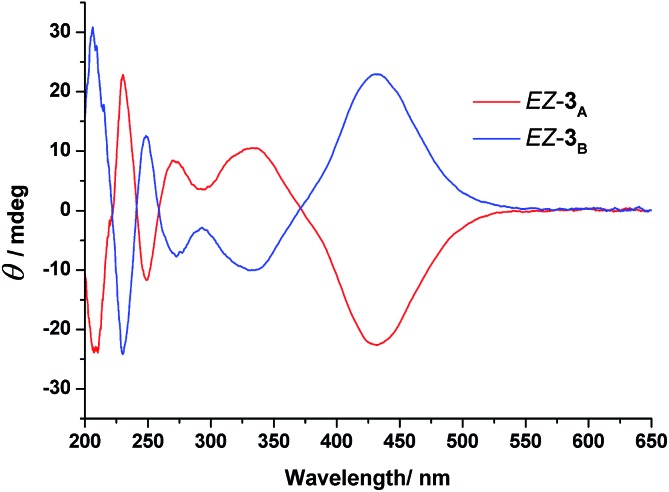
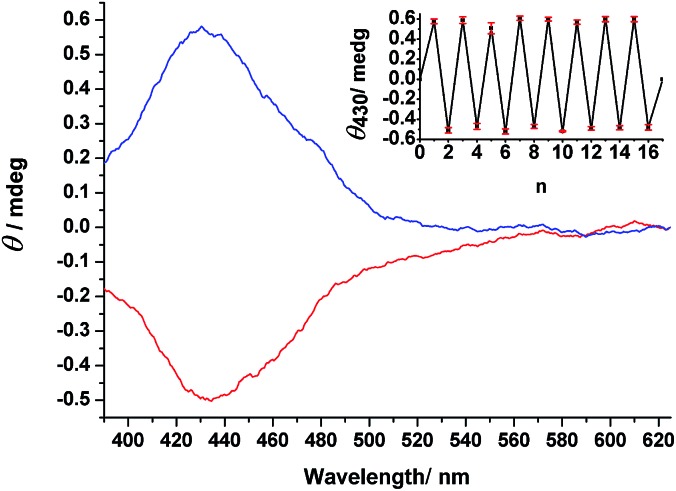
The ability to photoinduce enantiomeric excess from the chirality of circularly polarized light (CPL) is pertinent to the study of the origin of homochirality in biomolecules. Such CPL-induced reactions, including both chirality generation and formation of partial enantiomeric imbalance, from nonchiral starting compounds have been known, however, only for the conversion of diarylolefins into chiral helicenes. In this study we synthesized three different prochiral molecules, each featuring a pair of photoisomerizable phenylazo moieties arranged symmetrically upon the phenyl rings of an sp-hybridized carbon atom (), the phenyl rings of [2.2]paracyclophane (), and the positions of a phenyl ring bearing a naphthyl unit (), and then investigated the possibility of photoinducing enantiomeric excess under CPL. Irradiation of with light induced ↔ photoisomerizations of their azobenzene moieties, giving mixtures of their , , and isomers in the photostationary state (PSS). Among these regioisomers, the forms are chiral and existed as racemic mixtures of and stereoisomers. Upon CPL irradiation of , circular dichroism (CD) revealed enantiomeric enrichment of one of the stereoisomers; furthermore, irradiation with - or -CPL gave CD signals opposite in sign, but with equal intensity, in the PSS. In contrast, and did not give any detectable induced CD upon CPL irradiation. These experimental results can be explained by considering the different Kuhn anisotropy factors () of the ()- and ()- stereoisomers of , assuming that the origin of the enantiomeric excess is the -differentiating photoisomerization from stereoisomers to nonchiral or regioisomers by - or -CPL. In short, we demonstrate the simultaneous induction of chirality and enantiomeric excess from a prochiral azobenzene dimer a chiral regioisomer formed upon CPL irradiation.
从圆偏振光(CPL)的手性光诱导对映体过量的能力与生物分子中同手性起源的研究相关。然而,这种由CPL诱导的反应,包括从非手性起始化合物产生手性和形成部分对映体失衡,目前仅在二芳基烯烃转化为手性螺旋烯的反应中被知晓。在本研究中,我们合成了三种不同的前手性分子,每个分子都具有一对光异构化的苯基偶氮基团,它们对称地排列在sp杂化碳原子的苯环上()、[2.2]对环芳烷的苯环上()以及带有萘基单元的苯环的位置上(),然后研究了在CPL下光诱导对映体过量的可能性。用光照射会诱导其偶氮苯部分发生 ↔ 光异构化,在光稳态(PSS)下得到它们的、和异构体的混合物。在这些区域异构体中,形式是手性的,以和立体异构体的外消旋混合物形式存在。在用CPL照射时,圆二色性(CD)显示其中一种立体异构体的对映体富集;此外,用 - 或 -CPL照射在PSS中产生的CD信号符号相反,但强度相等。相比之下,和在用CPL照射时没有产生任何可检测到的诱导CD。通过考虑的() - 和() - 立体异构体的不同库恩各向异性因子(),可以解释这些实验结果,假设对映体过量的起源是通过 - 或 -CPL从立体异构体到非手性或区域异构体的 - 区分光异构化。简而言之,我们证明了在CPL照射下,从前手性偶氮苯二聚体同时诱导出手性和对映体过量,形成了一种手性区域异构体。