Ciccarelli Giovanni, D'Elia Saverio, De Paulis Michele, Golino Paolo, Cimmino Giovanni
Department of Cardio-Thoracic and Respiratory Sciences, Section of Cardiology, University of Campania "Luigi Vanvitelli", 80131 Naples, Italy.
Diseases. 2018 Mar 17;6(1):22. doi: 10.3390/diseases6010022.
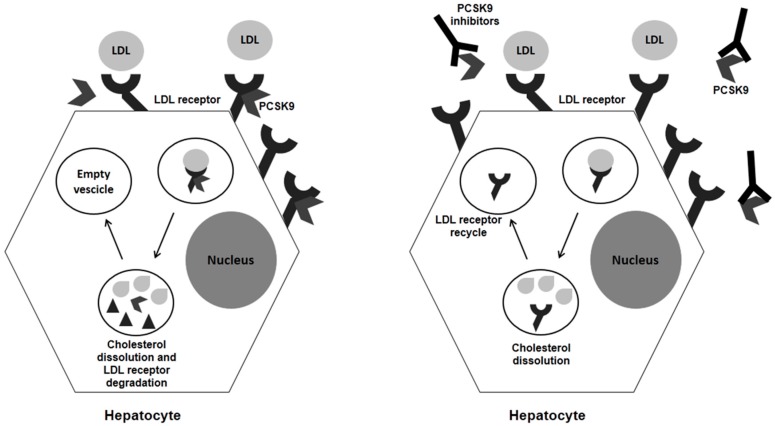
The role of low-density lipoproteins (LDLs) as a major risk factor for cardiovascular disease has been demonstrated by several epidemiological studies. The molecular basis for LDLs in atherosclerotic plaque formation and progression is not completely unraveled yet. Pharmacological modulation of plasma LDL-C concentrations and randomized clinical trials addressing the impact of lipid-lowering interventions on cardiovascular outcome have clearly shown that reducing plasma LDL-C concentrations results in a significant decrease in major cardiovascular events. For many years, statins have represented the most powerful pharmacological agents available to lower plasma LDL-C concentrations. In clinical trials, it has been shown that the greater the reduction in plasma LDL-C concentrations, the lower the rate of major cardiovascular events, especially in high-risk patients, because of multiple risk factors and recurrent events. However, in a substantial number of patients, the recommended LDL target is difficult to achieve because of different factors: genetic background (familial hypercholesterolemia), side effects (statin intolerance), or high baseline plasma LDL-C concentrations. In the last decade, our understanding of the molecular mechanisms involved in LDL metabolism has progressed significantly and the key role of proprotein convertase subtilisin/kexin type 9 (PCSK9) has emerged. This protein is an enzyme able to bind the LDL receptors (LDL-R) on hepatocytes, favoring their degradation. Blocking PCSK9 represents an intriguing new therapeutic approach to decrease plasma LDL-C concentrations, which in recent studies has been demonstrated to also result in a significant reduction in major cardiovascular events.
多项流行病学研究已证实低密度脂蛋白(LDL)作为心血管疾病主要危险因素的作用。LDL在动脉粥样硬化斑块形成和进展中的分子基础尚未完全阐明。对血浆LDL-C浓度的药物调节以及针对降脂干预对心血管结局影响的随机临床试验清楚地表明,降低血浆LDL-C浓度会导致主要心血管事件显著减少。多年来,他汀类药物一直是可用于降低血浆LDL-C浓度的最有效药物。在临床试验中,已表明血浆LDL-C浓度降低幅度越大,主要心血管事件发生率越低,尤其是在具有多种危险因素和复发性事件的高危患者中。然而,由于不同因素,相当数量的患者难以达到推荐的LDL目标:遗传背景(家族性高胆固醇血症)、副作用(他汀类药物不耐受)或高基线血浆LDL-C浓度。在过去十年中,我们对LDL代谢所涉及分子机制的理解有了显著进展,前蛋白转化酶枯草杆菌蛋白酶/kexin 9型(PCSK9)的关键作用已显现出来。这种蛋白质是一种能够结合肝细胞上LDL受体(LDL-R)并促进其降解的酶。阻断PCSK9代表了一种降低血浆LDL-C浓度的有趣新治疗方法,在最近的研究中已证明这也会导致主要心血管事件显著减少。