Bondaronek Paulina, Alkhaldi Ghadah, Slee April, Hamilton Fiona L, Murray Elizabeth
eHealth Unit, Research Department of Primary Care and Population Health, University College London, London, United Kingdom.
Community Health Sciences Department, College of Applied Medical Sciences, King Saud University, Riyadh, Saudi Arabia.
JMIR Mhealth Uhealth. 2018 Mar 21;6(3):e53. doi: 10.2196/mhealth.9069.
Within the new digital health landscape, the rise of health apps creates novel prospects for health promotion. The market is saturated with apps that aim to increase physical activity (PA). Despite the wide distribution and popularity of PA apps, there are limited data on their effectiveness, user experience, and safety of personal data.
The purpose of this review and content analysis was to evaluate the quality of the most popular PA apps on the market using health care quality indicators.
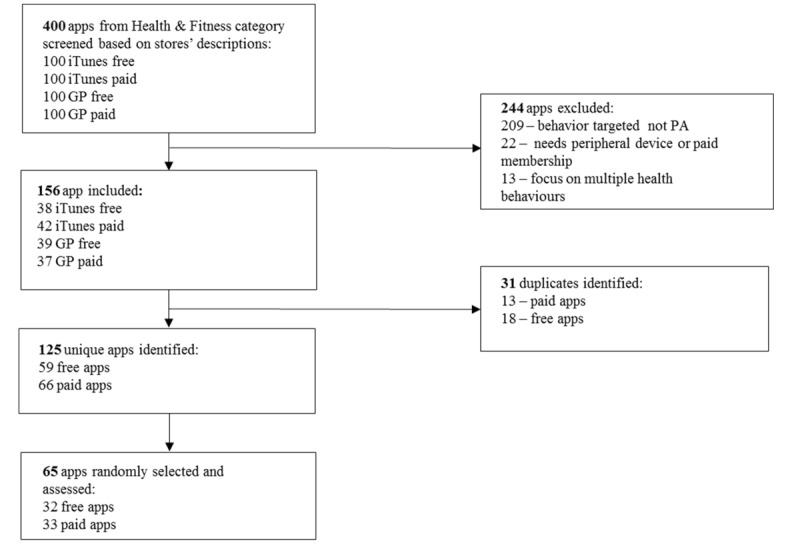
The top-ranked 400 free and paid apps from iTunes and Google Play stores were screened. Apps were included if the primary behavior targeted was PA, targeted users were adults, and the apps had stand-alone functionality. The apps were downloaded on mobile phones and assessed by 2 reviewers against the following quality assessment criteria: (1) users' data privacy and security, (2) presence of behavior change techniques (BCTs) and quality of the development and evaluation processes, and (3) user ratings and usability.
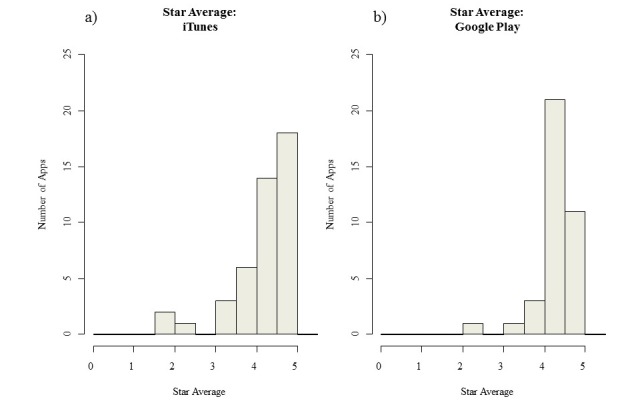
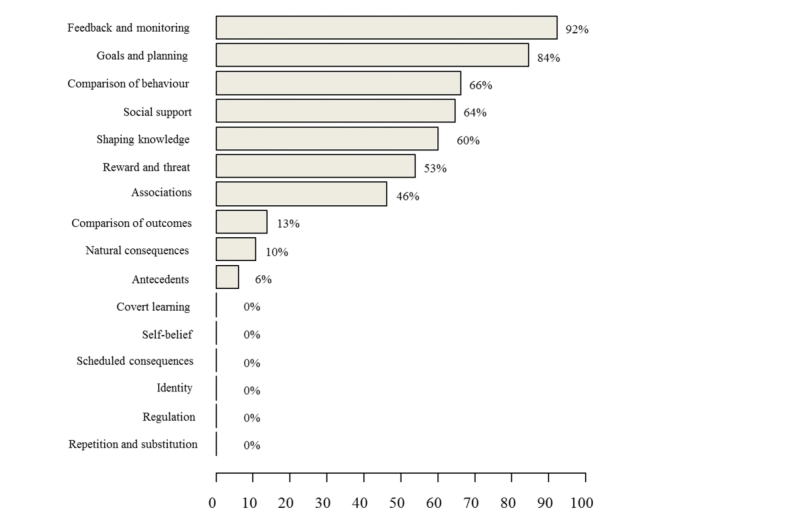
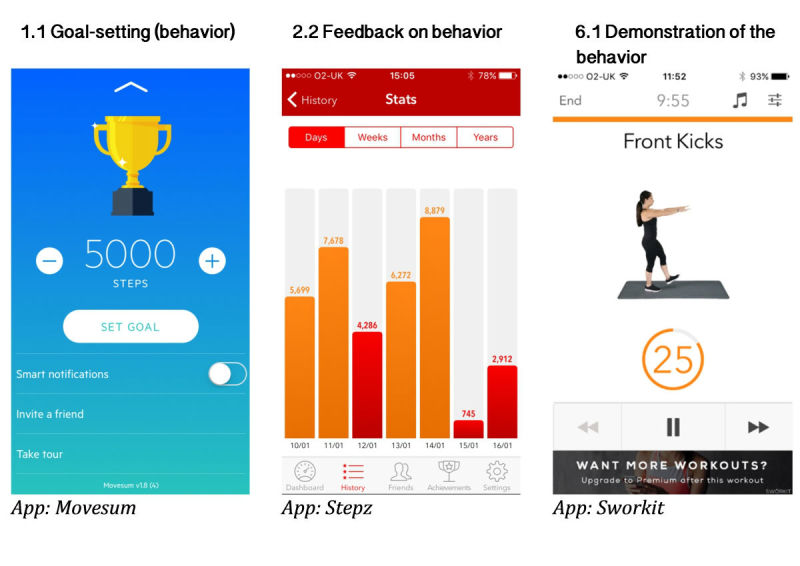
Out of 400 apps, 156 met the inclusion criteria, of which 65 apps were randomly selected to be downloaded and assessed. Almost 30% apps (19/65) did not have privacy policy. Every app contained at least one BCT, with an average number of 7 and a maximum of 13 BCTs. All but one app had commercial affiliation, 12 consulted an expert, and none reported involving users in the app development. Only 12 of 65 apps had a peer-reviewed study connected to the app. User ratings were high, with only a quarter of the ratings falling below 4 stars. The median usability score was excellent-86.3 out of 100.
Despite the popularity of PA apps available on the commercial market, there were substantial shortcomings in the areas of data safety and likelihood of effectiveness of the apps assessed. The limited quality of the apps may represent a missed opportunity for PA promotion.
在新的数字健康格局中,健康应用程序的兴起为健康促进创造了新的前景。市场上充斥着旨在增加身体活动(PA)的应用程序。尽管PA应用程序分布广泛且广受欢迎,但关于其有效性、用户体验和个人数据安全性的数据却很有限。
本综述和内容分析的目的是使用医疗保健质量指标评估市场上最受欢迎的PA应用程序的质量。
对iTunes和谷歌Play商店中排名前400的免费和付费应用程序进行筛选。如果主要针对的行为是PA,目标用户是成年人,且应用程序具有独立功能,则将其纳入。这些应用程序被下载到手机上,并由两名评审员根据以下质量评估标准进行评估:(1)用户数据隐私和安全;(2)行为改变技术(BCT)的存在以及开发和评估过程的质量;(3)用户评分和可用性。
在400个应用程序中,156个符合纳入标准,其中65个应用程序被随机选择下载并评估。近30%的应用程序(19/65)没有隐私政策。每个应用程序至少包含一项BCT,平均数量为7项,最多为13项BCT。除一个应用程序外,所有应用程序都有商业关联,12个咨询了专家,且没有一个报告在应用程序开发中让用户参与。65个应用程序中只有12个有与该应用程序相关的同行评审研究。用户评分较高,只有四分之一的评分低于4星。可用性中位数得分非常好——满分100分中的86.3分。
尽管商业市场上的PA应用程序很受欢迎,但在所评估的应用程序的数据安全和有效性可能性方面存在重大缺陷。应用程序质量有限可能意味着PA推广错失了一个机会。