Mwove Johnson K, Gogo Lilian A, Chikamai Ben N, Omwamba Mary, Mahungu Symon M
Dairy and Food science and Technology Department Egerton University Egerton Kenya.
Kenya Forest Research Institute Nairobi Kenya.
Food Sci Nutr. 2018 Jan 16;6(2):474-482. doi: 10.1002/fsn3.576. eCollection 2018 Mar.
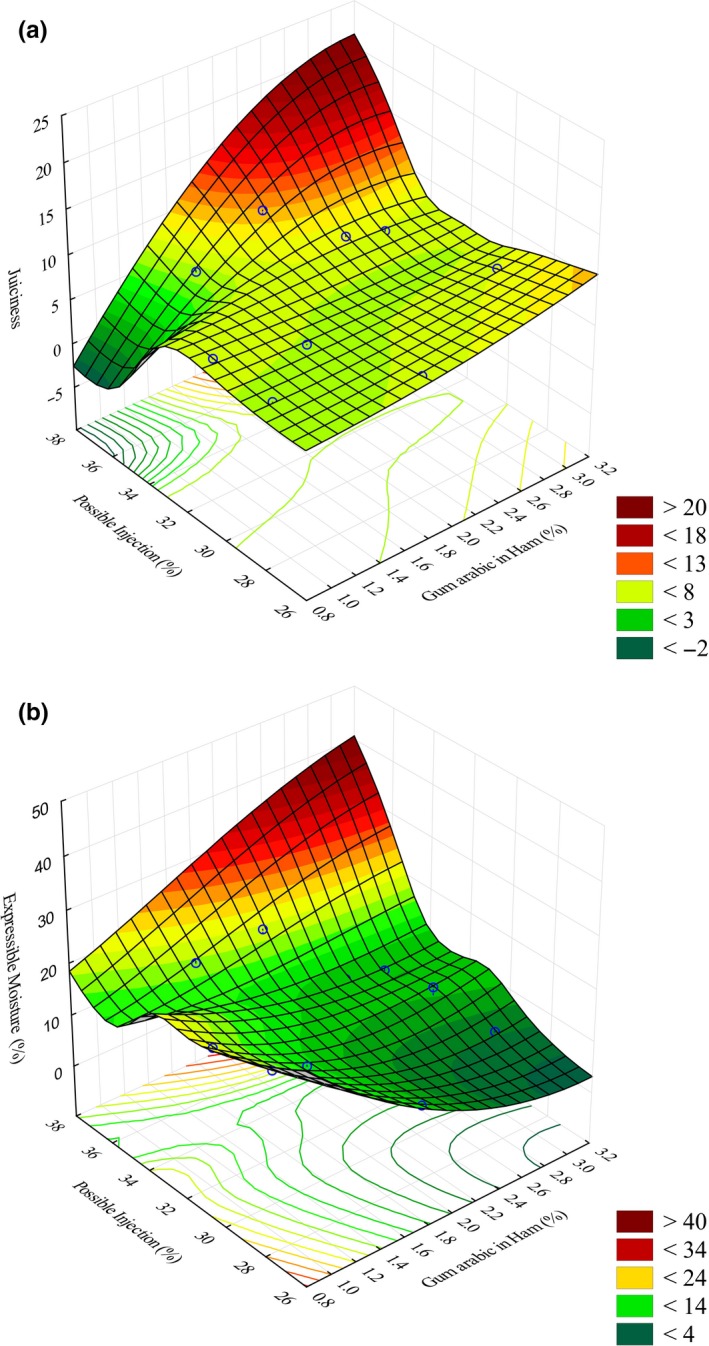
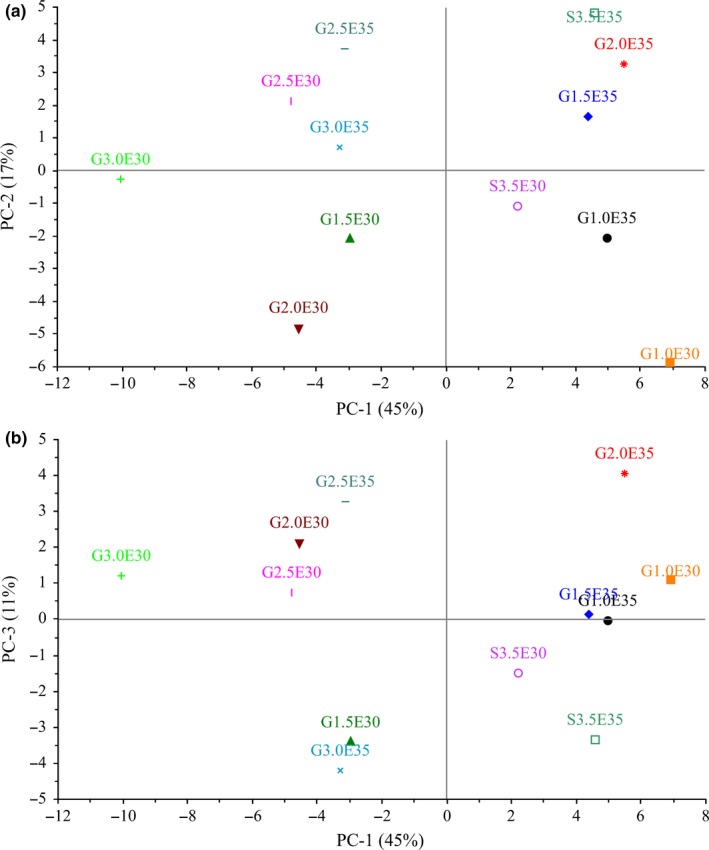
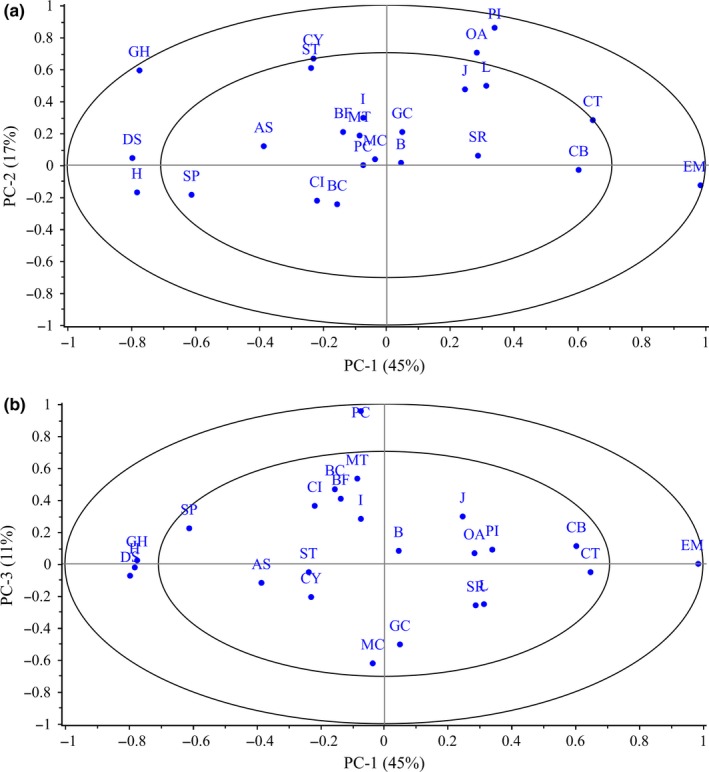
Principal component analysis (PCA) was carried out to study the relationship between 24 meat quality measurements taken from beef round samples that were injected with curing brines containing gum arabic (1%, 1.5%, 2%, 2.5%, and 3%) and soy protein concentrate (SPC) (3.5%) at two injection levels (30% and 35%). The measurements used to describe beef round quality were expressible moisture, moisture content, cook yield, possible injection, achieved gum arabic level in beef round, and protein content, as well as descriptive sensory attributes for flavor, texture, basic tastes, feeling factors, color, and overall acceptability. Several significant correlations were found between beef round quality parameters. The highest significant negative and positive correlations were recorded between color intensity and gray color and between color intensity and brown color, respectively. The first seven principal components (PCs) were extracted explaining over 95% of the total variance. The first PC was characterized by texture attributes (hardness and denseness), feeling factors (chemical taste and chemical burn), and two physicochemical properties (expressible moisture and achieved gum arabic level). Taste attribute (saltiness), physicochemical attributes (cook yield and possible injection), and overall acceptability were useful in defining the second PC, while the third PC was characterized by metallic taste, gray color, brown color, and physicochemical attributes (moisture and protein content). The correlation loading plot showed that the distribution of the samples on the axes of the first two PCs allowed for differentiation of samples injected to 30% injection level which were placed on the upper side of the biplot from those injected to 35% which were placed on the lower side. Similarly, beef samples extended with gum arabic and those containing SPC were also visible when scores for the first and third PCs were plotted. Thus, PCA was efficient in analyzing the quality characteristics of beef rounds extended with gum arabic.
进行主成分分析(PCA)以研究从牛后腿肉样品中获取的24种肉质测量值之间的关系,这些样品注射了含有阿拉伯胶(1%、1.5%、2%、2.5%和3%)和大豆浓缩蛋白(SPC)(3.5%)的腌制盐水,注射水平分为两种(30%和35%)。用于描述牛后腿肉品质的测量值包括可表达水分、水分含量、熟肉率、可能的注射量、牛后腿肉中达到的阿拉伯胶水平和蛋白质含量,以及风味、质地、基本味道、感觉因素、颜色和总体可接受性的描述性感官属性。在牛后腿肉品质参数之间发现了几个显著的相关性。颜色强度与灰色以及颜色强度与棕色之间分别记录到了最高的显著负相关和正相关。提取了前七个主成分(PC),它们解释了总方差的95%以上。第一个主成分的特征是质地属性(硬度和密度)、感觉因素(化学味道和化学灼烧感)以及两种物理化学性质(可表达水分和达到的阿拉伯胶水平)。味道属性(咸味)、物理化学属性(熟肉率和可能的注射量)以及总体可接受性有助于定义第二个主成分,而第三个主成分的特征是金属味、灰色、棕色以及物理化学属性(水分和蛋白质含量)。相关载荷图表明,在前两个主成分轴上样品的分布使得注射水平为30%的样品(位于双标图的上侧)与注射水平为35%的样品(位于下侧)得以区分。同样,当绘制第一个和第三个主成分的得分时,可以看到添加了阿拉伯胶的牛肉样品和含有SPC的牛肉样品。因此,主成分分析在分析添加了阿拉伯胶的牛后腿肉的品质特征方面是有效的。