Ridge Perry G, Kauwe John S K
Department of Biology, Brigham Young University, 4102 LSB, Provo, UT 84602 USA.
Curr Genet Med Rep. 2018;6(1):1-10. doi: 10.1007/s40142-018-0132-2. Epub 2018 Mar 1.
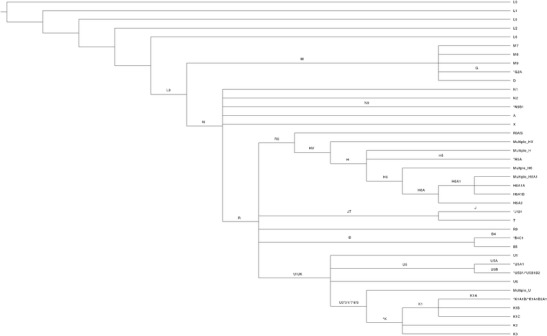
Alzheimer's disease (AD) is the most common form of dementia, affects an increasing number of people worldwide, has a rapidly increasing incidence, and is fatal. In the past several years, significant progress has been made towards solving the genetic architecture of AD, but our understanding remains incomplete and has not led to treatments that either cure or slow disease. There is substantial evidence that mitochondria are involved in AD: mitochondrial functional declines in AD, mitochondrial encoded gene expression changes, mitochondria are morphologically different, and mitochondrial fusion/fission are modified. While a majority of mitochondrial proteins are nuclear encoded and could lead to malfunction in mitochondria, the mitochondrial genome encodes numerous proteins important for the electron transport chain, which if damaged could possibly lead to mitochondrial changes observed in AD. Here, we review publications that describe a relationship between the mitochondrial genome and AD and make suggestions for analysis approaches and data acquisition, from existing datasets, to study the mitochondrial genetics of AD.
Numerous mitochondrial haplogroups and SNPs have been reported to influence risk for AD, but the majority of these have not been replicated, nor experimentally validated.
The role of the mitochondrial genome in AD remains elusive, and several impediments exist to fully understand the relationship between the mitochondrial genome and AD. Yet, by leveraging existing datasets and implementing appropriate analysis approaches, determining the role of mitochondrial genetics in risk for AD is possible.
阿尔茨海默病(AD)是最常见的痴呆形式,全球受其影响的人数不断增加,发病率迅速上升,且具有致命性。在过去几年中,在解析AD的遗传结构方面取得了重大进展,但我们的理解仍不完整,也尚未带来治愈或延缓疾病的治疗方法。有大量证据表明线粒体与AD有关:AD中线粒体功能下降、线粒体编码基因表达改变、线粒体形态不同以及线粒体融合/裂变发生改变。虽然大多数线粒体蛋白是由核基因编码的,可能导致线粒体功能异常,但线粒体基因组编码了许多对电子传递链很重要的蛋白质,如果这些蛋白质受损,可能会导致在AD中观察到的线粒体变化。在此,我们综述了描述线粒体基因组与AD之间关系的文献,并对从现有数据集中研究AD线粒体遗传学的分析方法和数据获取提出建议。
据报道,许多线粒体单倍群和单核苷酸多态性(SNP)会影响AD风险,但其中大多数尚未得到重复验证,也未经过实验验证。
线粒体基因组在AD中的作用仍然难以捉摸,要全面理解线粒体基因组与AD之间的关系存在若干障碍。然而,通过利用现有数据集并实施适当的分析方法,确定线粒体遗传学在AD风险中的作用是有可能的。