Brain and Consciousness Group (ENS, EHESS, CNRS), École Normale Supérieure - PSL Research University, Paris, France.
École Doctorale Cerveau Cognition Comportement, Université Pierre et Marie Curie, Paris, France.
Sci Rep. 2018 Mar 22;8(1):5055. doi: 10.1038/s41598-018-23467-3.
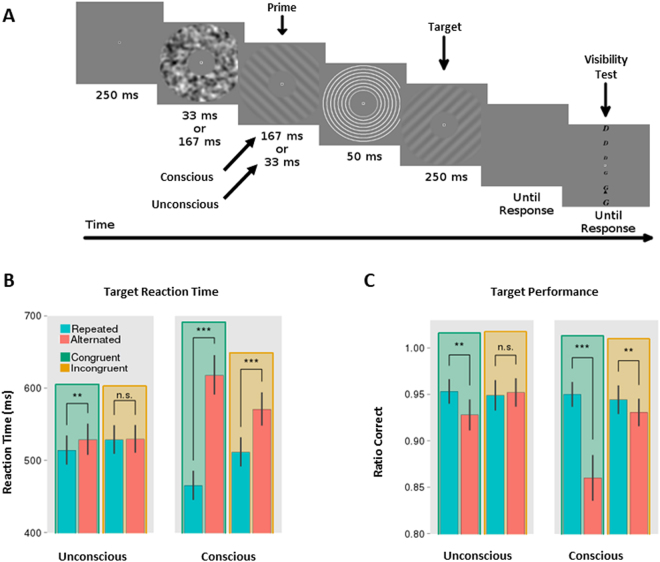
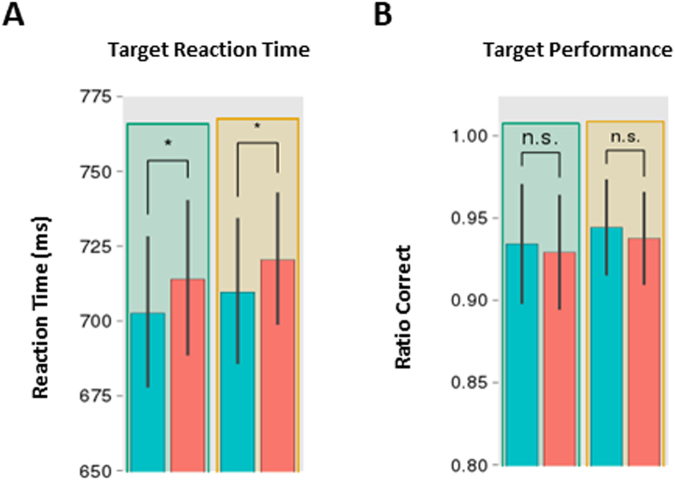
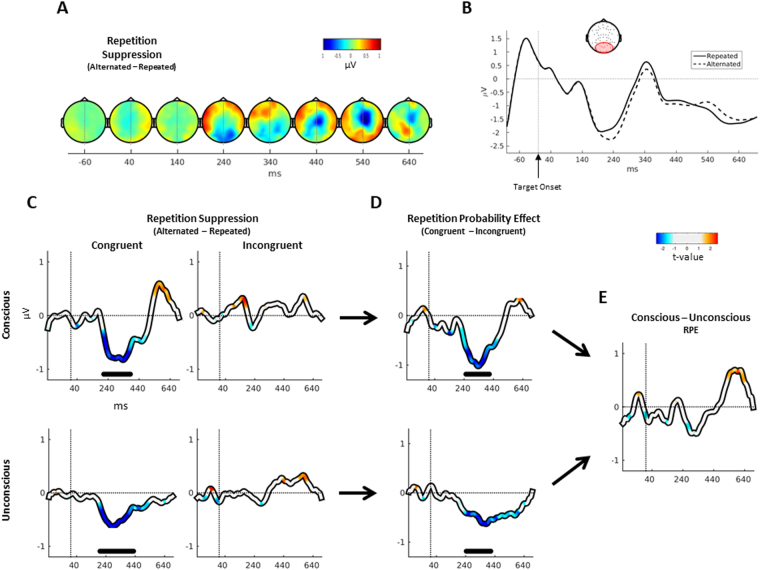
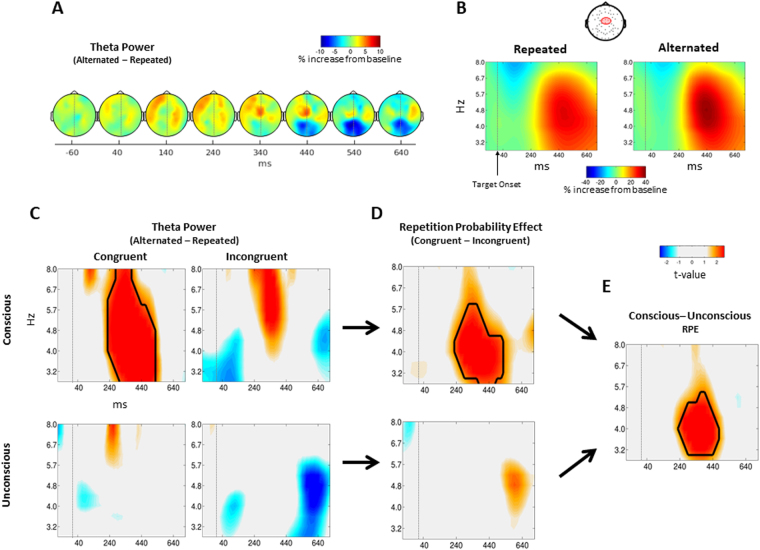
Stimulus repetition induces attenuated brain responses. This phenomenon, termed repetition suppression (RS), is classically held to stem from bottom-up neuronal adaptation. However, recent studies suggest that RS is driven by top-down predictive mechanisms. It remains controversial whether these top-down mechanisms of RS rely on conscious strategies, or if they represent a more fundamental aspect of perception, coding for physical properties of the repeated feature. The presence of top-down effects in the absence of perceptual awareness would indicate that conscious strategies are not sufficient to explain top-down mechanisms of RS. We combined an unconscious priming paradigm with EEG recordings and tested whether RS can be modulated by the probability of encountering a repetition, even in the absence of awareness. Our results show that both behavioural priming and RS near occipital areas are modulated by repetition probability, regardless of prime awareness. This contradicts previous findings that have argued that RS modulation is a by-product of conscious strategies. In contrast, we found that the increase in theta-band power following unrepeated trials - an index of conflict detection - is modulated only by expectations during conscious primes, implicating the use of conscious strategies. Together, our results suggest that the influence of predictions on RS can be either automatic in sensory brain regions or dependent on conscious strategies.
刺激重复会引起大脑反应减弱。这种现象被称为重复抑制(RS),经典观点认为它源自于自上而下的神经元适应。然而,最近的研究表明,RS 是由自上而下的预测机制驱动的。RS 的这些自上而下的机制是否依赖于有意识的策略,或者它们是否代表了感知的一个更基本方面,对重复特征的物理性质进行编码,这仍然存在争议。如果在没有知觉意识的情况下存在自上而下的效应,这将表明有意识的策略不足以解释 RS 的自上而下的机制。我们结合了无意识启动范式和 EEG 记录,测试了即使在没有意识的情况下,重复的可能性是否可以调节 RS。我们的结果表明,无论是在意识还是无意识的情况下,行为启动和枕叶区域的 RS 都受到重复概率的调节。这与之前认为 RS 调节是有意识策略的副产品的研究结果相矛盾。相比之下,我们发现,在未重复的试验后,theta 波段功率的增加——冲突检测的一个指标——仅受到有意识的启动期间的预期调节,这表明有意识的策略的使用。总的来说,我们的结果表明,预测对 RS 的影响在感觉大脑区域可能是自动的,也可能依赖于有意识的策略。