College of Food Science and Engineering, Gansu Agricultural University, Lanzhou, China.
College of Science, Gansu Agricultural University, Lanzhou, China.
PLoS One. 2018 Mar 23;13(3):e0194876. doi: 10.1371/journal.pone.0194876. eCollection 2018.
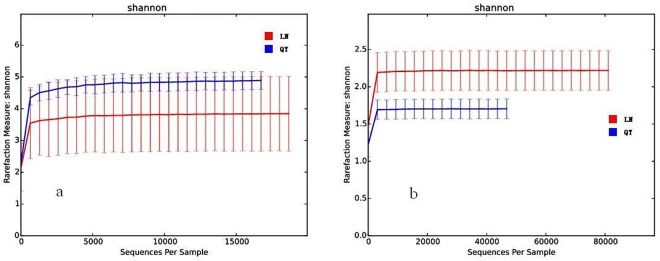
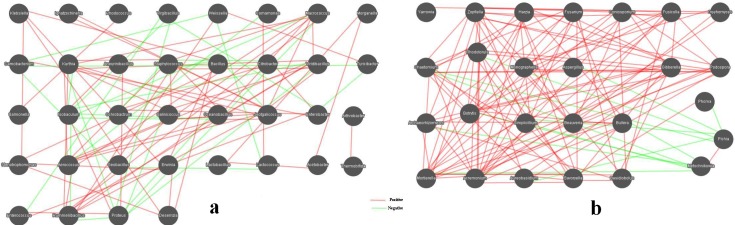
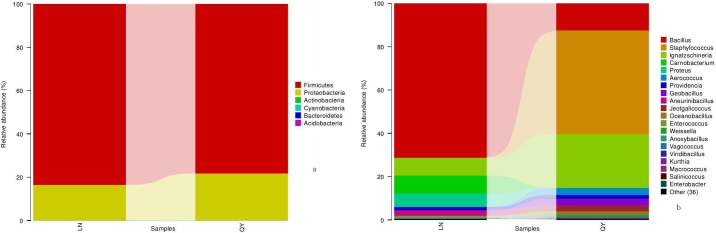
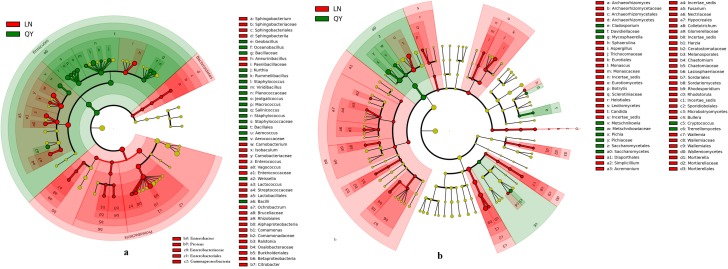
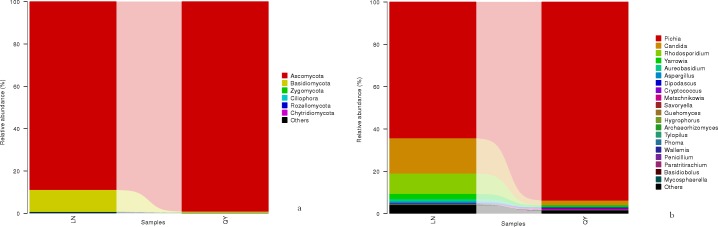
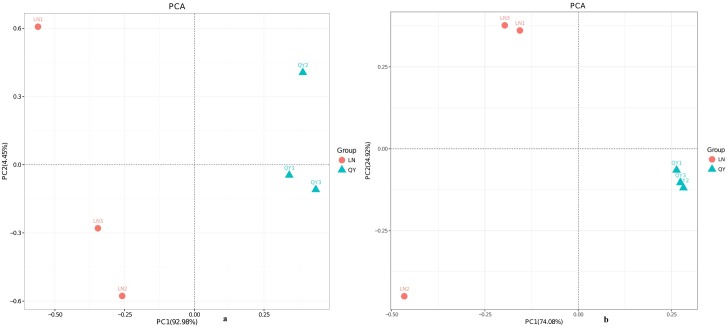
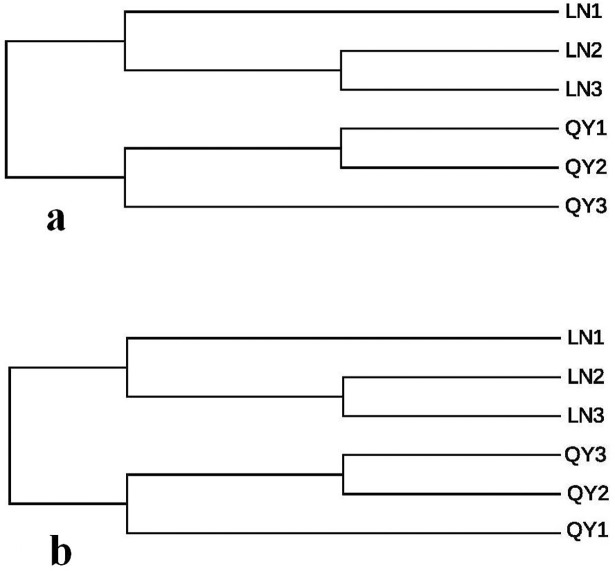
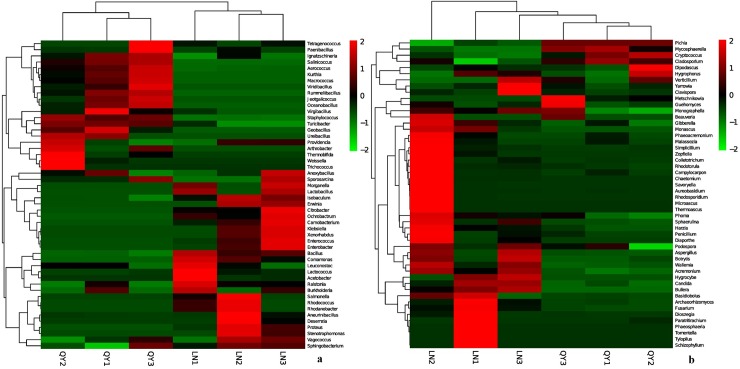
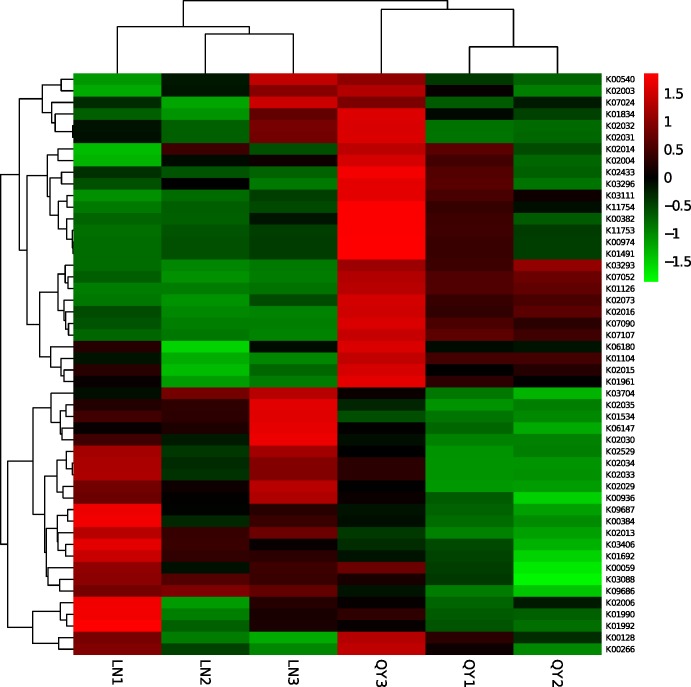
Douchi has been consumed as a flavoring ingredient for centuries. During production of douchi, numerous microorganisms play important roles in the hydrolysis and conversion of proteins and starch, which are related to the quality and flavor of the end product. Therefore, in the present study, the microbial diversity in two types of home-made traditional bacterial douchi from Gansu province in northwest China was studied by high-throughput sequencing, and a corresponding analysis of the bacterial and fungal communities were conducted. The results showed that geography may have impacted the fungal diversity and the bacterial and fungal species richness in the samples. The results also showed that the microbial community was significantly different in samples of different origin and the difference in the microbial community at the genus level was greater than at phylum level. Two dominant bacterial genera (Bacillus and Ignatzschineria) were common to the two samples, both of which had a relative abundance of more than 1%. Four bacterial genera (Staphylococcus, Aerococcus, Geobacillus, and Jeotgalicoccus) were dominant only in the sample from Qingyang, while another four (Carnobacterium, Proteus, Aneurinibacillus, and Enterococcus) were dominant only in the sample from Longnan. Two dominant fungal genera (Pichia and Candida) were shared by the two samples. Additionally, two genera (Rhodosporidium and Yarrowia) were dominant only in samples from Longnan. The functional genes of the bacteria present in samples indicated that a significant difference was observed in the bacterial community between samples of different origin. We also found that microbial interactions between bacterial and fungal communities in the samples were very complex. This study provides previously unknown information regarding the impact of the environment on microbial communities in douchi and lays a foundation for further investigations into food ecology in bacterial douchi.
豆豉作为一种调味料已经有几个世纪的食用历史了。在豆豉的生产过程中,大量微生物在蛋白质和淀粉的水解和转化中发挥着重要作用,这与最终产品的质量和风味有关。因此,本研究采用高通量测序技术对来自中国西北甘肃省的两种自制传统细菌豆豉中的微生物多样性进行了研究,并对细菌和真菌群落进行了相应分析。结果表明,地理环境可能会影响真菌多样性以及样本中细菌和真菌的丰富度。结果还表明,不同来源的样本中微生物群落存在显著差异,且在属水平上的微生物群落差异大于在门水平上的差异。两个优势细菌属(芽孢杆菌属和 Ignatzschineria 属)在两个样本中都很常见,相对丰度均超过 1%。四个细菌属(葡萄球菌属、气球菌属、地芽孢杆菌属和杰氏棒杆菌属)仅在庆阳样本中占优势,而另外四个细菌属(肠球菌属、变形菌属、解糖菌属和栖热菌属)仅在陇南样本中占优势。两个优势真菌属(毕赤酵母属和假丝酵母属)在两个样本中都有共享。此外,两个属(红色毛霉属和酵母属)仅在陇南样本中占优势。样本中存在的细菌功能基因表明,不同来源的样本之间细菌群落存在显著差异。我们还发现,样本中细菌和真菌群落之间的微生物相互作用非常复杂。本研究提供了关于环境对豆豉中微生物群落影响的未知信息,为进一步研究细菌豆豉中的食品生态学奠定了基础。