Core Laboratory of Translational Medicine, State Key Laboratory of Kidney Disease, Chinese PLA General Hospital, 28 Fu-Xing Road, Beijing, 100853, China.
School of Medicine, Nankai University, 94 Weijin Road, Tianjin, 300071, China.
Cancer Med. 2018 May;7(5):1670-1679. doi: 10.1002/cam4.1390. Epub 2018 Mar 23.
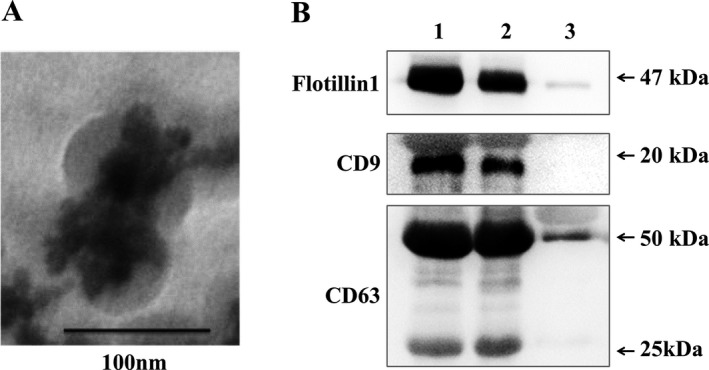
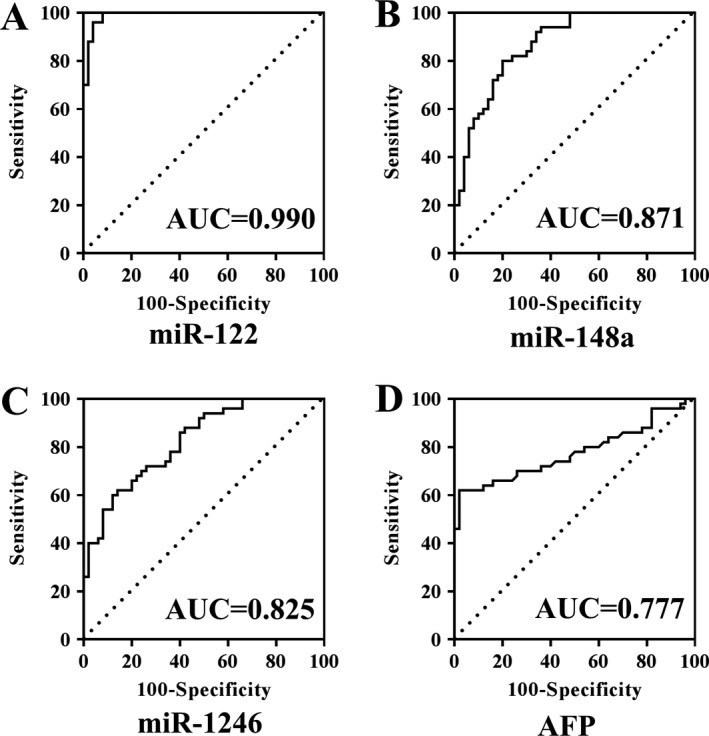
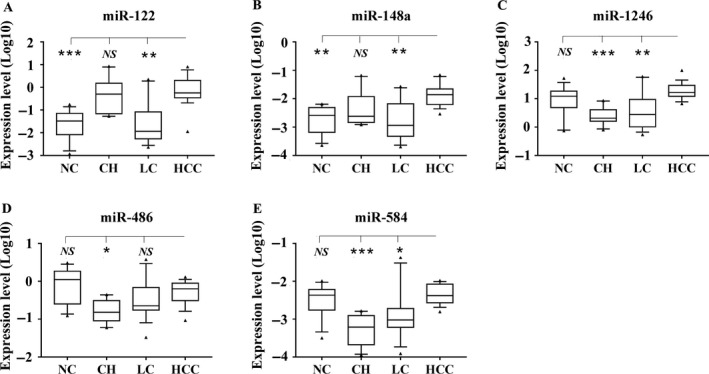
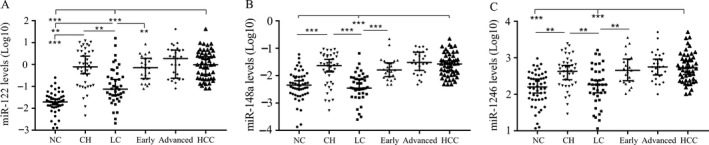
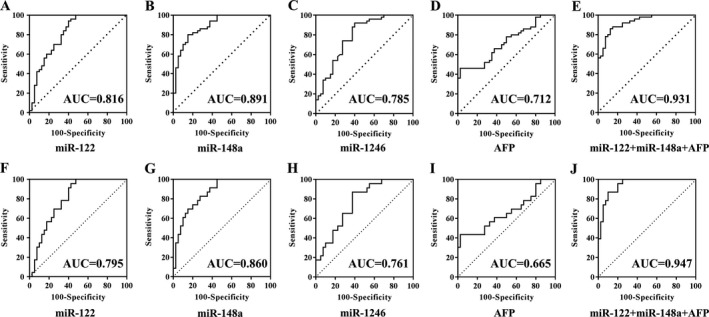
Exosomal microRNAs have recently been studied as the potential diagnostic marker for various malignancies, including hepatocellular carcinoma (HCC). The aim of this study was to investigate serum exosomal microRNA profiles as HCC diagnostic marker. Transmission electron microscopy and Western blot were used to identify serum exosomes. Deep sequencing was performed to screen differentially expressed microRNAs between HCC (n = 5) and liver cirrhosis (LC, n = 5) groups. Three upregulated and two downregulated microRNAs were selected for qPCR analysis. The levels of selected microRNAs were normalized to Caenorhabditis elegans miR-39 microRNA mimics. Serum exosomal level of miR-122, miR-148a, and miR-1246 was further analyzed and significantly higher in HCC than LC and normal control (NC) groups (P < 0.001), but not different from chronic hepatitis group (P > 0.05). The receiver operating characteristic curve was used to evaluate the diagnostic performance of candidate microRNAs. Area under the curve (AUC) of miR-148a was 0.891 [95% confidence interval (CI), 0.809-0.947] in discriminating HCC from LC, remarkably higher than alpha-fetoprotein (AFP) (AUC: 0.712, 95% CI: 0.607-0.803). Binary logistic regression was adopted to establish the diagnostic model for discriminating HCC from LC. And the combination of miR-122, miR-148a, and AFP increased the AUC to 0.931 (95% CI, 0.857-0.973), which can also be applied for distinguishing early HCC from LC. miR-122 was the best for differentiating HCC from NC (AUC: 0.990, 95% CI, 0.945-1.000). These data suggest that serum exosomal microRNAs signature or their combination with traditional biomarker may be used as a suitable peripheral screening tool for HCC.
外泌体 microRNAs 最近被研究作为各种恶性肿瘤的潜在诊断标志物,包括肝细胞癌 (HCC)。本研究旨在探讨血清外泌体 microRNA 谱作为 HCC 诊断标志物。透射电子显微镜和 Western blot 用于鉴定血清外泌体。进行深度测序以筛选 HCC (n=5)和肝硬化 (LC,n=5)组之间差异表达的 microRNAs。选择三个上调和两个下调的 microRNAs 进行 qPCR 分析。选择的 microRNAs 的水平与秀丽隐杆线虫 miR-39 microRNA 模拟物进行归一化。进一步分析和显著高于 LC 和正常对照组 (NC) 组的 HCC 患者血清外泌体 miR-122、miR-148a 和 miR-1246 水平 (P<0.001),但与慢性肝炎组无差异 (P>0.05)。采用受试者工作特征曲线评估候选 microRNAs 的诊断性能。miR-148a 的曲线下面积 (AUC) 为 0.891[95%置信区间 (CI),0.809-0.947],在区分 HCC 与 LC 方面明显高于甲胎蛋白 (AFP) (AUC:0.712,95%CI:0.607-0.803)。采用二元逻辑回归建立用于区分 HCC 与 LC 的诊断模型。miR-122、miR-148a 和 AFP 的组合将 AUC 提高至 0.931(95%CI,0.857-0.973),也可用于区分早期 HCC 与 LC。miR-122 是区分 HCC 与 NC 的最佳指标 (AUC:0.990,95%CI,0.945-1.000)。这些数据表明,血清外泌体 microRNAs 特征或其与传统生物标志物的组合可能作为 HCC 的合适外周筛查工具。