
社会保护和消除贫困对全球结核病发病率的影响:基于可持续发展目标 1 的统计建模分析。
The impact of social protection and poverty elimination on global tuberculosis incidence: a statistical modelling analysis of Sustainable Development Goal 1.
机构信息
Department of Infectious Disease Epidemiology, London School of Hygiene & Tropical Medicine, London, UK.
Global TB Programme, World Health Organization, Geneva, Switzerland.
出版信息
Lancet Glob Health. 2018 May;6(5):e514-e522. doi: 10.1016/S2214-109X(18)30195-5. Epub 2018 Mar 23.
BACKGROUND
The End TB Strategy and the Sustainable Development Goals (SDGs) are intimately linked by their common targets and approaches. SDG 1 aims to end extreme poverty and expand social protection coverage by 2030. Achievement of SDG 1 is likely to affect the tuberculosis epidemic through a range of pathways. We estimate the reduction in global tuberculosis incidence that could be obtained by reaching SDG 1.
METHODS
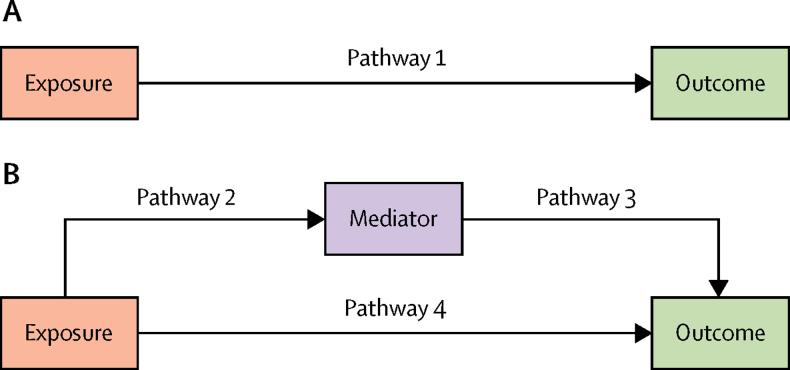
We developed a conceptual framework linking key indicators of SDG 1 progress to tuberculosis incidence via well described risk factor pathways and populated it with data from the SDG data repository and the WHO tuberculosis database for 192 countries. Correlations and mediation analyses informed the strength of the association between the SDG 1 subtargets and tuberculosis incidence, resulting in a simplified framework for modelling. The simplified framework linked key indicators for SDG 1 directly to tuberculosis incidence. We applied an exponential decay model based on linear associations between SDG 1 indicators and tuberculosis incidence to estimate tuberculosis incidence in 2035.
FINDINGS
Ending extreme poverty resulted in a reduction in global incidence of tuberculosis of 33·4% (95% credible interval 15·5-44·5) by 2035 and expanding social protection coverage resulted in a reduction in incidence of 76·1% (45·2-89·9) by 2035; both pathways together resulted in a reduction in incidence of 84·3% (54·7-94·9).
INTERPRETATION
Full achievement of SDG 1 could have a substantial effect on the global burden of tuberculosis. Cross-sectoral approaches that promote poverty reduction and social protection expansion will be crucial complements to health interventions, accelerating progress towards the End TB targets.
FUNDING
World Health Organization.
背景
《终结结核病策略》与可持续发展目标(SDGs)通过共同的目标和方法紧密相连。SDG1 的目标是到 2030 年消除极端贫困并扩大社会保护覆盖面。实现 SDG1 很可能通过一系列途径影响结核病流行。我们估计实现 SDG1 可使全球结核病发病率降低多少。
方法
我们制定了一个概念框架,通过明确的风险因素途径将 SDG1 进展的关键指标与结核病发病率联系起来,并利用 SDG 数据存储库和世卫组织结核病数据库中 192 个国家的数据对其进行填充。相关性和中介分析为 SDG1 子目标与结核病发病率之间的关联强度提供了信息,从而为建模制定了一个简化框架。简化框架将 SDG1 的关键指标直接与结核病发病率联系起来。我们应用了一种基于 SDG1 指标与结核病发病率之间线性关联的指数衰减模型来估计 2035 年的结核病发病率。
结果
到 2035 年,消除极端贫困使全球结核病发病率降低了 33.4%(95%可信区间 15.5-44.5),扩大社会保护覆盖面使发病率降低了 76.1%(45.2-89.9);两种途径共同使发病率降低了 84.3%(54.7-94.9)。
解释
全面实现 SDG1 可能对全球结核病负担产生重大影响。促进减贫和扩大社会保护的跨部门方法将是卫生干预措施的重要补充,从而加速实现终结结核病目标的进展。
资金来源
世界卫生组织。


 Zotero 插件