Kretschmer Rafael, Ferguson-Smith Malcolm A, de Oliveira Edivaldo Herculano Correa
Programa de Pós-graduação em Genética e Biologia Molecular, PPGBM, Universidade Federal do Rio Grande do Sul, Porto Alegre, Rio Grande do Sul 91509-900, Brazil.
Cambridge Resource Centre for Comparative Genomics, University of Cambridge Department of Veterinary Medicine, Cambridge CB3 0ES, UK.
Genes (Basel). 2018 Mar 27;9(4):181. doi: 10.3390/genes9040181.
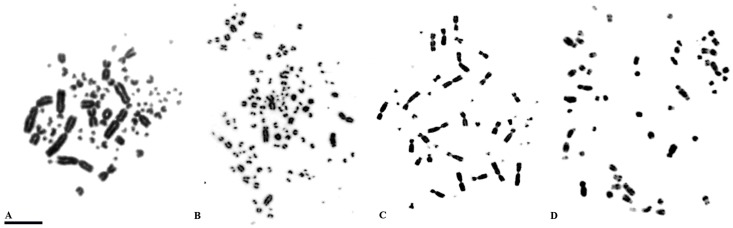
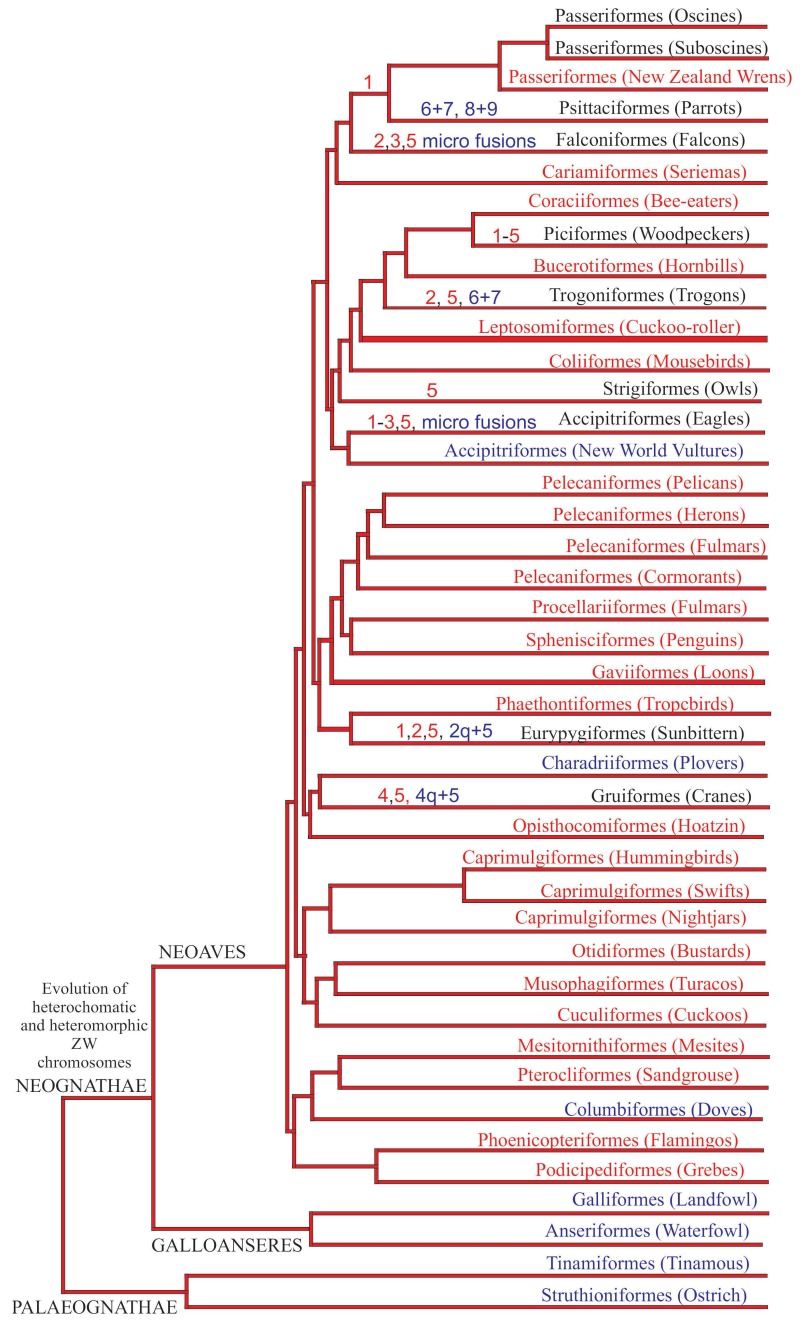
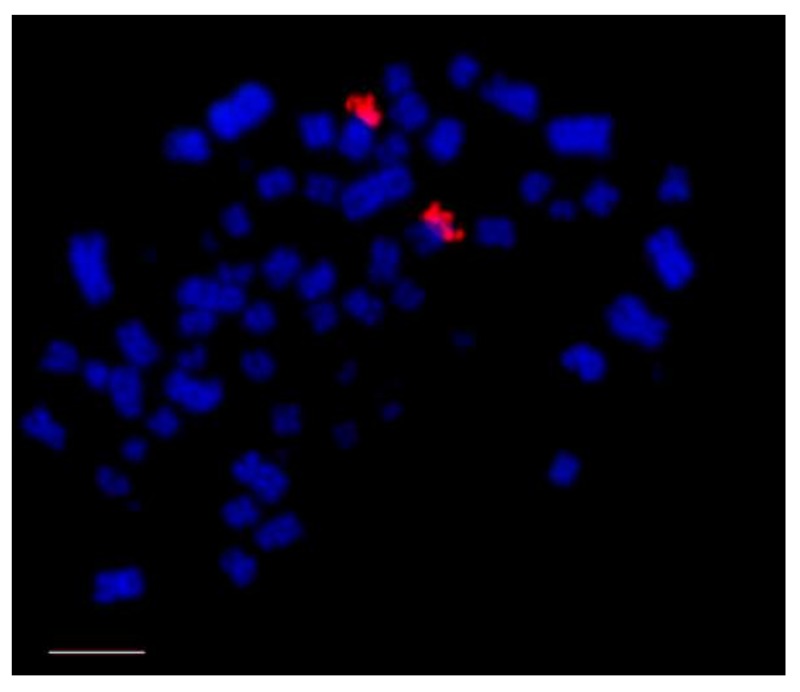
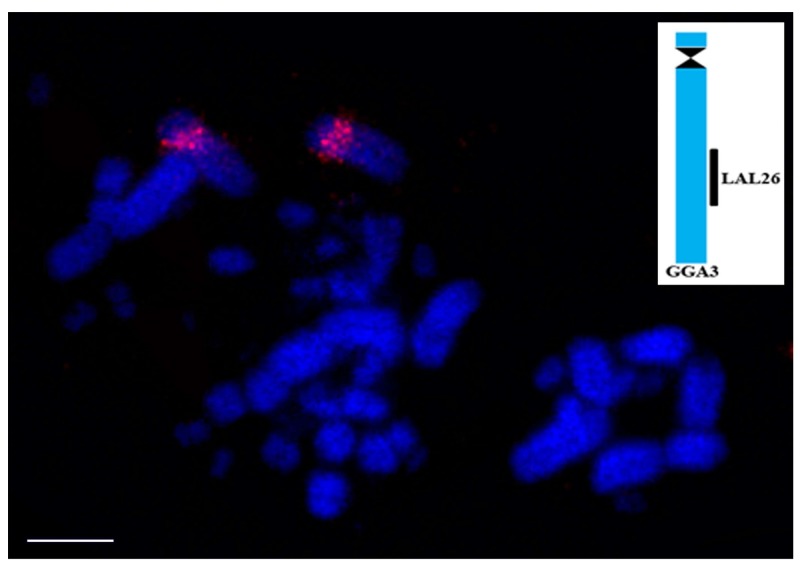
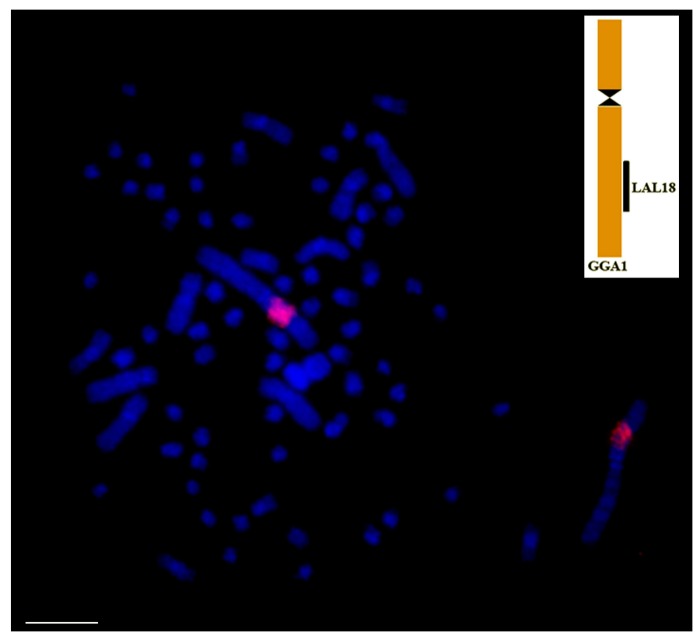
In the last few decades, there have been great efforts to reconstruct the phylogeny of Neoaves based mainly on DNA sequencing. Despite the importance of karyotype data in phylogenetic studies, especially with the advent of fluorescence in situ hybridization (FISH) techniques using different types of probes, the use of chromosomal data to clarify phylogenetic proposals is still minimal. Additionally, comparative chromosome painting in birds is restricted to a few orders, while in mammals, for example, virtually all orders have already been analyzed using this method. Most reports are based on comparisons using probes, and only a small number of species have been analyzed with more informative sets of probes, such as those from and , which show ancestral macrochromosomes rearranged in alternative patterns. Despite this, it is appropriate to review the available cytogenetic information and possible phylogenetic conclusions. In this report, the authors gather both classical and molecular cytogenetic data and describe some interesting and unique characteristics of karyotype evolution in birds.
在过去几十年里,人们主要基于DNA测序对新鸟亚纲的系统发育进行了大量重建工作。尽管核型数据在系统发育研究中很重要,特别是随着使用不同类型探针的荧光原位杂交(FISH)技术的出现,但利用染色体数据来阐明系统发育观点的情况仍然很少。此外,鸟类的比较染色体描绘仅限于少数目,而在哺乳动物中,例如,几乎所有目都已经使用这种方法进行了分析。大多数报告基于使用探针的比较,只有少数物种使用了更具信息性的探针集进行分析,例如来自[具体物种1]和[具体物种2]的探针,这些探针显示祖先的大染色体以不同模式重排。尽管如此,回顾现有的细胞遗传学信息和可能的系统发育结论是合适的。在本报告中,作者收集了经典和分子细胞遗传学数据,并描述了鸟类核型进化的一些有趣且独特的特征。