Mehrbod Parvaneh, Abdalla Muna A, Njoya Emmanuel M, Ahmed Aroke S, Fotouhi Fatemeh, Farahmand Behrokh, Gado Dorcas A, Tabatabaian Mansoureh, Fasanmi Olubunmi G, Eloff Jacobus N, McGaw Lyndy J, Fasina Folorunso O
Department of Veterinary Tropical Diseases, University of Pretoria, Pretoria, South Africa.
Influenza and Other Respiratory Viruses Department, Pasteur Institute of IRAN, Tehran, Iran.
BMC Complement Altern Med. 2018 Mar 27;18(1):112. doi: 10.1186/s12906-018-2184-y.
Influenza infection remains a major health threat for animals and humans which crucially requires effective antiviral remedies. The usage of herbal medications as readily available alternatives for their compatibility with the body and fewer side effects compared to synthetic chemical treatments has become popular globally. The aim of this study was to investigate and screen in vitro anti-influenza activity of extracts of five South African medicinal plants, namely Tabernaemontana ventricosa, Cussonia spicata, Rapanea melanophloeos, Pittosporum viridiflorum and Clerodendrum glabrum, species which are used traditionally for the treatment of several diseases such as inflammatory and respiratory diseases.
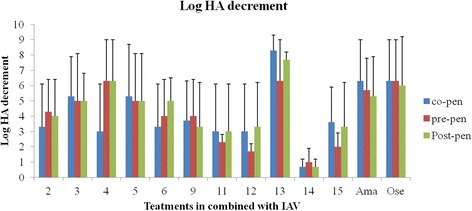
Methanol, ethanol (100% and 30%), acetone, hot and cold water extracts of the powdered plants leaves were obtained by standard methods. The cytotoxicity was determined by the MTT colorimetric assay on MDCK cells. The concentrations below CC values were tested for antiviral activity against influenza A virus (IAV) in different combination treatments. The effect of extracts on viral surface glycoproteins and viral titer were tested by HI and HA virological assays, respectively.
Based on the applied methods, the most effective results against IAV were obtained from Rapanea melanophloeos methanol leaf extract (EC = 113.3 μg/ml) and Pittosporum viridiflorum methanol, 100% and 30% ethanol and acetone leaf extracts (EC values = 3.6, 3.4, 19.2, 82.3 μg/ml, respectively) in all types of combined treatments especially in pre- and post-penetration combined treatments with highly significant effects against viral titer (P ≤ 0.01).
The outcomes offer for the first time a scientific basis for the use of extracts of Rapanea melanophloeos and Pittosporum viridiflorum against IAV. It is worth focusing on the isolation and identification of effective active compounds and elucidating the mechanism of action from these species. However, Tabernaemontana ventricosa, Cussonia spicata and Clerodendrum glabrum leaf extracts were ineffective in vitro in this study.
流感感染仍然是动物和人类面临的主要健康威胁,这迫切需要有效的抗病毒药物。与合成化学疗法相比,草药因其与人体的兼容性和较少的副作用而成为全球流行的现成替代品。本研究的目的是调查和筛选五种南非药用植物的提取物的体外抗流感活性,这五种植物分别是非洲山橙、刺参、黑脉蒲桃、绿花海桐和光萼大青,这些植物传统上用于治疗多种疾病,如炎症和呼吸道疾病。
采用标准方法获得植物叶片粉末的甲醇、乙醇(100%和30%)、丙酮、热水和冷水提取物。通过MTT比色法在MDCK细胞上测定细胞毒性。对低于CC值的浓度进行不同联合处理下抗甲型流感病毒(IAV)的抗病毒活性测试。分别通过血凝抑制(HI)和血凝素(HA)病毒学试验检测提取物对病毒表面糖蛋白和病毒滴度的影响。
基于所应用的方法,在所有类型的联合处理中,尤其是在穿透前和穿透后联合处理中,黑脉蒲桃甲醇叶提取物(EC = 113.3 μg/ml)以及绿花海桐甲醇、100%和30%乙醇及丙酮叶提取物(EC值分别为3.6、3.4、19.2、82.3 μg/ml)对IAV的效果最为显著,对病毒滴度有高度显著影响(P≤0.01)。
研究结果首次为使用黑脉蒲桃和绿花海桐提取物对抗IAV提供了科学依据。值得关注从这些植物中分离和鉴定有效活性化合物并阐明其作用机制。然而,在本研究中,非洲山橙、刺参和光萼大青叶提取物在体外无效。