Molecular Microbiology Section, Laboratory of Clinical Immunology and Microbiology (LCIM), National Institute of Allergy and Infectious Diseases (NIAID), National Institutes of Health (NIH), Bethesda, Maryland, USA.
Oncovir Inc., Washington, DC, USA.
mBio. 2018 Mar 27;9(2):e00422-18. doi: 10.1128/mBio.00422-18.
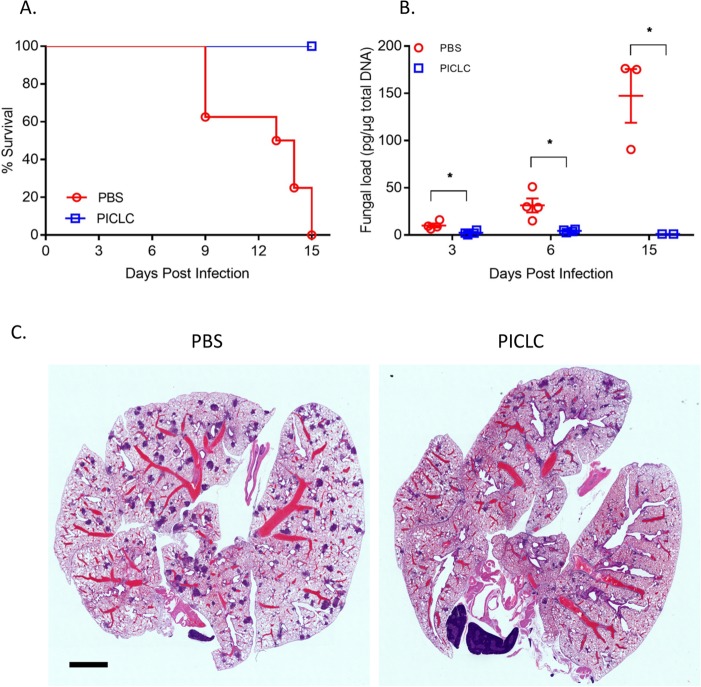
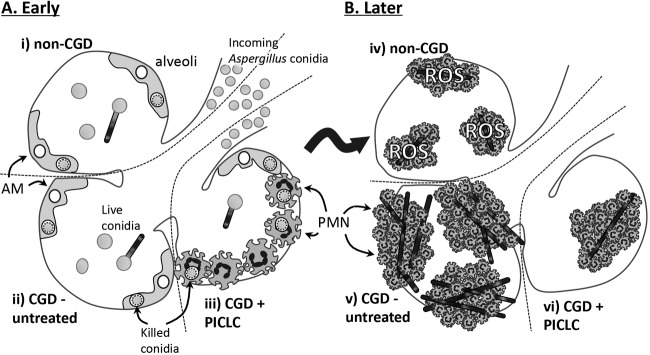
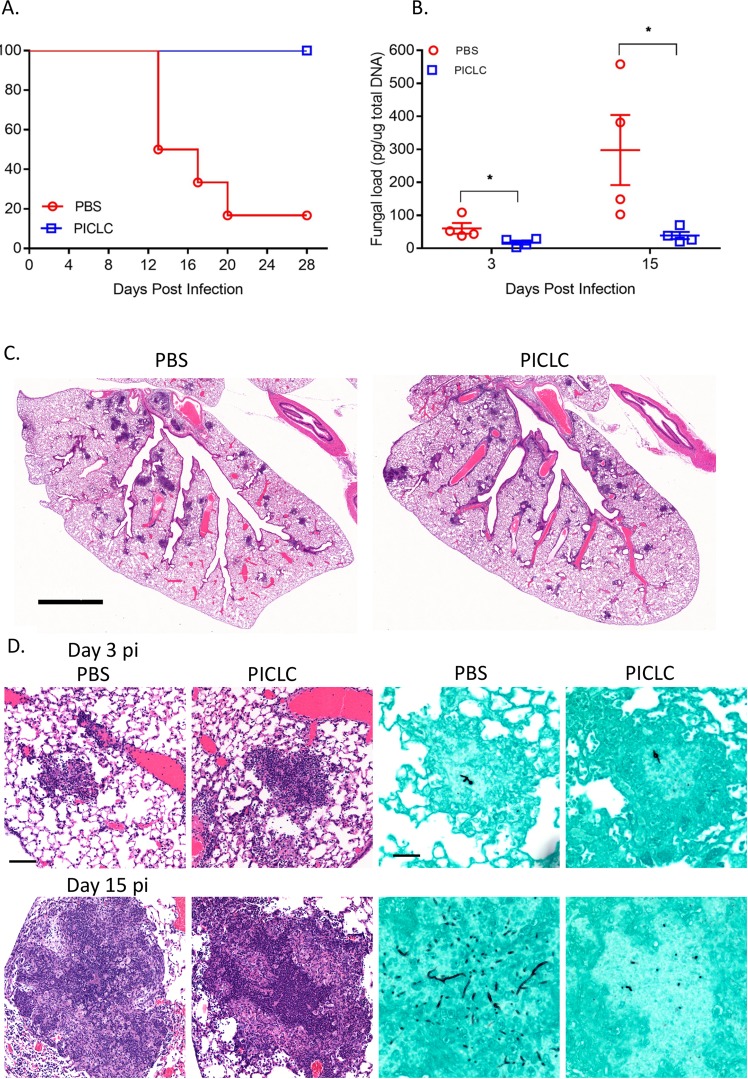
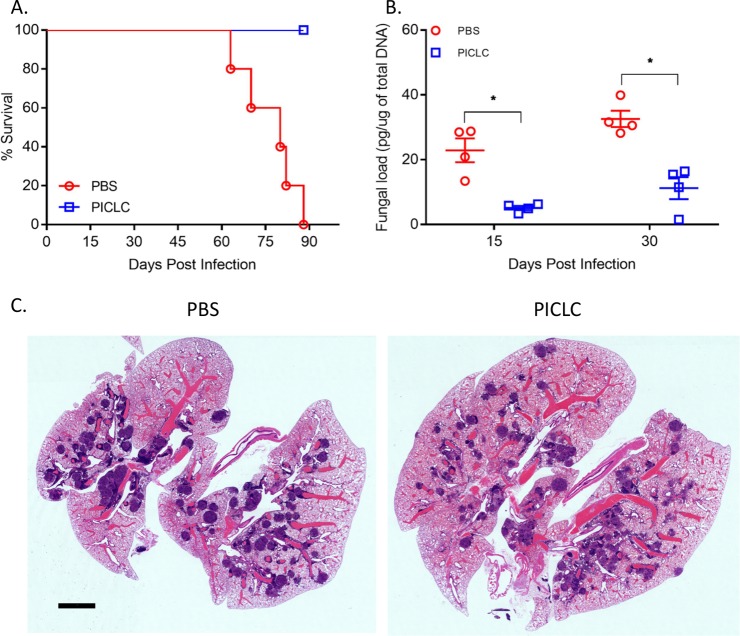
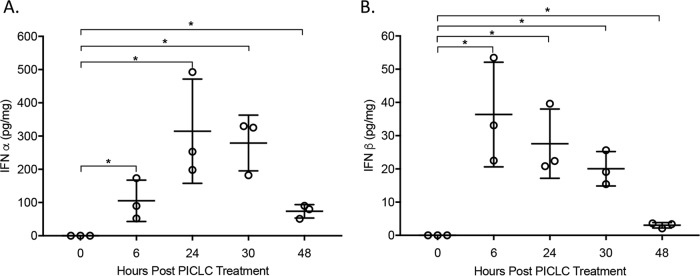
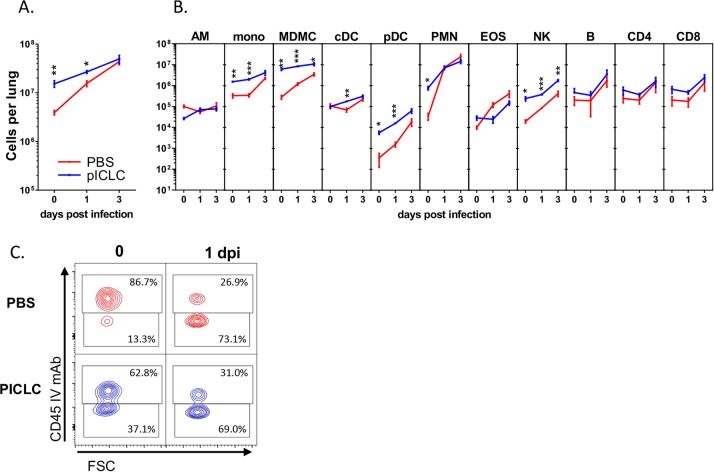
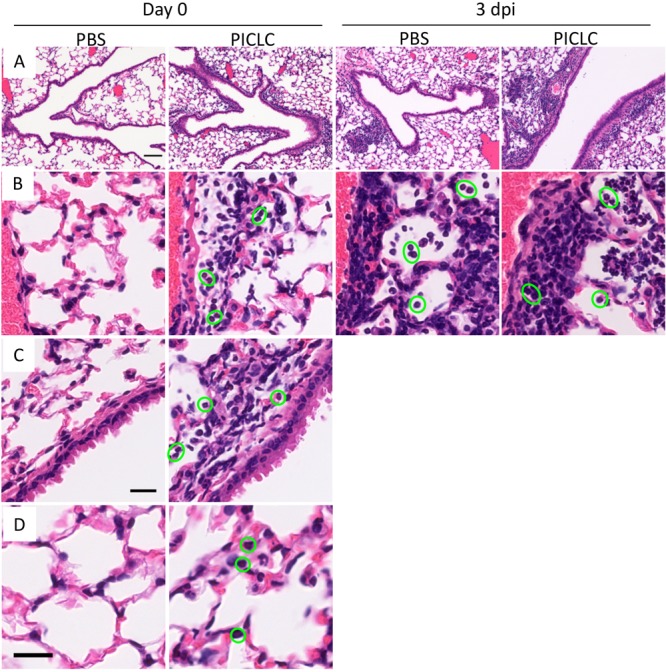
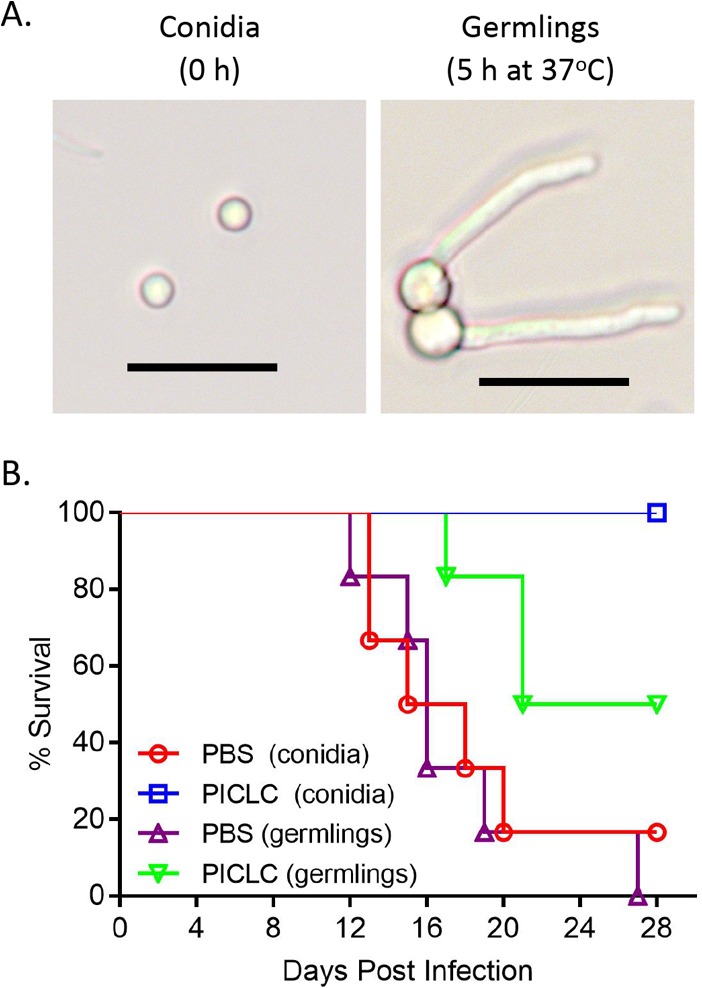
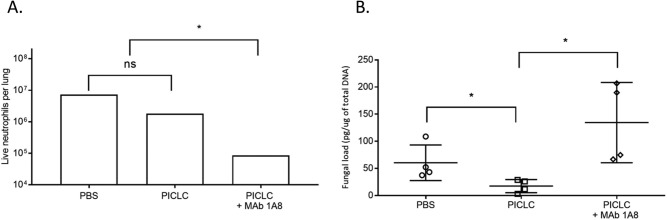
Invasive aspergillosis (IA) remains the primary cause of morbidity and mortality in chronic granulomatous disease (CGD) patients, often due to infection by species refractory to antifungals. This motivates the search for alternative treatments, including immunotherapy. We investigated the effect of exogenous type I interferon (IFN) activation on the outcome of IA caused by three species, , , and , in CGD mice. The animals were treated with poly(I):poly(C) carboxymethyl cellulose poly-l-lysine (PICLC), a mimetic of double-stranded RNA, 24 h preinfection and postinfection. The survival rates and lung fungal burdens were markedly improved by PICLC immunotherapy in animals infected with any one of the three species. While protection from IA was remarkable, PICLC induction of type I IFN in the lungs surged 24 h posttreatment and returned to baseline levels by 48 h, suggesting that PICLC altered early events in protection against IA. Immunophenotyping of recruited leukocytes and histopathological examination of tissue sections showed that PICLC induced similar cellular infiltrates as those in untreated-infected mice, in both cases dominated by monocytic cells and neutrophils. However, the PICLC immunotherapy resulted in a marked earlier recruitment of the leukocytes. Unlike with conidia, infection with germlings reduced the protective effect of PICLC immunotherapy. Additionally, antibody depletion of neutrophils totally reversed the protection, suggesting that neutrophils are crucial for PICLC-mediated protection. Together, these data show that prophylactic PICLC immunotherapy prerecruits these cells, enabling them to attack the conidia and thus resulting in a profound protection from IA. Patients with chronic granulomatous disease (CGD) are highly susceptible to invasive aspergillosis (IA). While is the most-studied species, CGD patients often suffer IA caused by , , and other rare species. These non- species are more resistant to antifungal drugs and cause higher fatality rates than Therefore, alternative therapies are needed to protect CGD patients. We report an effective immunotherapy of mice infected with three species via PICLC dosing. While protection from IA was long lasting, PICLC induction of type I IFN surged but quickly returned to baseline levels, suggesting that PICLC was altering early events in IA. Interestingly, we found responding immune cells to be similar between PICLC-treated and untreated-infected mice. However, PICLC immunotherapy resulted in an earlier recruitment of the leukocytes and suppressed fungal growth. This study highlights the value of type I IFN induction in CGD patients.
侵袭性曲霉病(IA)仍然是慢性肉芽肿病(CGD)患者发病和死亡的主要原因,通常是由于对真菌药物有抗药性的 引起的感染。这促使人们寻找替代疗法,包括免疫疗法。我们研究了外源性 I 型干扰素(IFN)激活对 CGD 小鼠感染三种 引起的 IA 的影响。动物在感染前 24 小时和感染后用聚(I):聚(C)羧甲基纤维素聚赖氨酸(PICLC)治疗,聚(I):聚(C)羧甲基纤维素聚赖氨酸是双链 RNA 的模拟物。PICLC 免疫疗法显著提高了感染三种 之一的动物的存活率和肺部真菌负荷。虽然对 IA 的保护作用显著,但 PICLC 在肺部诱导 I 型 IFN 的增加在治疗后 24 小时达到高峰,并在 48 小时内恢复到基线水平,这表明 PICLC 改变了对 IA 的保护的早期事件。募集白细胞的免疫表型和组织切片的组织病理学检查表明,PICLC 诱导的细胞浸润与未治疗感染的小鼠相似,在两种情况下均以单核细胞和中性粒细胞为主。然而,PICLC 免疫疗法导致白细胞的募集明显更早。与分生孢子不同,感染芽生孢子会降低 PICLC 免疫疗法的保护作用。此外,中性粒细胞的抗体耗竭完全逆转了保护作用,表明中性粒细胞对于 PICLC 介导的保护作用至关重要。总之,这些数据表明,预防性 PICLC 免疫疗法预先招募这些细胞,使它们能够攻击分生孢子,从而从 IA 中获得深刻的保护。慢性肉芽肿病(CGD)患者极易感染侵袭性曲霉病(IA)。虽然 是研究最多的 ,但 CGD 患者经常患有由 、 和其他罕见 引起的 IA。这些非 比真菌药物更有抵抗力,导致死亡率高于 因此,需要替代疗法来保护 CGD 患者。我们报告了通过 PICLC 剂量对感染三种 小鼠的有效免疫治疗。虽然对 IA 的保护作用持久,但 PICLC 诱导的 I 型 IFN 激增但很快恢复到基线水平,表明 PICLC 正在改变 IA 的早期事件。有趣的是,我们发现治疗和未治疗感染的小鼠之间的反应免疫细胞相似。然而,PICLC 免疫疗法导致白细胞的募集更早,并抑制了真菌的生长。这项研究强调了在 CGD 患者中诱导 I 型 IFN 的价值。