Department of Molecular Biosciences, University of Texas at Austin, Austin, TX, USA.
Enteric Diseases Department, Naval Medical Research Center, Silver Spring, MD, USA.
Nat Microbiol. 2018 Apr;3(4):494-502. doi: 10.1038/s41564-018-0133-7. Epub 2018 Mar 27.
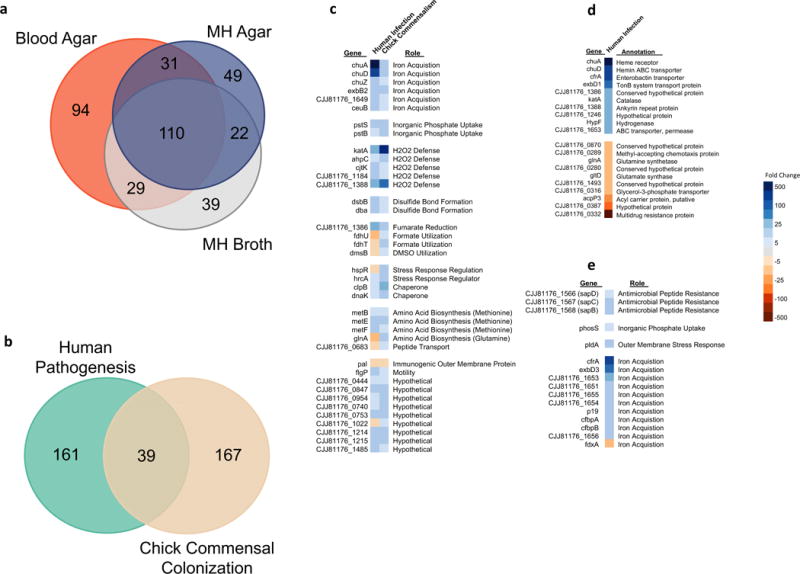
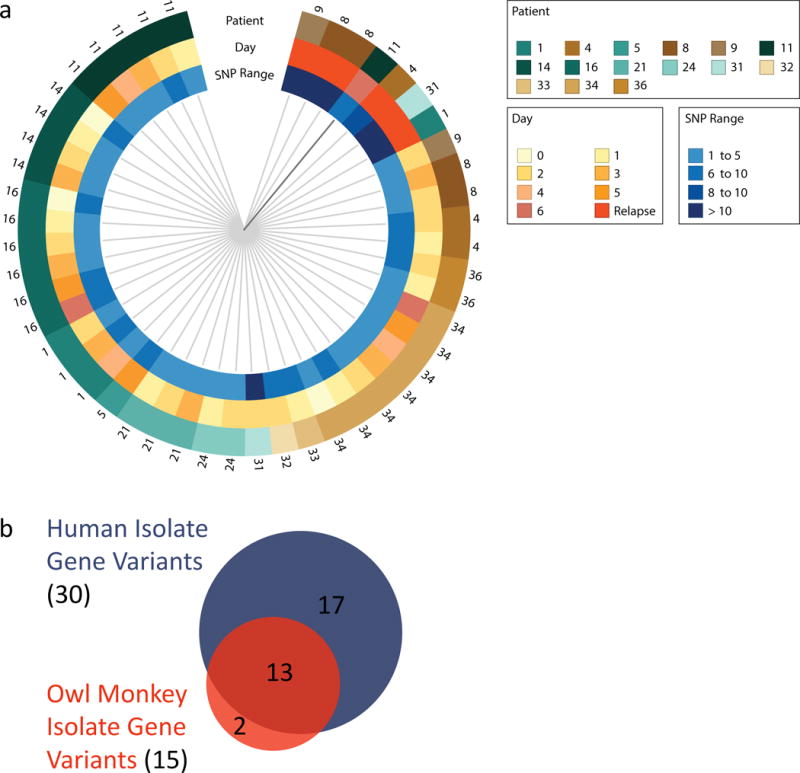
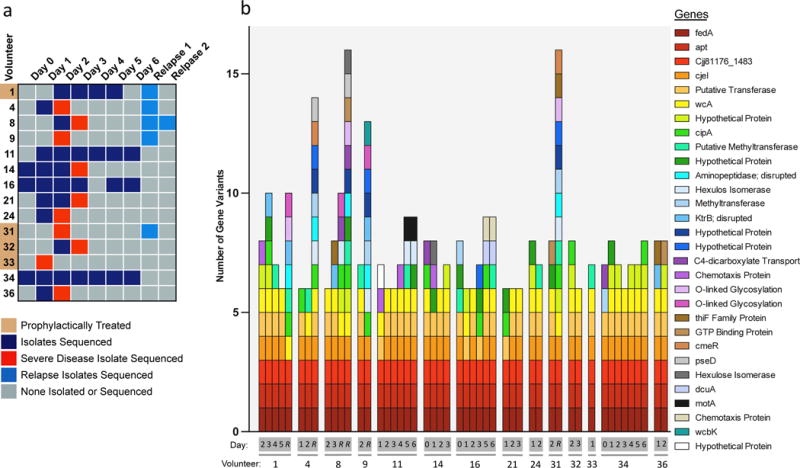
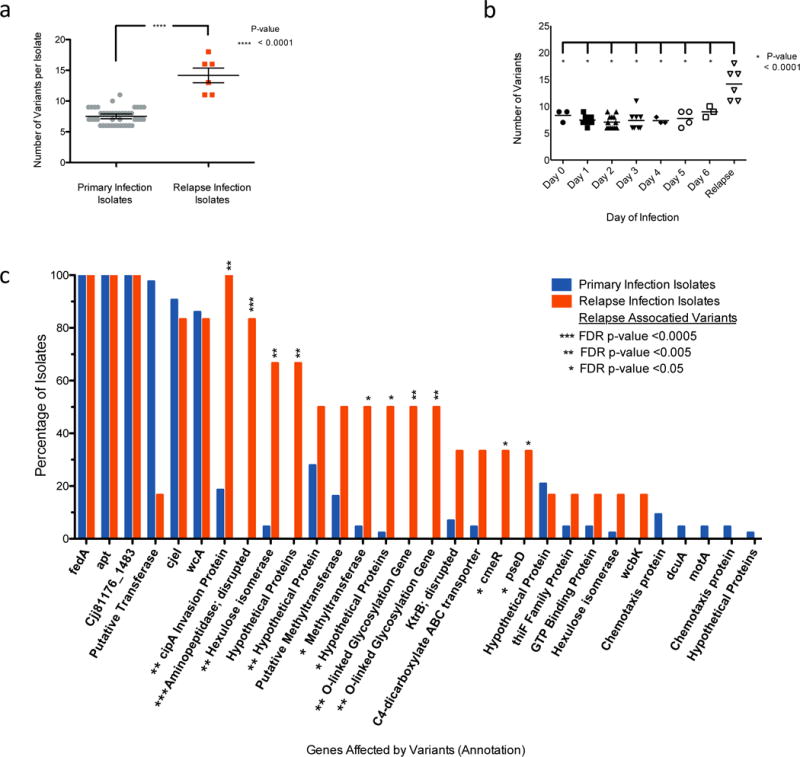
Campylobacter jejuni infections are a leading cause of bacterial food-borne diarrhoeal illness worldwide, and Campylobacter infections in children are associated with stunted growth and therefore long-term deficits into adulthood. Despite this global impact on health and human capital, how zoonotic C. jejuni responds to the human host remains unclear. Unlike other intestinal pathogens, C. jejuni does not harbour pathogen-defining toxins that explicitly contribute to disease in humans. This makes understanding Campylobacter pathogenesis challenging and supports a broad examination of bacterial factors that contribute to C. jejuni infection. Here, we use a controlled human infection model to characterize C. jejuni transcriptional and genetic adaptations in vivo, along with a non-human primate infection model to validate our approach. We found that variation in 11 genes is associated with either acute or persistent human infections and includes products involved in host cell invasion, bile sensing and flagella modification, plus additional potential therapeutic targets. In particular, a functional version of the cell invasion protein A (cipA) gene product is strongly associated with persistently infecting bacteria and we identified its biochemical role in flagella modification. These data characterize the adaptive C. jejuni response to primate infections and suggest therapy design should consider the intrinsic differences between acute and persistently infecting bacteria. In addition, RNA sequencing revealed conserved responses during natural host commensalism and human infections. Thirty-nine genes were differentially regulated in vivo across hosts, lifestyles and C. jejuni strains. This conserved in vivo response highlights important C. jejuni survival mechanisms such as iron acquisition and evasion of the host mucosal immune response. These advances highlight pathogen adaptability across host species and demonstrate the utility of multidisciplinary collaborations in future clinical trials to study pathogens in vivo.
空肠弯曲菌感染是全球细菌性食源性腹泻病的主要病因,儿童空肠弯曲菌感染与生长迟缓有关,因此成年后患长期缺陷。尽管这种疾病对健康和人力资本有全球性影响,但人源化的空肠弯曲菌如何对人体宿主做出反应仍不清楚。与其他肠道病原体不同,空肠弯曲菌不携带明确导致人类疾病的病原体定义毒素。这使得理解空肠弯曲菌发病机制具有挑战性,并支持对有助于空肠弯曲菌感染的细菌因素进行广泛检查。在这里,我们使用受控的人体感染模型来描述体内空肠弯曲菌的转录和遗传适应性,以及非人类灵长类动物感染模型来验证我们的方法。我们发现 11 个基因的变异与急性或持续性人类感染有关,包括参与宿主细胞入侵、胆汁感应和鞭毛修饰的产物,以及其他潜在的治疗靶点。特别是,细胞入侵蛋白 A(cipA)基因产物的功能性版本与持续性感染的细菌强烈相关,我们确定了其在鞭毛修饰中的生化作用。这些数据描述了空肠弯曲菌对灵长类动物感染的适应性反应,并表明治疗设计应考虑急性和持续性感染细菌之间的内在差异。此外,RNA 测序揭示了自然宿主共生和人类感染期间保守的反应。在宿主、生活方式和空肠弯曲菌菌株之间,有 39 个基因在体内差异调节。这种保守的体内反应突出了空肠弯曲菌的重要生存机制,如铁的获取和逃避宿主黏膜免疫反应。这些进展突出了病原体在宿主物种之间的适应性,并证明了多学科合作在未来临床试验中研究体内病原体的实用性。