Adhikari Ramesh P, Upadhaya Nawaraj, Satinsky Emily N, Burkey Matthew D, Kohrt Brandon A, Jordans Mark J D
1Padma Kanya Multiple Campus, Tribhuvan University Kathmandu, Bagbazar, Kathmandu, Nepal.
Research Department, Transcultural Psychosocial Organization (TPO), Baluwatar, Kathmandu, Nepal.
Child Adolesc Psychiatry Ment Health. 2018 Mar 23;12:20. doi: 10.1186/s13034-018-0226-3. eCollection 2018.
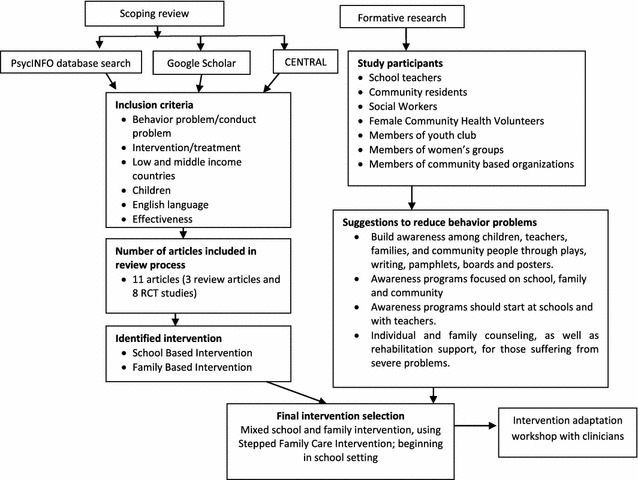
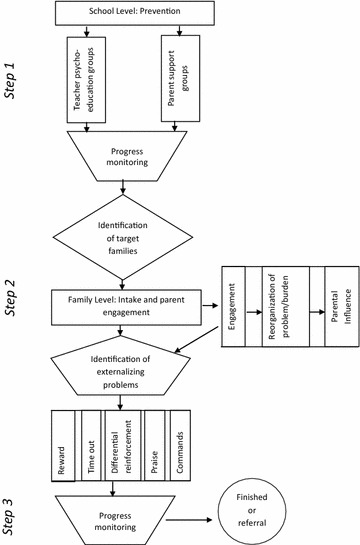
This study evaluates the feasibility, acceptability, and outcomes of a combined school- and family-based intervention, delivered by psychosocial counselors, for children with behavior problems in rural Nepal.
Forty-one children participated at baseline. Two students moved to another district, meaning 39 children, ages 6-15, participated at both baseline and follow-up. Pre-post evaluation was used to assess behavioral changes over a 4-month follow-up period (n = 39). The primary outcome measure was the Disruptive Behavior International Scale-Nepal version (DBIS-N). The secondary outcome scales included the Child Functional Impairment Scale and the Eyberg Child Behavior Inventory (ECBI). Twelve key informant interviews were conducted with community stakeholders, including teachers, parents, and community members, to assess stakeholders' perceptions of the intervention.
The study found that children's behavior problems as assessed on the DBIS-N were significantly lower at follow-up (M = 13.0, SD = 6.4) than at baseline (M = 20.5, SD = 3.8), p < 0.001, CI [5.57, 9.35]. Similarly, children's ECBI Intensity scores were significantly lower at follow-up (M = 9.9, SD = 8.5) than at baseline (M = 14.8, SD = 7.7), p < 0.005, 95% CI [1.76, 8.14]. The intervention also significantly improved children's daily functioning. Parents and teachers involved in the intervention found it acceptable and feasible for delivery to their children and students. Parents and teachers reported improved behaviors among children and the implementation of new behavior management techniques both at home and in the classroom.
Significant change in child outcome measures in this uncontrolled evaluation, alongside qualitative findings suggesting feasibility and acceptability, support moving toward a controlled trial to determine effectiveness.
本研究评估了由心理社会咨询师实施的、基于学校和家庭相结合的干预措施对尼泊尔农村地区有行为问题儿童的可行性、可接受性及效果。
41名儿童参与了基线评估。两名学生搬到了另一个地区,这意味着39名6至15岁的儿童参与了基线评估和随访。采用前后评估来评估4个月随访期内的行为变化(n = 39)。主要结局指标是《尼泊尔版破坏性行为国际量表》(DBIS-N)。次要结局量表包括儿童功能损害量表和艾伯格儿童行为量表(ECBI)。对包括教师、家长和社区成员在内的社区利益相关者进行了12次关键 informant访谈,以评估利益相关者对干预措施的看法。
研究发现,根据DBIS-N评估,儿童的行为问题在随访时(M = 13.0,SD = 6.4)显著低于基线时(M = 20.5,SD = 3.8),p < 0.001,CI [5.57, 9.35]。同样,儿童的ECBI强度得分在随访时(M = 9.9,SD = 8.5)显著低于基线时(M = 14.8,SD = 7.7),p < 0.005,95% CI [1.76, 8.14]。该干预措施还显著改善了儿童的日常功能。参与干预的家长和教师认为该措施对他们的孩子和学生来说是可接受且可行的。家长和教师报告称,儿童的行为有所改善,并且在家中和课堂上都实施了新的行为管理技巧。
在这项非对照评估中,儿童结局指标有显著变化,同时定性研究结果表明该干预措施具有可行性和可接受性,这些都支持开展对照试验以确定其有效性。