Dressler Anastasia, Haiden Nadja, Trimmel-Schwahofer Petra, Benninger Franz, Samueli Sharon, Gröppel Gudrun, Spatzierer Sina, Mühlebner Angelika, Abraham Klaus, Feucht Martha
Department of Pediatrics and Adolescent Medicine Medical University Vienna Vienna Austria.
Department of Child and Adolescent Psychiatry Medical University Vienna Vienna Austria.
Epilepsia Open. 2017 Nov 16;3(1):30-39. doi: 10.1002/epi4.12084. eCollection 2018 Mar.
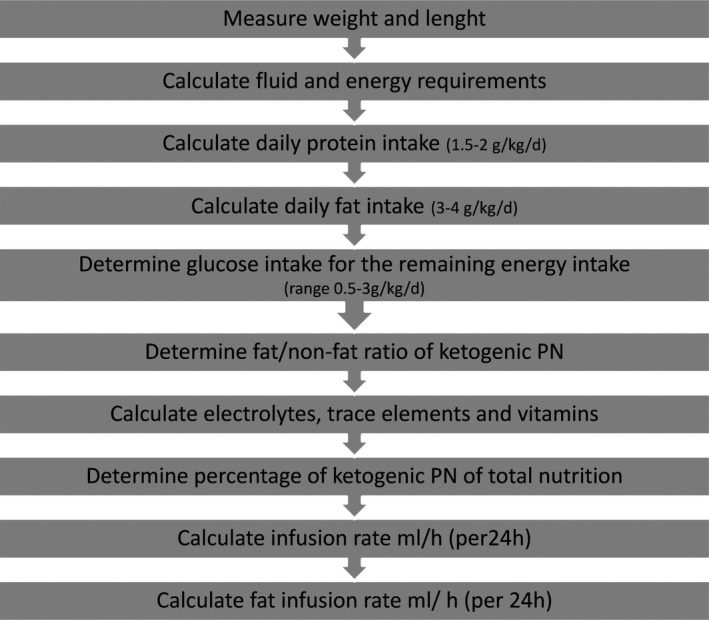
Ketogenic parenteral nutrition (kPN) is indicated when enteral intake is temporarily limited or impossible, but evidence-based prescriptions are lacking. Objective was to evaluate the efficacy and safety of kPN in children with epileptic encephalopathies using a new computer-based algorithm for accurate component calculating.
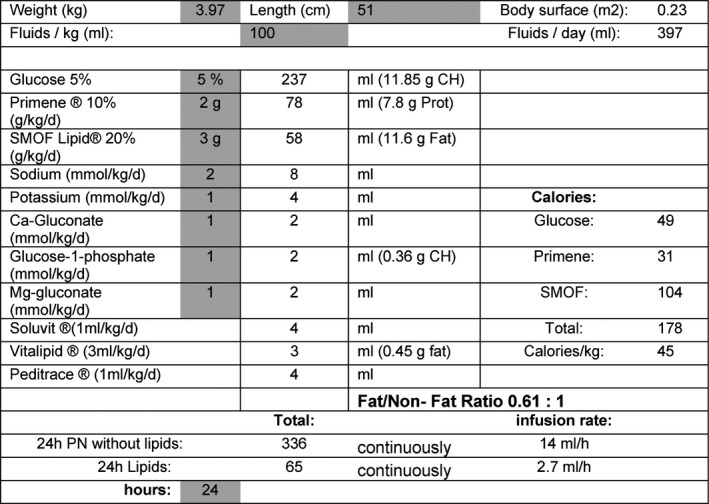
Children with epilepsy receiving kPN were included. A computer-based algorithm was established on the basis of guidelines of the European Society for Paediatric Gastroenterology, Hepatology and Nutrition (ESPGHAN): fat intake not exceeding 4 g/kg/day, age-adequate supply of protein, electrolytes, vitamins, and trace elements, but reduced carbohydrates. Primary outcome was successfully reaching relevant ketosis, defined as beta-hydroxybutyrate plasma level of ≥ 2 mmol/L. Efficacy was defined as seizure reduction ≥50% in de novo kPN and maintenance of response in children already on a ketogenic diet (KD). Safety was assessed by adverse effects, laboratory findings, and the appropriateness of nutritional intake.
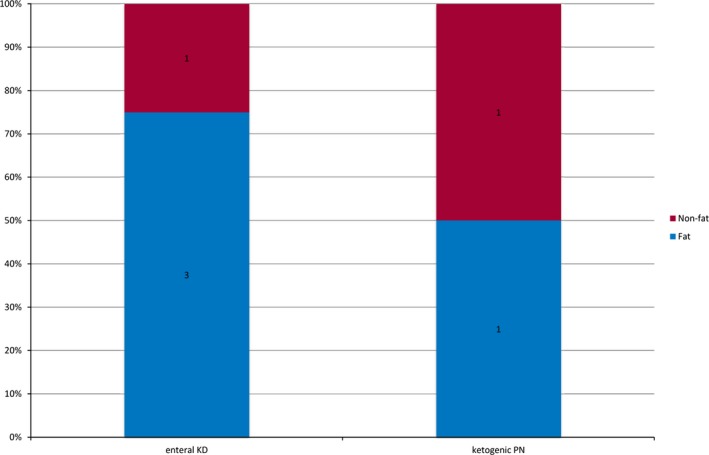
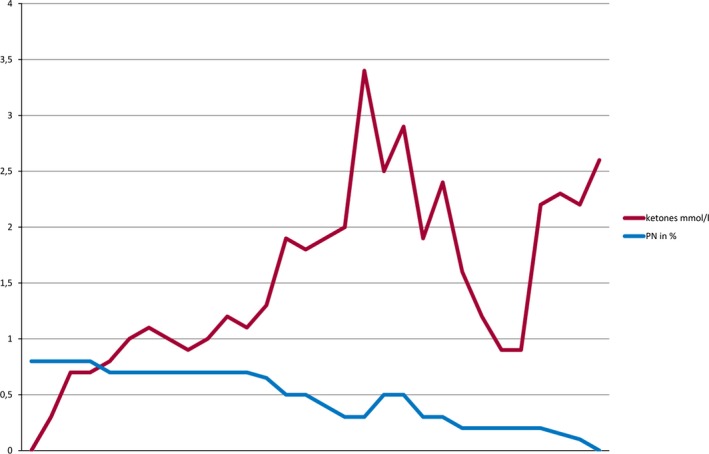
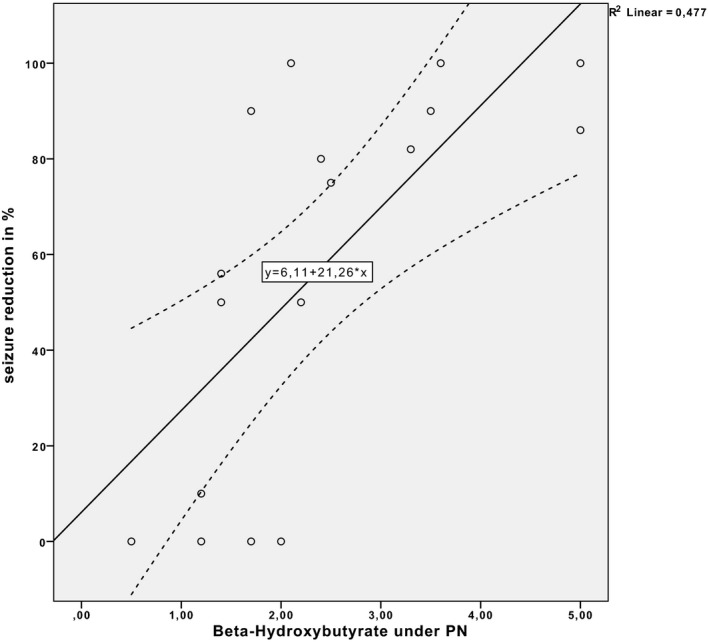
Seventeen children (median 1.84 years) were studied, of which 76% (13/17) were already on an oral ketogenic diet. Indications for kPN were surgery, status epilepticus, vomiting, food refusal, and introduction of enteral feeding in neonates. The parenteral fat/nonfat ratio was mean 0.9 (±0.3; range 0.6-1.5). Relevant ketosis was reached in 10 children (median 2.9 mmol/L), but not in 7 (median = 1.4 mmol/L). In de novo kPN, significant response was observed in 50% (2/4); in patients previously responding to the KD (77%, 10/13), response was maintained. A significant correlation between the degree of ketosis and seizure reduction (correlation coefficient = 0.691; p = .002) was observed. Only mild and transient adverse events occurred during kPN.
KPN with fat intake of 3.5-4.0 g/kg/day was safe and effective. KPN was tailored according to guidelines and individual nutritional needs. In nearly half of the patients, ketosis was lower than during oral KD. Despite this, seizures remained controlled.
当肠道摄入暂时受限或无法进行时,需采用生酮肠外营养(kPN),但目前缺乏循证处方。本研究旨在使用一种基于计算机的精确成分计算算法,评估kPN在癫痫性脑病患儿中的疗效和安全性。
纳入接受kPN的癫痫患儿。基于欧洲儿科胃肠病学、肝病学和营养学会(ESPGHAN)的指南建立了一种基于计算机的算法:脂肪摄入量不超过4g/(kg·天),蛋白质、电解质、维生素和微量元素的供应应符合年龄需求,但碳水化合物摄入量减少。主要结局是成功达到相关酮症,定义为血浆β-羟基丁酸水平≥2mmol/L。疗效定义为新发kPN患儿癫痫发作减少≥50%,以及已采用生酮饮食(KD)的患儿维持疗效。通过不良反应、实验室检查结果和营养摄入的适宜性评估安全性。
共研究了17名儿童(中位年龄1.84岁),其中76%(13/17)已采用口服生酮饮食。kPN的适应证包括手术、癫痫持续状态、呕吐、拒食以及新生儿开始肠内喂养。肠外脂肪/非脂肪比平均为0.9(±0.3;范围0.6 - 1.5)。10名儿童(中位值2.9mmol/L)达到了相关酮症,7名儿童(中位值 = 1.4mmol/L)未达到。在新发kPN中,50%(2/4)观察到显著反应;在先前对KD有反应的患者中(77%,10/13),反应得以维持。观察到酮症程度与癫痫发作减少之间存在显著相关性(相关系数 = 0.691;p = 0.002)。kPN期间仅发生了轻度和短暂的不良事件。
脂肪摄入量为3.5 - 4.0g/(kg·天)的kPN是安全有效的。kPN是根据指南和个体营养需求定制的。近一半患者的酮症低于口服KD期间。尽管如此,癫痫发作仍得到控制。