Department of Pharmacology, Vanderbilt University, Nashville, TN, United States of America.
Department of Biomedical Science, Charles E. Schmidt College of Medicine, Florida Atlantic University, Boca Raton, FL, United States of America.
PLoS Genet. 2018 Mar 28;14(3):e1007269. doi: 10.1371/journal.pgen.1007269. eCollection 2018 Mar.
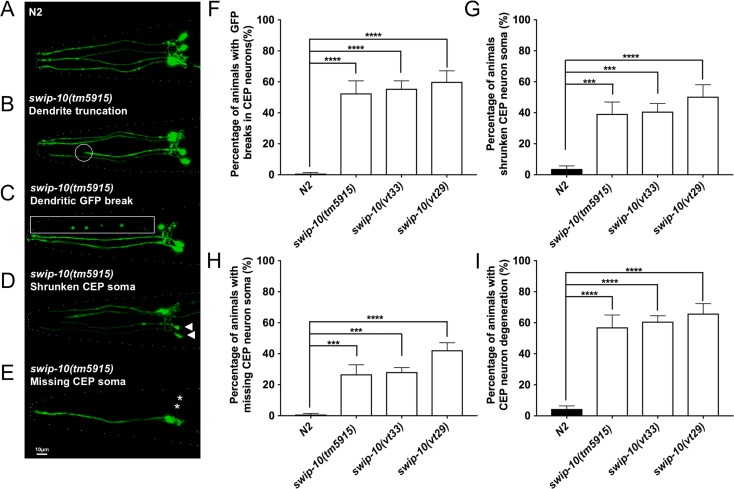
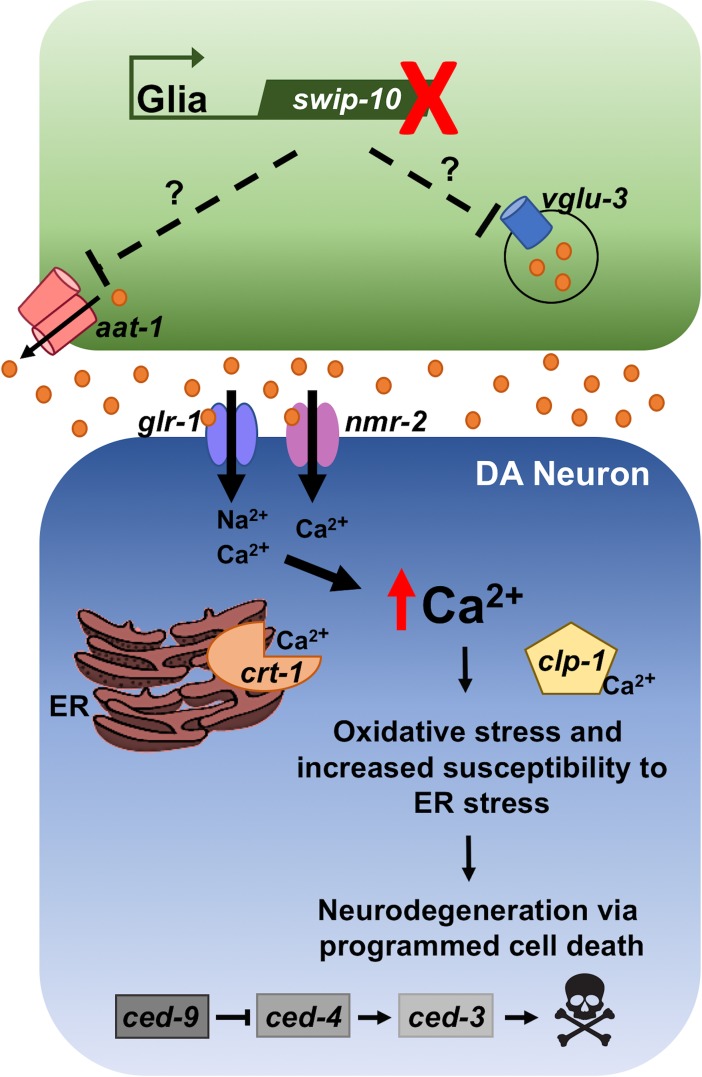
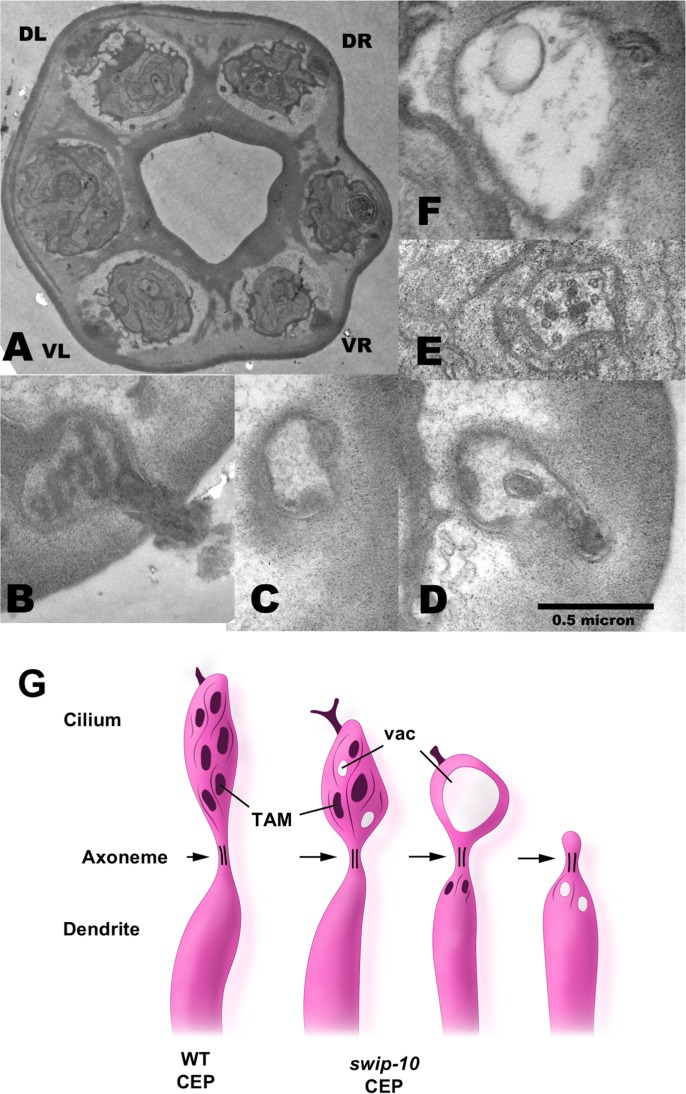
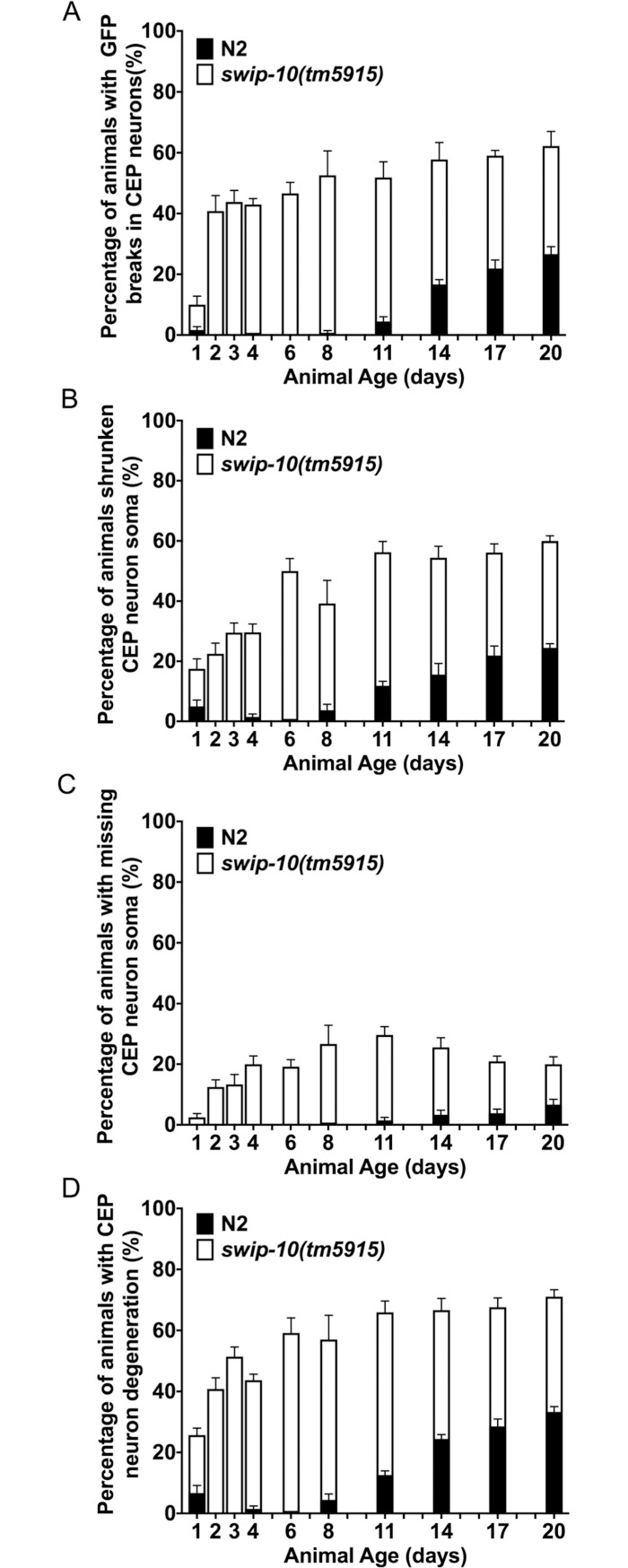
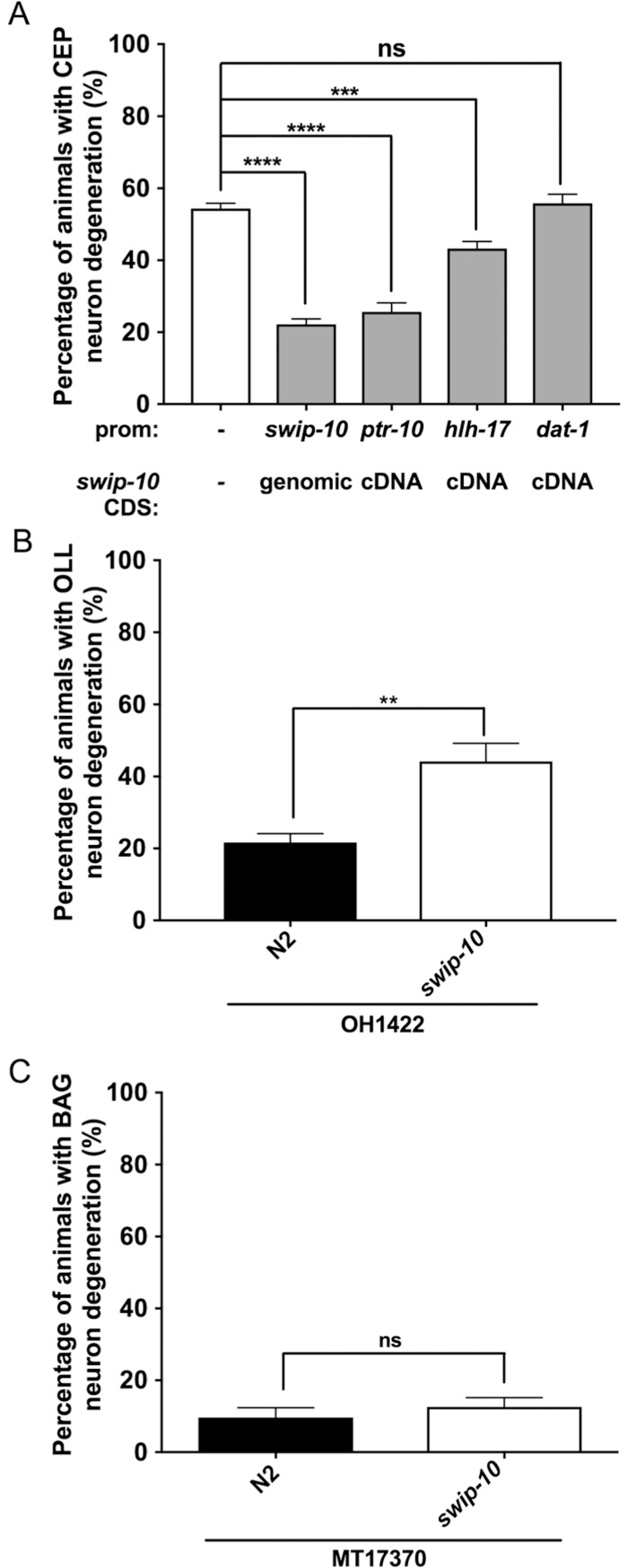
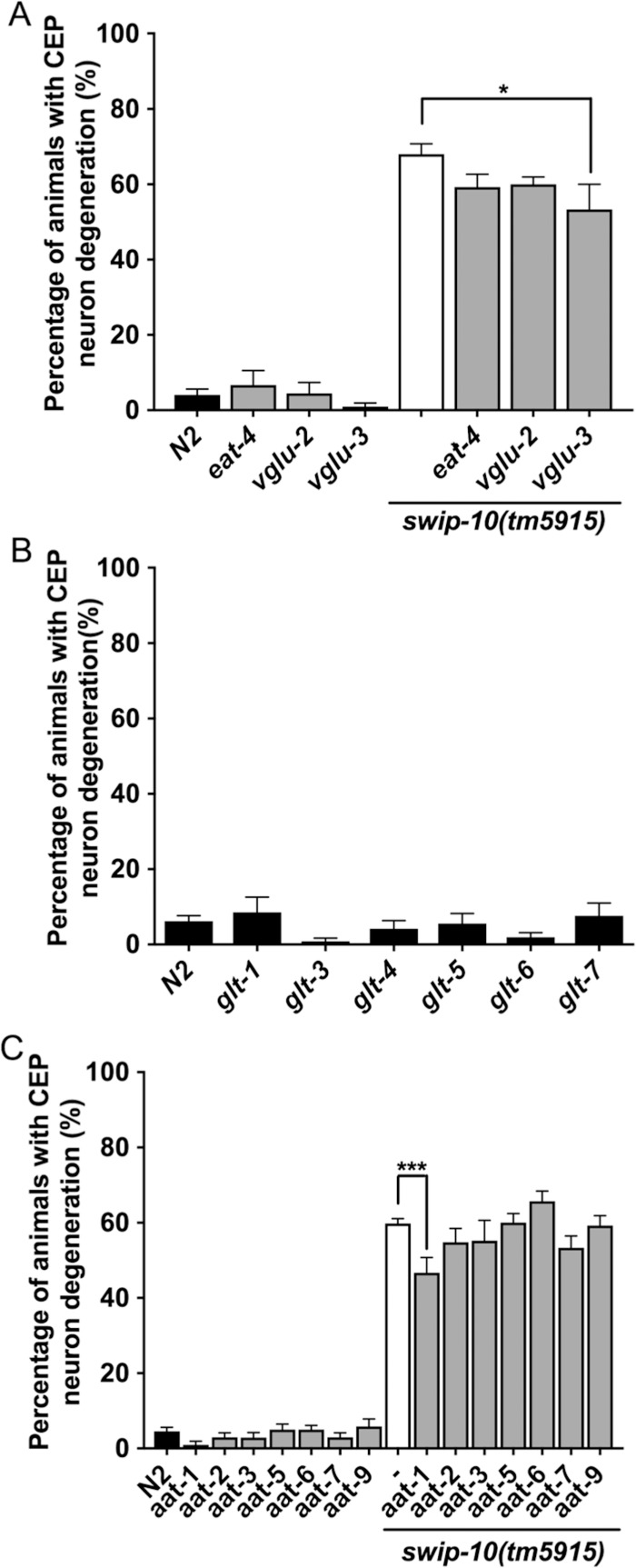
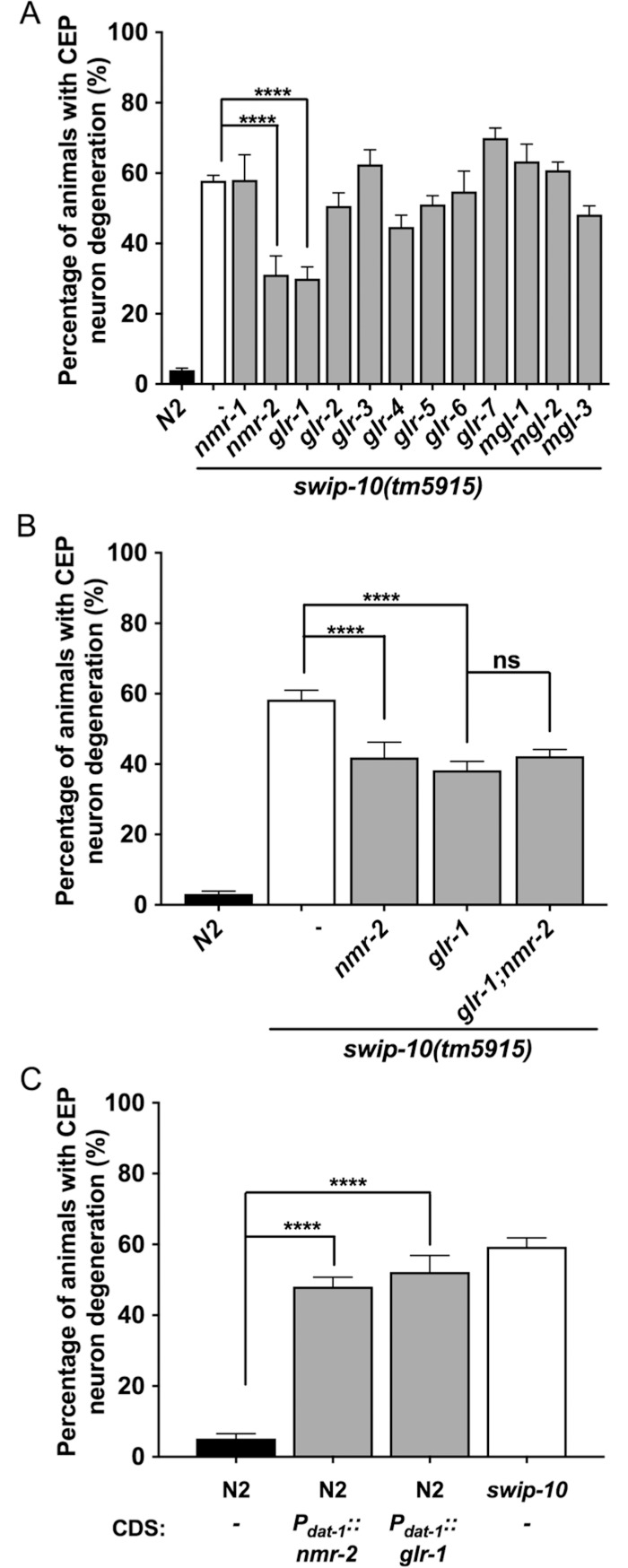
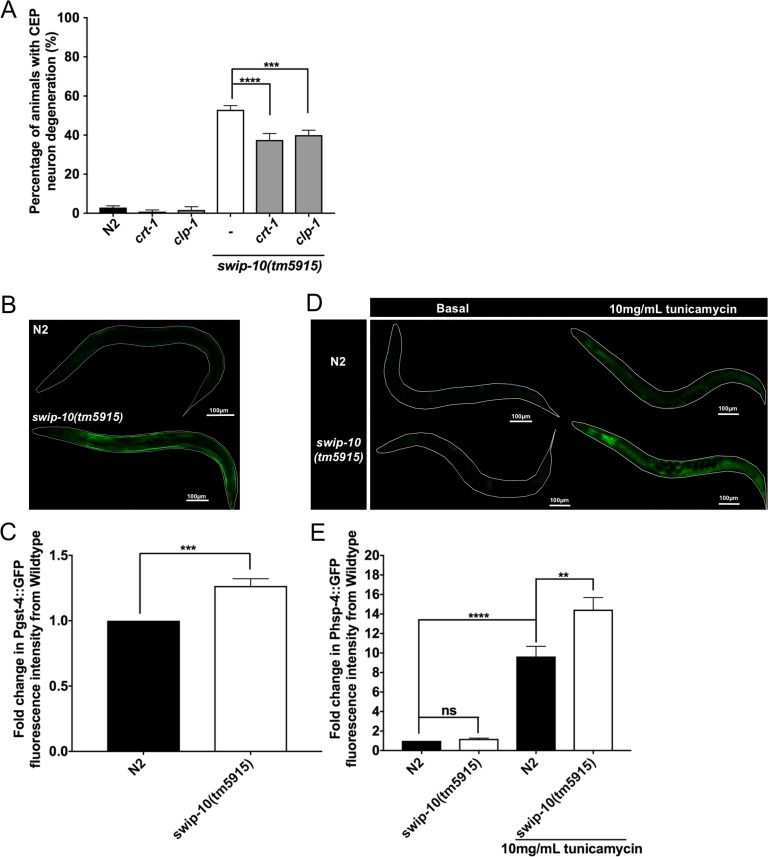
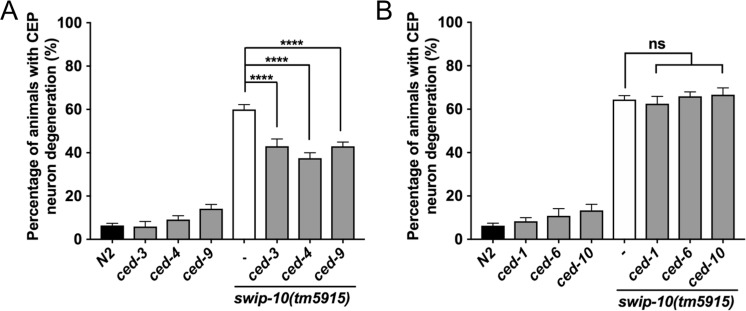
Across phylogeny, glutamate (Glu) signaling plays a critical role in regulating neural excitability, thus supporting many complex behaviors. Perturbed synaptic and extrasynaptic Glu homeostasis in the human brain has been implicated in multiple neuropsychiatric and neurodegenerative disorders including Parkinson's disease, where theories suggest that excitotoxic insults may accelerate a naturally occurring process of dopamine (DA) neuron degeneration. In C. elegans, mutation of the glial expressed gene, swip-10, results in Glu-dependent DA neuron hyperexcitation that leads to elevated DA release, triggering DA signaling-dependent motor paralysis. Here, we demonstrate that swip-10 mutations induce premature and progressive DA neuron degeneration, with light and electron microscopy studies demonstrating the presence of dystrophic dendritic processes, as well as shrunken and/or missing cell soma. As with paralysis, DA neuron degeneration in swip-10 mutants is rescued by glial-specific, but not DA neuron-specific expression of wildtype swip-10, consistent with a cell non-autonomous mechanism. Genetic studies implicate the vesicular Glu transporter VGLU-3 and the cystine/Glu exchanger homolog AAT-1 as potential sources of Glu signaling supporting DA neuron degeneration. Degeneration can be significantly suppressed by mutations in the Ca2+ permeable Glu receptors, nmr-2 and glr-1, in genes that support intracellular Ca2+ signaling and Ca2+-dependent proteolysis, as well as genes involved in apoptotic cell death. Our studies suggest that Glu stimulation of nematode DA neurons in early larval stages, without the protective actions of SWIP-10, contributes to insults that ultimately drive DA neuron degeneration. The swip-10 model may provide an efficient platform for the identification of molecular mechanisms that enhance risk for Parkinson's disease and/or the identification of agents that can limit neurodegenerative disease progression.
在整个进化过程中,谷氨酸 (Glu) 信号在调节神经兴奋性方面起着至关重要的作用,从而支持许多复杂的行为。人类大脑中突触和 extrasynaptic Glu 稳态的紊乱与多种神经精神和神经退行性疾病有关,包括帕金森病,其中的理论表明兴奋性毒性损伤可能加速多巴胺 (DA) 神经元自然退化的过程。在秀丽隐杆线虫中,神经胶质表达基因 swip-10 的突变导致 Glu 依赖性 DA 神经元过度兴奋,导致 DA 释放增加,引发依赖 DA 信号的运动麻痹。在这里,我们证明 swip-10 突变诱导 DA 神经元的过早和进行性退化,用光和电子显微镜研究表明存在营养不良的树突过程,以及缩小和/或缺失的细胞体。与麻痹一样,swip-10 突变体中的 DA 神经元退化可以通过胶质特异性而不是 DA 神经元特异性表达野生型 swip-10 来挽救,这与非自主细胞机制一致。遗传研究表明,囊泡谷氨酸转运体 VGLU-3 和半胱氨酸/谷氨酸交换体同源物 AAT-1 可能是支持 DA 神经元退化的 Glu 信号的潜在来源。在支持细胞内 Ca2+ 信号和 Ca2+-依赖性蛋白水解的基因以及参与细胞凋亡的基因中,nmr-2 和 glr-1 等钙通透性 Glu 受体的突变以及钙通透性 Glu 受体的突变可以显著抑制退化。我们的研究表明,Glu 刺激早期幼虫阶段的线虫 DA 神经元,而没有 SWIP-10 的保护作用,会导致最终导致 DA 神经元退化的损伤。swip-10 模型可能为鉴定增强帕金森病风险的分子机制以及鉴定限制神经退行性疾病进展的药物提供一个有效的平台。