School of Life Sciences, University of Dundee, Dundee, United Kingdom.
PLoS Genet. 2018 Jan 18;14(1):e1007106. doi: 10.1371/journal.pgen.1007106. eCollection 2018 Jan.
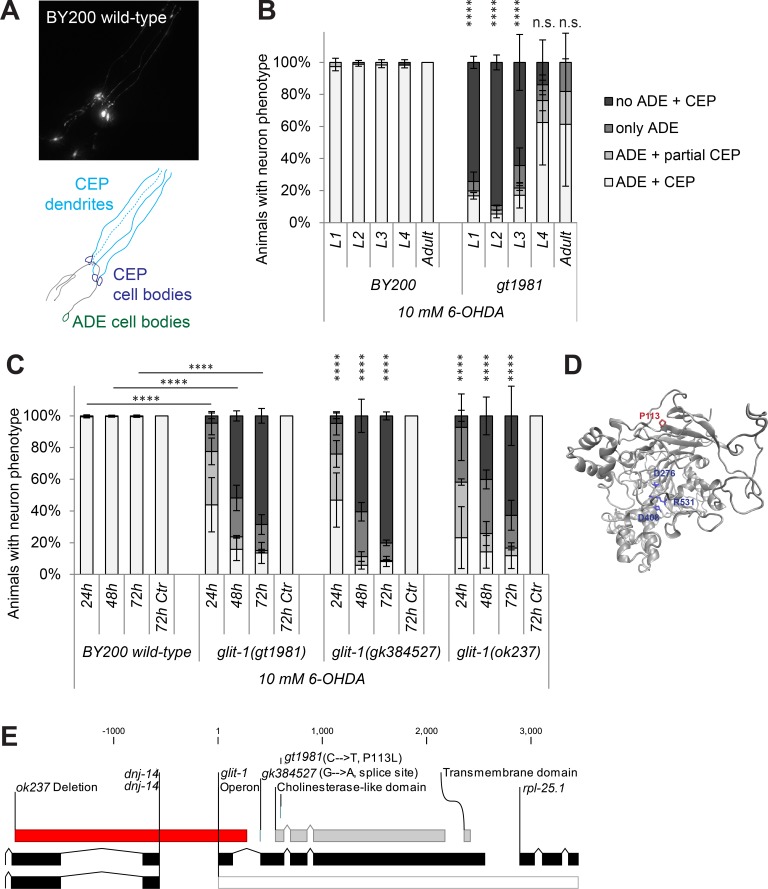
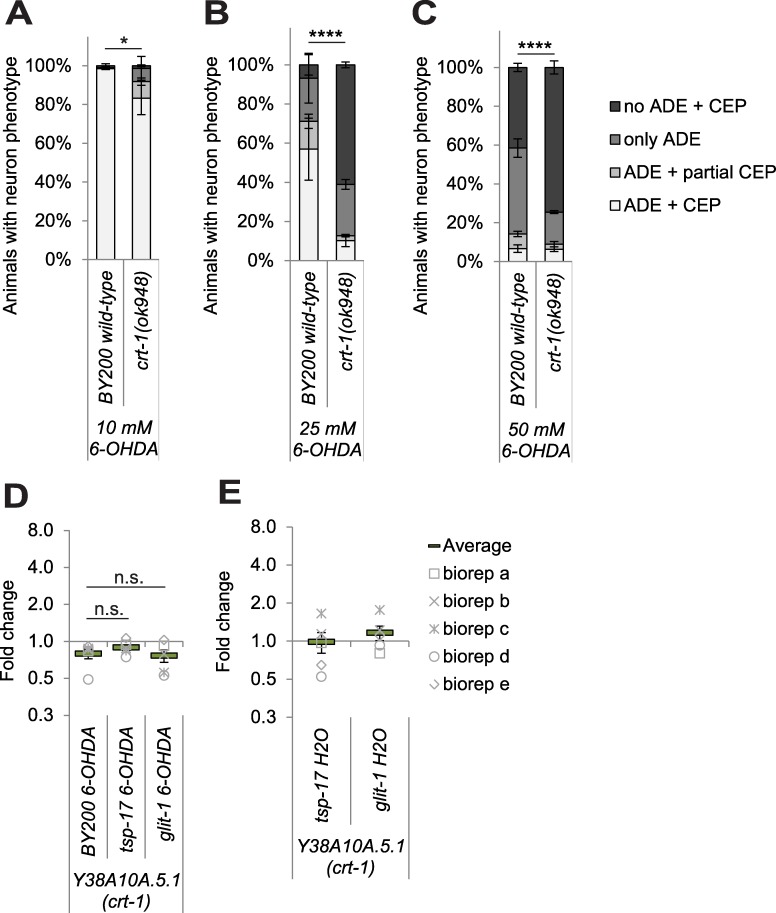
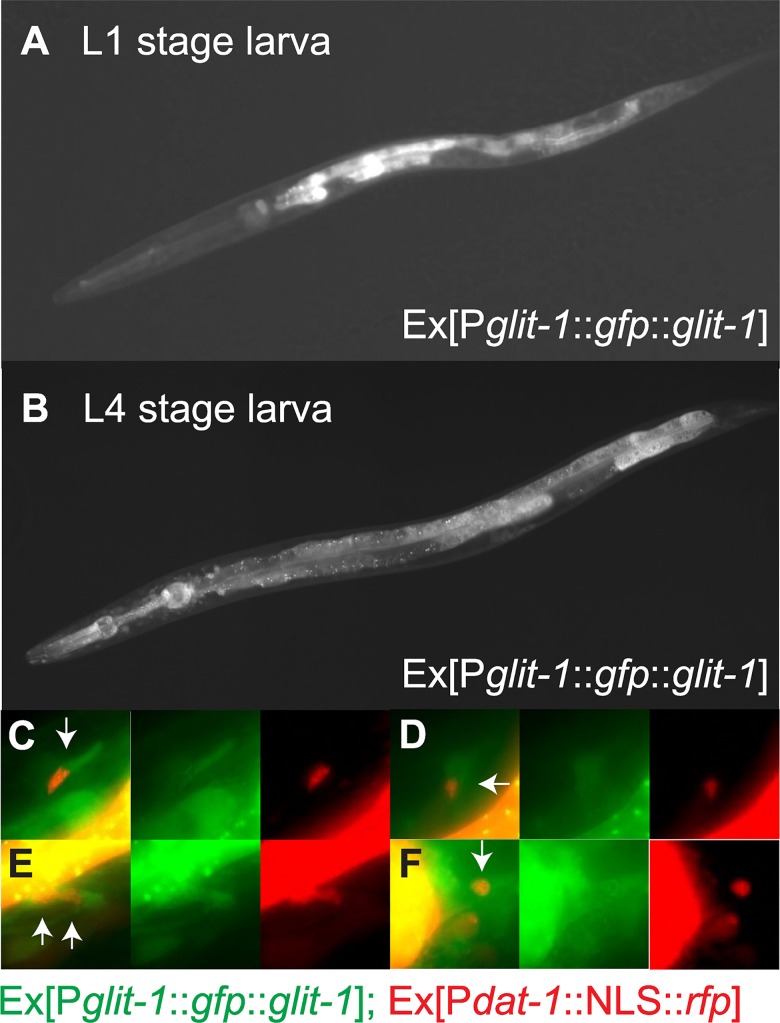
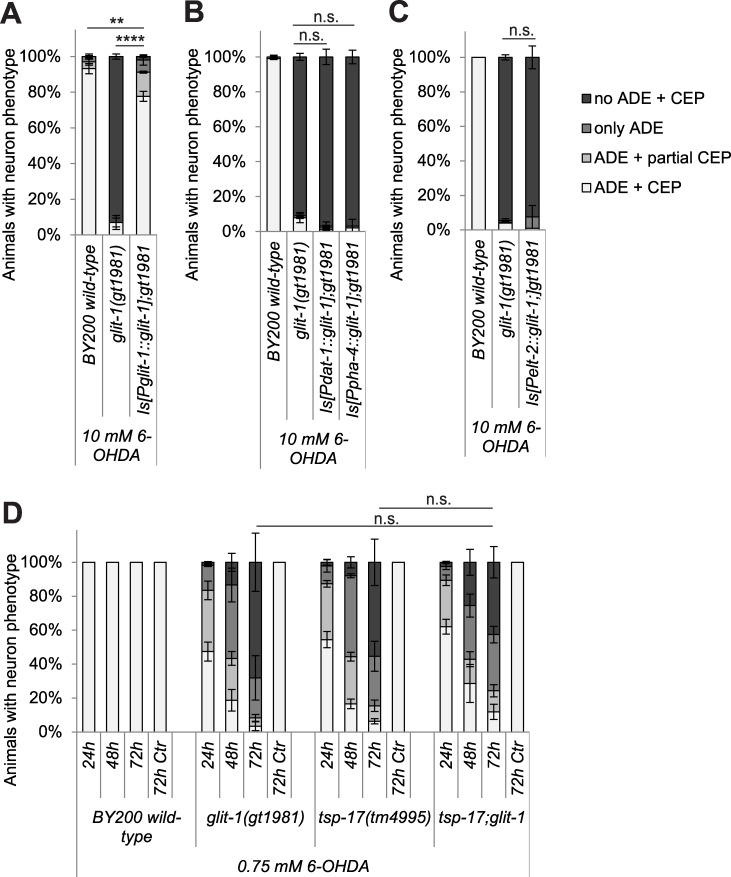
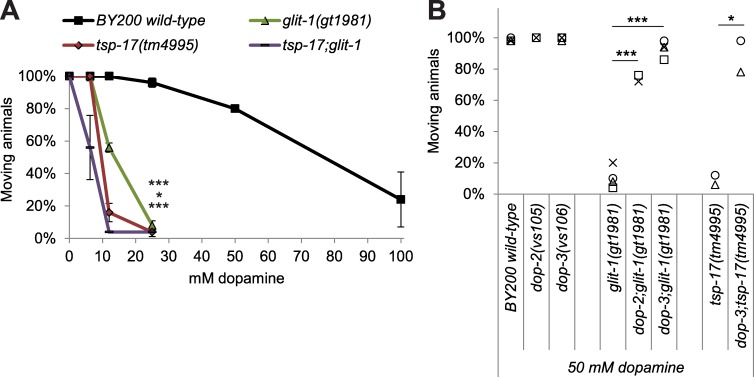
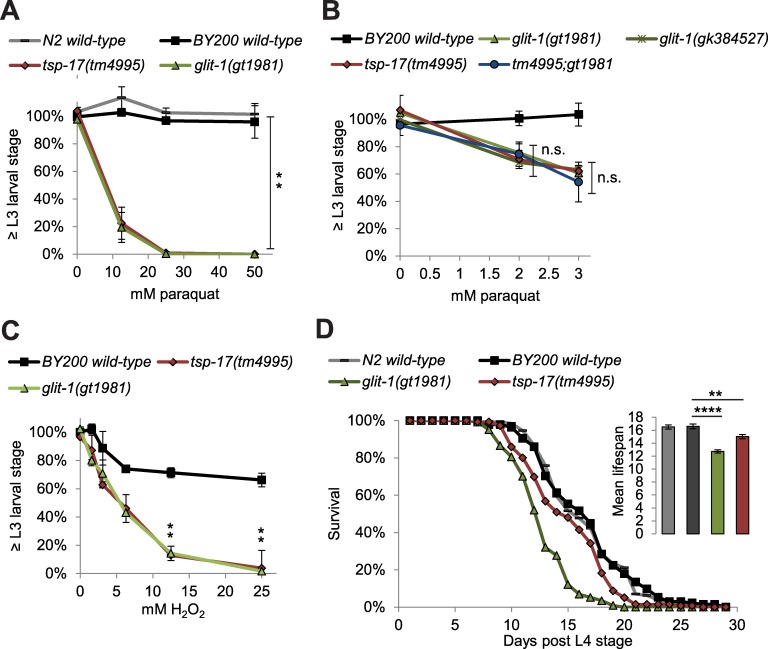
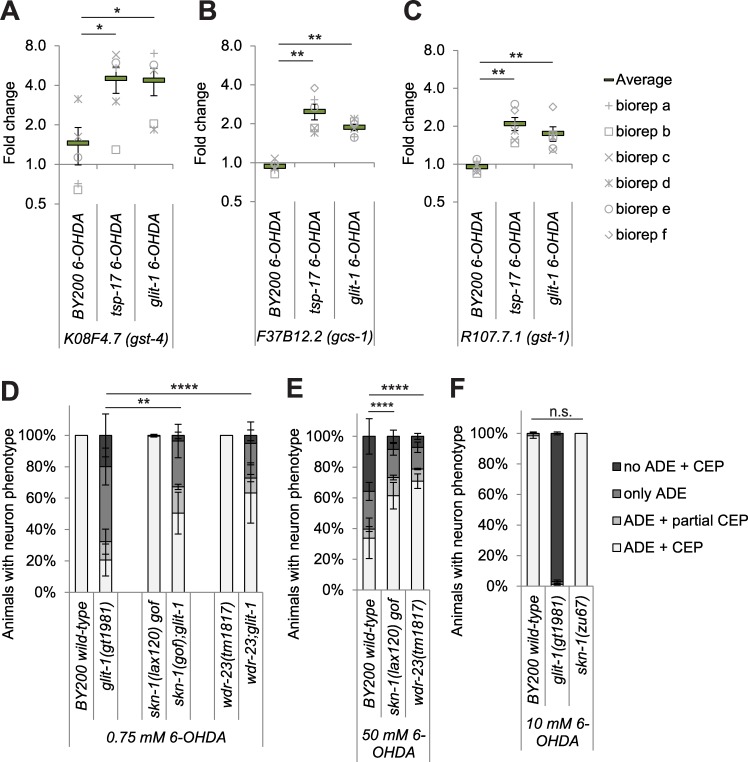
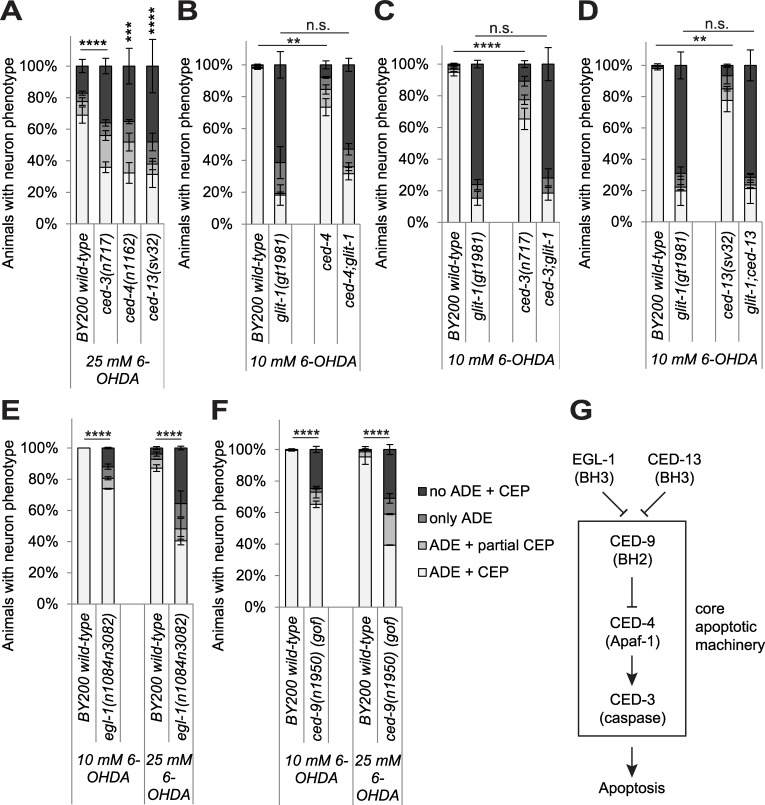
The loss of dopaminergic neurons is a hallmark of Parkinson's disease, the aetiology of which is associated with increased levels of oxidative stress. We used C. elegans to screen for genes that protect dopaminergic neurons against oxidative stress and isolated glit-1 (gliotactin (Drosophila neuroligin-like) homologue). Loss of the C. elegans neuroligin-like glit-1 causes increased dopaminergic neurodegeneration after treatment with 6-hydroxydopamine (6-OHDA), an oxidative-stress inducing drug that is specifically taken up into dopaminergic neurons. Furthermore, glit-1 mutants exhibit increased sensitivity to oxidative stress induced by H2O2 and paraquat. We provide evidence that GLIT-1 acts in the same genetic pathway as the previously identified tetraspanin TSP-17. After exposure to 6-OHDA and paraquat, glit-1 and tsp-17 mutants show almost identical, non-additive hypersensitivity phenotypes and exhibit highly increased induction of oxidative stress reporters. TSP-17 and GLIT-1 are both expressed in dopaminergic neurons. In addition, the neuroligin-like GLIT-1 is expressed in pharynx, intestine and several unidentified cells in the head. GLIT-1 is homologous, but not orthologous to neuroligins, transmembrane proteins required for the function of synapses. The Drosophila GLIT-1 homologue Gliotactin in contrast is required for epithelial junction formation. We report that GLIT-1 likely acts in multiple tissues to protect against 6-OHDA, and that the epithelial barrier of C. elegans glit-1 mutants does not appear to be compromised. We further describe that hyperactivation of the SKN-1 oxidative stress response pathway alleviates 6-OHDA-induced neurodegeneration. In addition, we find that mutations in the canonical apoptosis pathway and the calcium chaperone crt-1 cause increased 6-OHDA-induced dopaminergic neuron loss. In summary, we report that the neuroligin-like GLIT-1, the canonical apoptosis pathway and the calreticulin CRT-1 are required to prevent 6-OHDA-induced dopaminergic neurodegeneration.
多巴胺能神经元的丧失是帕金森病的一个标志,其病因与氧化应激水平升高有关。我们使用秀丽隐杆线虫筛选出能保护多巴胺能神经元免受氧化应激的基因,并分离出 glit-1(神经胶质蛋白(果蝇神经连接蛋白样)同源物)。秀丽隐杆线虫神经连接蛋白样 glit-1 的缺失会导致在 6-羟基多巴胺(一种专门进入多巴胺能神经元的氧化应激诱导药物)处理后多巴胺能神经退行性变增加。此外,glit-1 突变体对 H2O2 和百草枯诱导的氧化应激更敏感。我们提供的证据表明,GLIT-1 与先前鉴定的四跨膜蛋白 TSP-17 处于相同的遗传途径中。在暴露于 6-OHDA 和百草枯后,glit-1 和 tsp-17 突变体表现出几乎相同的、非累加性的超敏表型,并表现出高度增加的氧化应激报告基因诱导。TSP-17 和 GLIT-1 均在多巴胺能神经元中表达。此外,神经连接蛋白样 GLIT-1 还在咽、肠和头部的几个未识别细胞中表达。GLIT-1 与神经连接蛋白同源,但不是同系物,神经连接蛋白是突触功能所必需的跨膜蛋白。相比之下,果蝇 GLIT-1 同源物 Gliotactin 对于上皮连接形成是必需的。我们报告说,GLIT-1 可能在多种组织中发挥作用以抵抗 6-OHDA,并且 C. elegans glit-1 突变体的上皮屏障似乎没有受到损害。我们进一步描述说,SKN-1 氧化应激反应途径的过度激活可减轻 6-OHDA 诱导的神经退行性变。此外,我们发现经典凋亡途径和钙伴侣 CRT-1 的突变会导致 6-OHDA 诱导的多巴胺能神经元丢失增加。总之,我们报告说神经连接蛋白样 GLIT-1、经典凋亡途径和钙结合蛋白 CRT-1 对于预防 6-OHDA 诱导的多巴胺能神经退行性变是必需的。