College of Marine Sciences, South China Agricultural University, Guangzhou, 510842, China.
Guangdong Provincial Key Laboratory of Marine Biotechnology, Shantou University, Shantou, 515063, China.
Sci Rep. 2018 Mar 28;8(1):5305. doi: 10.1038/s41598-018-23668-w.
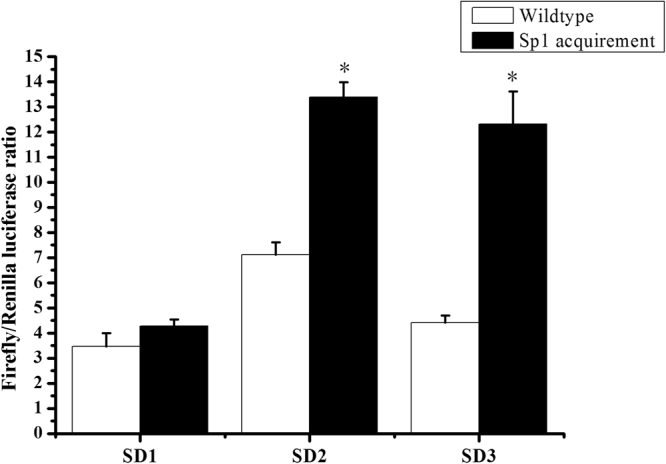
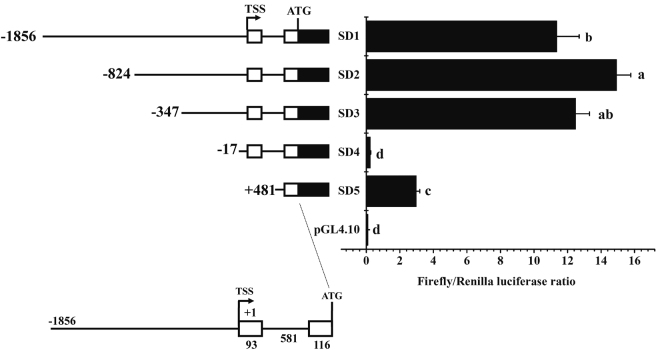
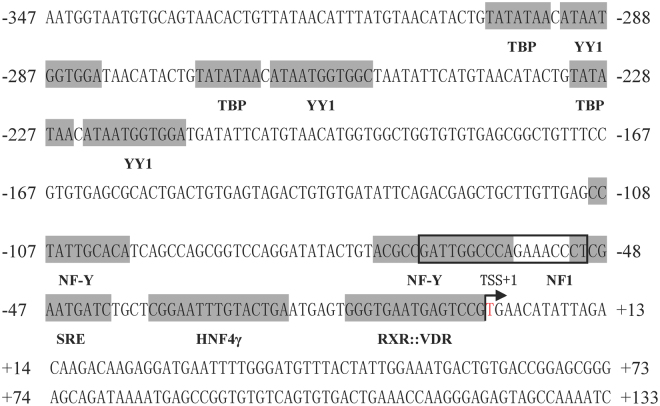
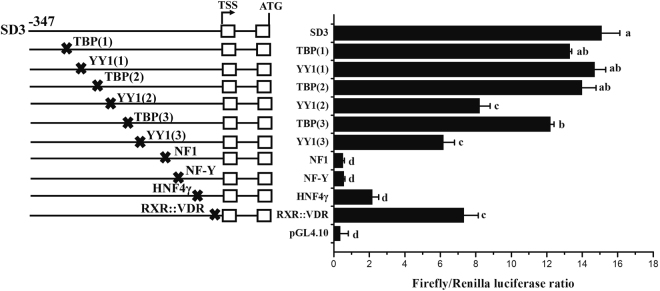
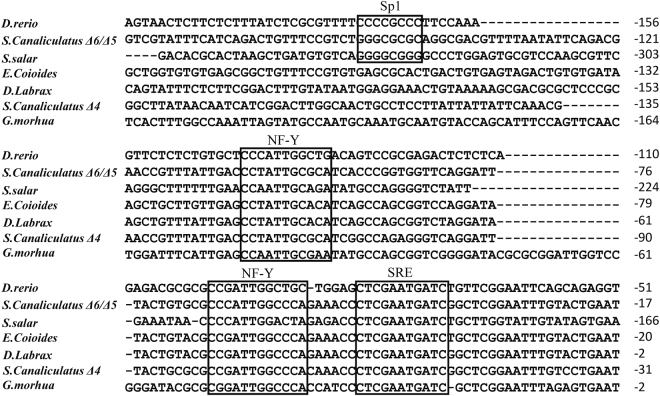
Δ6 fatty acyl desaturase (Fads2) is a rate-limiting enzyme in long-chain polyunsaturated fatty acids (LC-PUFA) biosynthesis. Comparative analysis of gene promoters of Fads2 between salmonids and carnivorous marine fish suggested that the lack of binding site for stimulatory protein 1 (Sp1) was responsible for the low expression of fads2 gene of carnivorous marine species. To confirm this speculation, the fads2 candidate promoter (2646 bp) was cloned from carnivorous marine teleost Epinephelus coioides, and 330 bp core regulatory region was identified. Several binding sites for transcriptional factors such as nuclear factor 1, nuclear factor Y, sterol regulatory element and hepatocyte nuclear factor 4γ were identified, while that for Sp1 was shown to be absent in the promoter by both bioinformatic analysis and site-directed mutation. Moreover, after the Sp1-binding site from the fads2 promoter of herbivorous Siganus canaliculatus, the first marine teleost demonstrated to have LC-PUFA biosynthetic ability, was inserted into the corresponding region of E. coioides fads2 promoter, activity was significantly increased. The results provided direct data for the importance of the Sp1-binding site in determining fads2 promoter activity, and indicated that its lack may be a reason for low expression of fads2 and poor LC-PUFA biosynthetic ability in E. coioides.
Δ6 脂肪酸去饱和酶(Fads2)是长链多不饱和脂肪酸(LC-PUFA)生物合成中的限速酶。对鲑鱼和肉食性海洋鱼类 Fads2 基因启动子的比较分析表明,缺乏刺激蛋白 1(Sp1)结合位点是肉食性海洋物种 fads2 基因低表达的原因。为了证实这一推测,从肉食性海洋硬骨鱼石斑鱼中克隆了 Fads2 的候选启动子(2646bp),并鉴定出 330bp 的核心调控区。鉴定出了几个转录因子的结合位点,如核因子 1、核因子 Y、固醇调节元件和肝细胞核因子 4γ,而通过生物信息学分析和定点突变表明,启动子中不存在 Sp1 结合位点。此外,在从具有 LC-PUFA 生物合成能力的草食性石斑鱼的 fads2 启动子中插入 Sp1 结合位点后,该启动子在肉食性海洋硬骨鱼中的活性显著增加。结果为 Sp1 结合位点在确定 fads2 启动子活性中的重要性提供了直接数据,并表明其缺失可能是 E. coioides 中 fads2 表达水平低和 LC-PUFA 生物合成能力差的原因。