Urayama Shuntaro, Arima Daisuke, Mizobe Fumiaki, Shinzaki Yuta, Nomura Motoi, Minamijima Yohei, Kusano Kanichi
Racehorse Hospital, Miho Training Center, Japan Racing Association, Ibaraki 300-0493, Japan.
Racehorse Hospital, Ritto Training Center, Japan Racing Association, Shiga 520-3085, Japan.
J Equine Sci. 2018;29(1):15-19. doi: 10.1294/jes.29.15. Epub 2018 Mar 23.
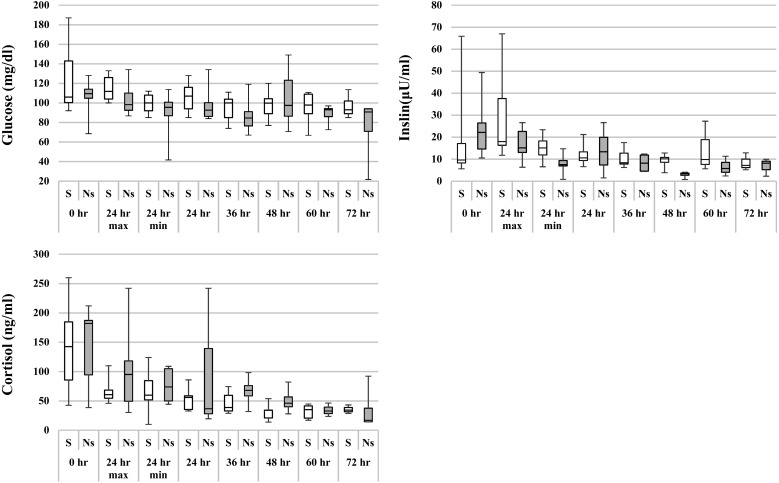
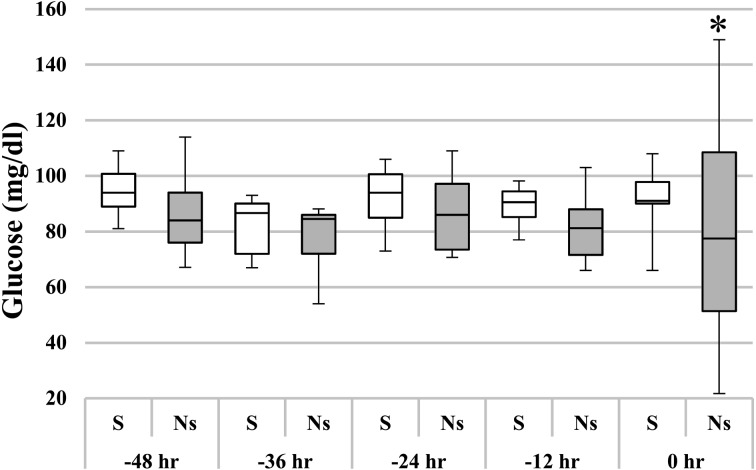
Although hyperglycemia at admission with colic has been reported to have a poor prognosis, there is no report specifically about acute colitis with systemic inflammatory response syndrome (SIRS) in horses. In this study, we measured blood glucose (Glu), insulin (Ins), and cortisol (Cor) levels in 17 Thoroughbred racehorses diagnosed as having acute colitis with SIRS, and examined the relationship between time-dependent changes in Glu, Ins, and Cor and prognosis. Glu levels were high in 3 horses at admission, but thereafter no horses had persistently high Glu levels. There was no significant difference in Glu, Ins, and Cor levels within 72 hr between surviving and non-surviving horses. In conclusion, the Glu level is unlikely to be a useful prognostic biomarker in acute colitis with SIRS.
尽管有报道称因绞痛入院时出现高血糖预后较差,但尚无关于马急性结肠炎伴全身炎症反应综合征(SIRS)的具体报道。在本研究中,我们测量了17匹被诊断为患有急性结肠炎伴SIRS的纯种赛马的血糖(Glu)、胰岛素(Ins)和皮质醇(Cor)水平,并研究了Glu、Ins和Cor随时间变化与预后之间的关系。入院时3匹马的Glu水平较高,但此后没有马的Glu水平持续升高。存活和未存活的马在72小时内Glu、Ins和Cor水平无显著差异。总之,Glu水平不太可能成为急性结肠炎伴SIRS有用的预后生物标志物。