Department of Cell Biology, Physiology and Immunology, Universitat de Barcelona, Avda Diagonal, 643, 08028 Barcelona, Spain.
Int J Mol Sci. 2018 Mar 29;19(4):1023. doi: 10.3390/ijms19041023.
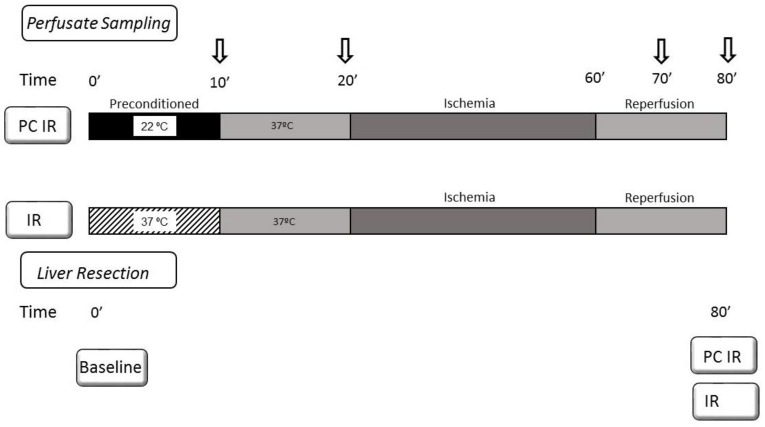
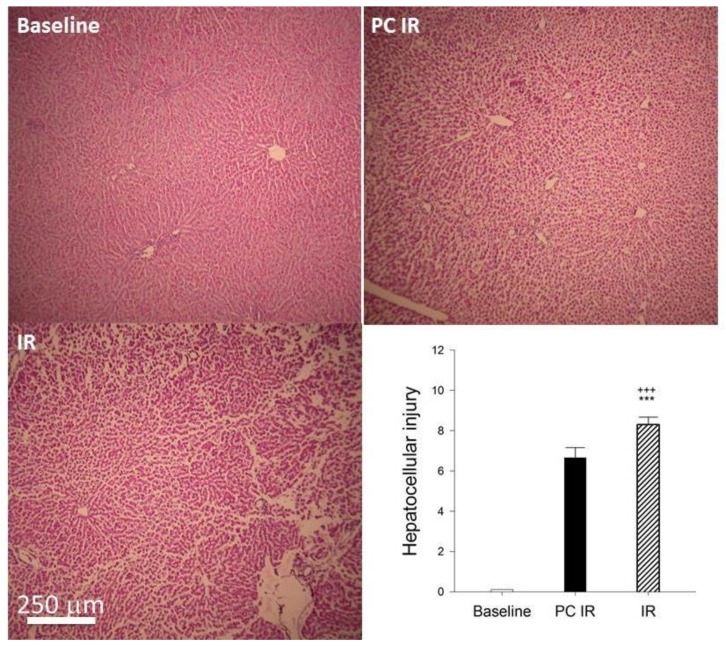
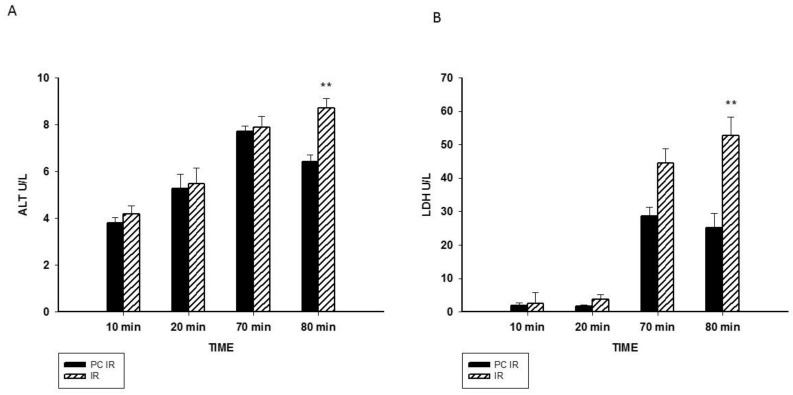
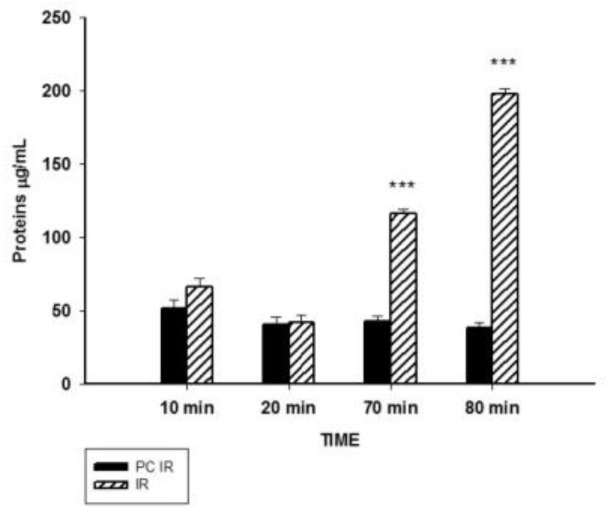
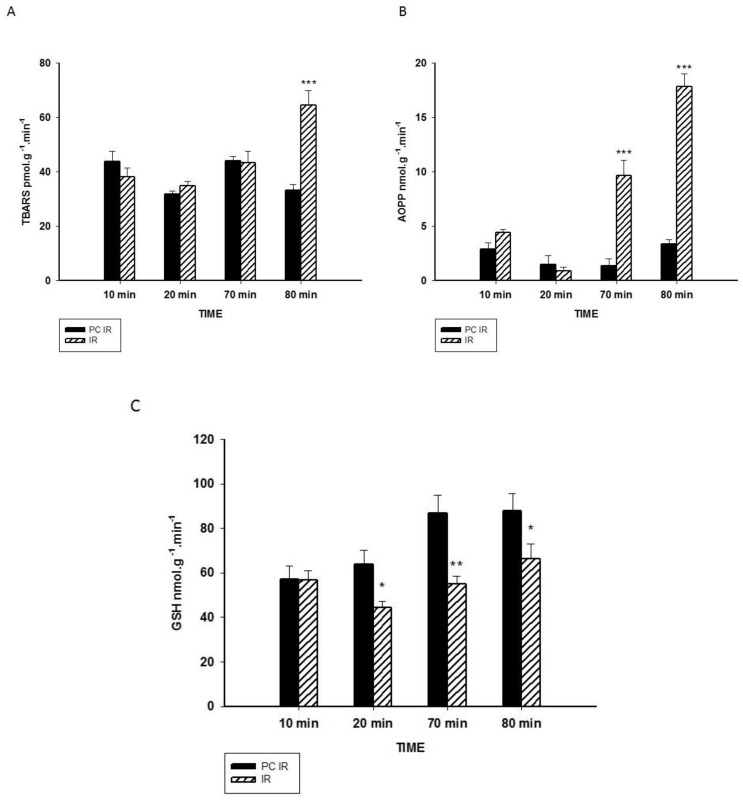
Hypothermia may attenuate the progression of ischemia-induced damage in liver. Here, we determined the effects of a brief cycle of hypothermic preconditioning applied before an ischemic/reperfusion (I/R) episode in isolated perfused rat liver (IPRL) on tissue damage and oxidative stress. Rats (male, 200-250 g) were anaesthetised with sodium pentobarbital (60 mg·kg i.p) and underwent laparatomy. The liver was removed and perfused in a temperature-regulated non-recirculating system. Livers were randomly divided into two groups ( = 6 each group). In the hypothermia-preconditioned group, livers were perfused with hypothermic buffer (cycle of 10 min at 22 °C plus 10 min at 37 °C) and the other group was perfused at 37 °C. Both groups were then submitted to 40 min of warm ischemia and 20 min of warm reperfusion. The level of tissue-damage indicators (alanine amino transferase, ALT; lactate dehydrogenase, LDH; and proteins), oxidative stress markers (thiobarbituric acid-reactive substances, TBARS; advanced oxidation protein products, AOPP; and glutathione, GSH) were measured in aliquots of perfusate sampled at different time intervals. Histological determinations and oxidative stress biomarkers in homogenized liver (AOPP; TBARS; nitric oxide derivatives, NO; GSH and glutathione disulphide, GSSG) were also made in the tissue at the end. Results showed that both damage and oxidant indicators significantly decreased while antioxidant increased in hypothermic preconditioned livers. In addition, homogenized liver determinations and histological observations at the end of the protocol corroborate the results in the perfusate, confirming the utility of the perfusate as a non-invasive method. In conclusion, hypothermic preconditioning attenuates oxidative damage and appears to be a promising strategy to protect the liver against IR injury.
低温可能会减弱缺血引起的肝损伤的进展。在这里,我们确定了在分离灌注大鼠肝(IPRL)的缺血/再灌注(I/R)发作前应用短暂的低温预处理循环对组织损伤和氧化应激的影响。雄性大鼠(200-250 g)用戊巴比妥钠(60 mg·kg i.p.)麻醉,并进行剖腹术。肝脏被取出并在温度调节的非再循环系统中灌注。肝脏被随机分为两组(每组 6 只)。在低温预处理组中,肝脏用低温缓冲液(22°C 下 10 分钟和 37°C 下 10 分钟的循环)灌注,另一组在 37°C 下灌注。两组均进行 40 分钟的热缺血和 20 分钟的热再灌注。在不同时间间隔采集灌注液样本,测量组织损伤指标(丙氨酸氨基转移酶,ALT;乳酸脱氢酶,LDH;和蛋白质)、氧化应激标志物(硫代巴比妥酸反应物质,TBARS;高级氧化蛋白产物,AOPP;和谷胱甘肽,GSH)。还在组织中进行了匀浆肝(AOPP;TBARS;一氧化氮衍生物,NO;GSH 和谷胱甘肽二硫化物,GSSG)的氧化应激生物标志物测定和组织学测定。结果表明,低温预处理组的损伤和氧化剂指标均显著降低,而抗氧化剂增加。此外,方案结束时的匀浆肝测定和组织学观察结果证实了灌注液中的结果,证实了灌注液作为一种非侵入性方法的实用性。总之,低温预处理可减轻氧化损伤,似乎是保护肝脏免受 IR 损伤的一种有前途的策略。