Zhang Shilong, Feng Zanjie, Gao Weidong, Duan Yuling, Fan Guoxin, Geng Xin, Wu Bo, Li Kai, Liu Kangwei, Peng Cijun
Department of Hepatobiliary and Pancreatic Surgery, Affiliated Hospital of Zunyi Medical University, Zunyi, China.
Department of Biochemistry and Molecular Biology, Zunyi Medical University, Zunyi, China.
Front Pharmacol. 2020 Sep 8;11:544124. doi: 10.3389/fphar.2020.544124. eCollection 2020.
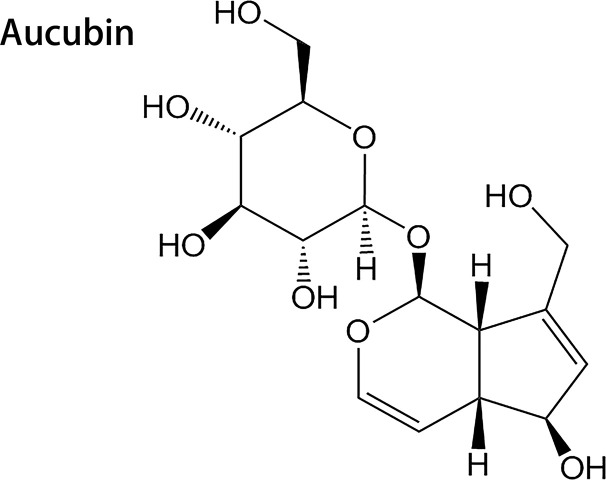
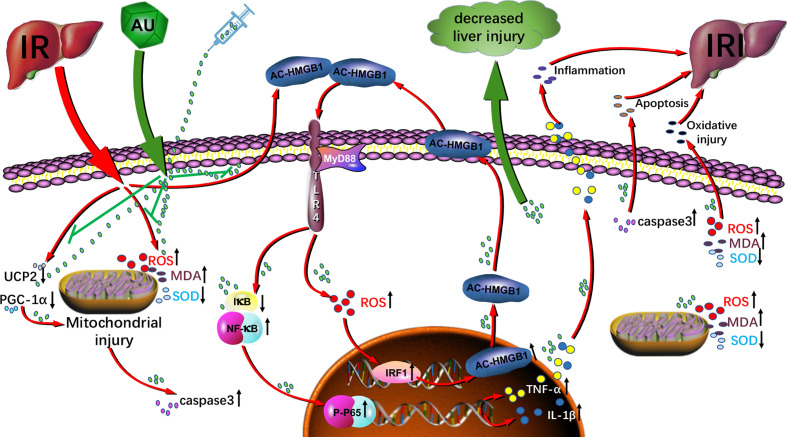
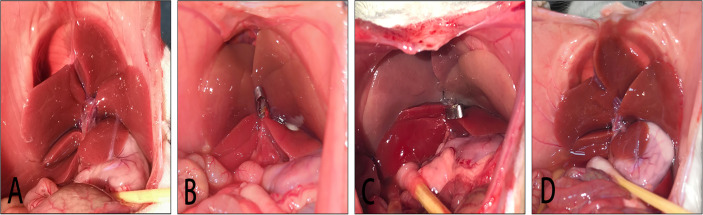
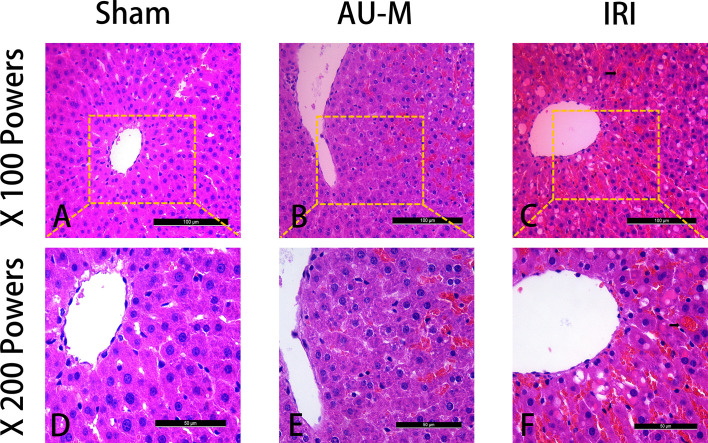
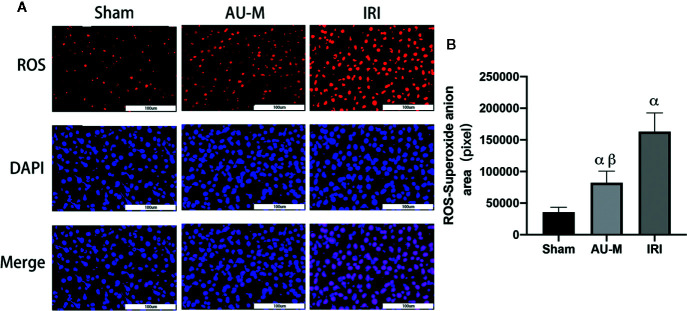
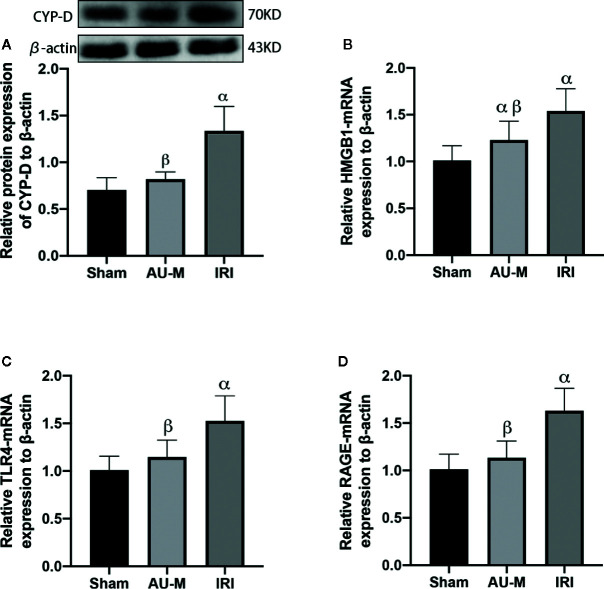
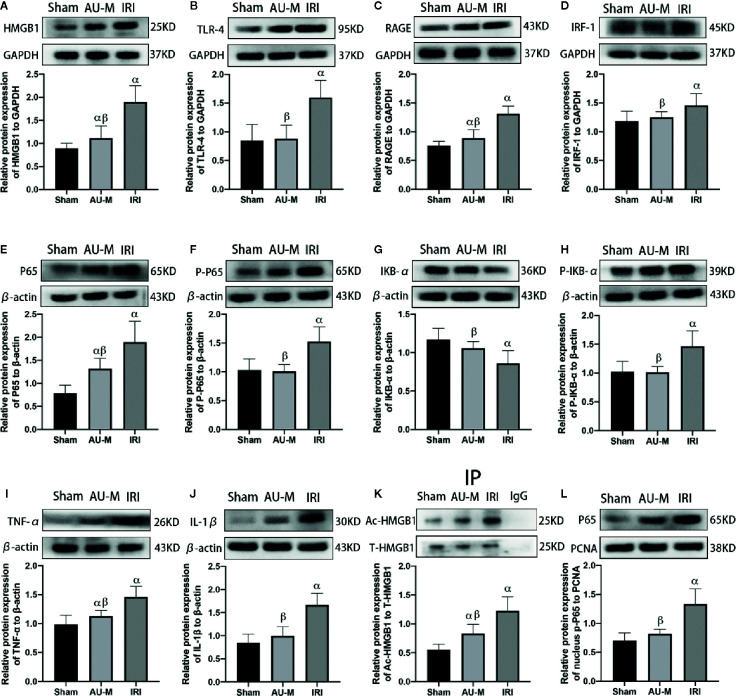
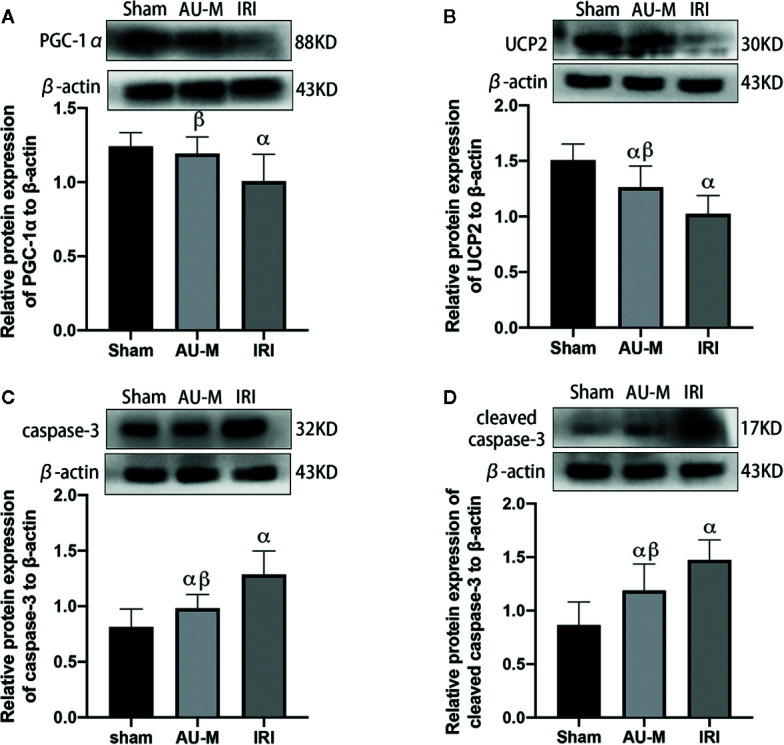
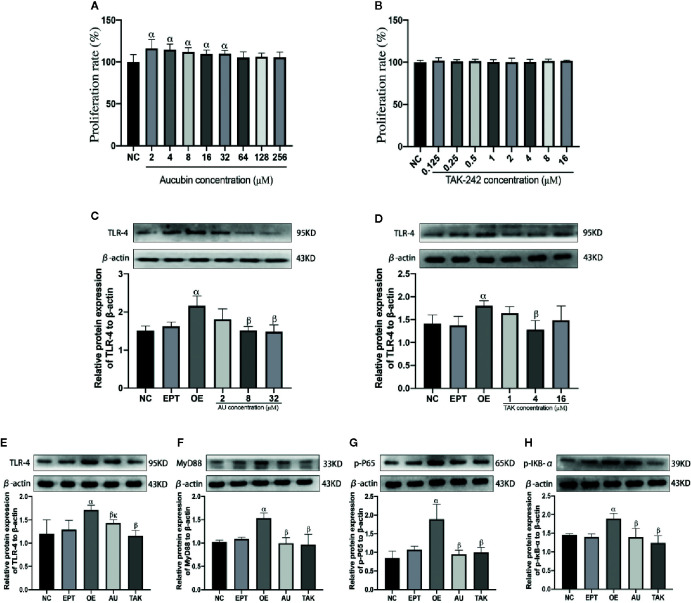
Liver ischemia-reperfusion injury (IRI) is a common clinical event with high morbidity in patients undergoing complex liver surgery or having abdominal trauma. Inflammatory and oxidative stress responses are the main contributing factors in liver IRI. The iridoid glucoside aucubin (AU) has good anti-inflammatory and antioxidative effects; however, there are no relevant reports on the protective effect of glucosides on hepatic IRI. The purpose of this study was to determine whether AU pretreatment could prevent liver IRI and to explore the mechanism. Sprague-Dawley rats were randomly divided into five groups. The sham operation and IRI control groups were given intraperitoneal injections of normal saline, while the AU low-dose (AU-L) group, AU medium-dose (AU-M) group, and AU high-dose (AU-H) group were given intraperitoneal injections of AU at doses of 1, 5, and 10 mg/kg/day, respectively. After 10 d, liver IRI (70% liver ischemia for 1 h, reperfusion for 6 h) was surgically established in all groups except the sham group. Our results confirmed that liver injury was significantly aggravated after hepatic ischemia-reperfusion. AU alleviated the increase of transaminase and pathological changes induced by ischemia-reperfusion and improved liver damage. AU could also ameliorate the inflammatory and oxidative stress responses induced by ischemia-reperfusion and reduced expression of high mobility group protein (HMG)B1, receptor for advanced glycation end-products (RAGE), tumor necrosis factor (TNF)-α, interleukin (IL)-1β, and reactive oxygen species (ROS). Moreover, AU reduced ischemia-reperfusion-induced mitochondrial dysfunction and cells apoptosis, increased peroxisome proliferator-activated receptor γ coactivator (PGC)-1α and uncoupling (UCP)2 protein expression, and reduced caspase-3, cleaved caspase-3, and Cytochrome P450 proteins (CYP) expression. To determine expression levels of the Toll-like receptor (TLR)-4/nuclear factor-κB (NF-κB) pathway-related proteins and , we also measured TLR-4, myeloid differentiation factor88 (MyD88), NF-κB P65, p-P65, I-kappa-B-alpha (IκB-α), and p-IκB-α levels. The results showed that AU effectively inhibited activation of the TLR-4/NF-κB signaling pathway. In conclusion, we showed for the first time a hepatoprotective effect for AU in liver IRI, which acted by inhibiting the HMGB1/TLR-4/NF-κB signaling pathway, oxidative stress, and apoptosis. Pretreatment with AU may be a promising strategy for preventing liver IRI.
肝缺血再灌注损伤(IRI)是一种常见的临床事件,在接受复杂肝脏手术或腹部创伤的患者中发病率很高。炎症和氧化应激反应是肝IRI的主要促成因素。环烯醚萜苷类化合物桃叶珊瑚苷(AU)具有良好的抗炎和抗氧化作用;然而,关于苷类对肝IRI的保护作用尚无相关报道。本研究的目的是确定AU预处理是否能预防肝IRI并探讨其机制。将Sprague-Dawley大鼠随机分为五组。假手术组和IRI对照组腹腔注射生理盐水,而AU低剂量(AU-L)组、AU中剂量(AU-M)组和AU高剂量(AU-H)组分别腹腔注射剂量为1、5和10mg/kg/天的AU。10天后,除假手术组外,所有组均通过手术建立肝IRI(70%肝脏缺血1小时,再灌注6小时)。我们的结果证实,肝缺血再灌注后肝损伤明显加重。AU减轻了缺血再灌注诱导的转氨酶升高和病理变化,并改善了肝损伤。AU还可以改善缺血再灌注诱导的炎症和氧化应激反应,并降低高迁移率族蛋白(HMG)B1、晚期糖基化终产物受体(RAGE)、肿瘤坏死因子(TNF)-α、白细胞介素(IL)-1β和活性氧(ROS)的表达。此外,AU减少了缺血再灌注诱导的线粒体功能障碍和细胞凋亡,增加了过氧化物酶体增殖物激活受体γ共激活因子(PGC)-1α和解偶联蛋白(UCP)2的表达,并降低了半胱天冬酶-3、裂解的半胱天冬酶-3和细胞色素P450蛋白(CYP)的表达。为了确定Toll样受体(TLR)-4/核因子-κB(NF-κB)信号通路相关蛋白的表达水平,我们还检测了TLR-4、髓样分化因子88(MyD88)、NF-κB P65、p-P65、I-κB-α和p-IκB-α的水平。结果表明,AU有效抑制了TLR-