Key Laboratory of South China Agricultural Plant Molecular Analysis and Genetic Improvement & Guangdong Provincial Key Laboratory of Applied Botany, South China Botanical Garden, Chinese Academy of Sciences, Xingke Road 723, Tianhe District, Guangzhou 510650, China.
Tea Research Institute, Guangdong Academy of Agricultural Sciences & Guangdong Provincial Key Laboratory of Tea Plant Resources Innovation and Utilization, Dafeng Road 6, Tianhe District, Guangzhou 510640, China.
Molecules. 2018 Mar 29;23(4):790. doi: 10.3390/molecules23040790.
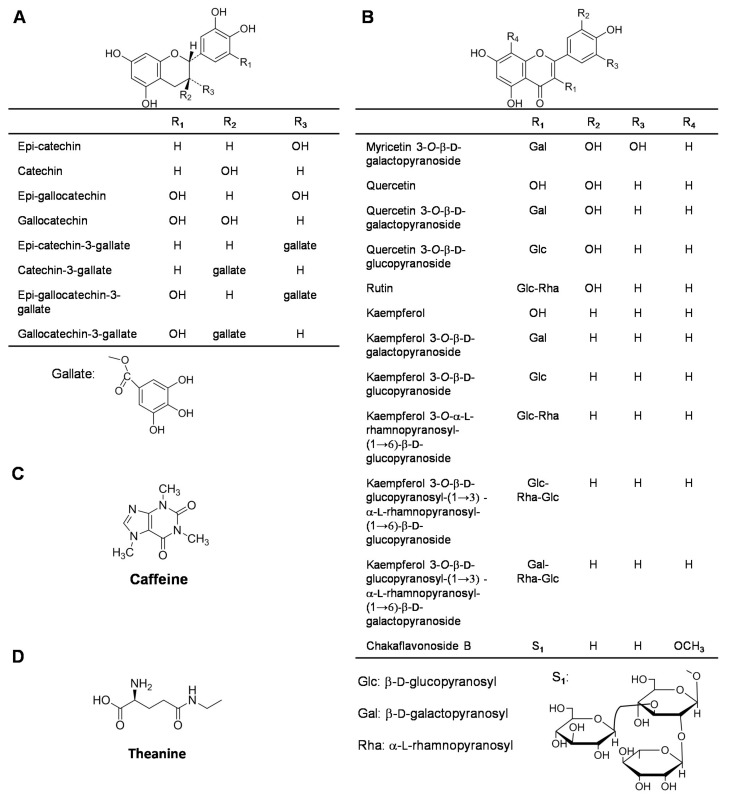
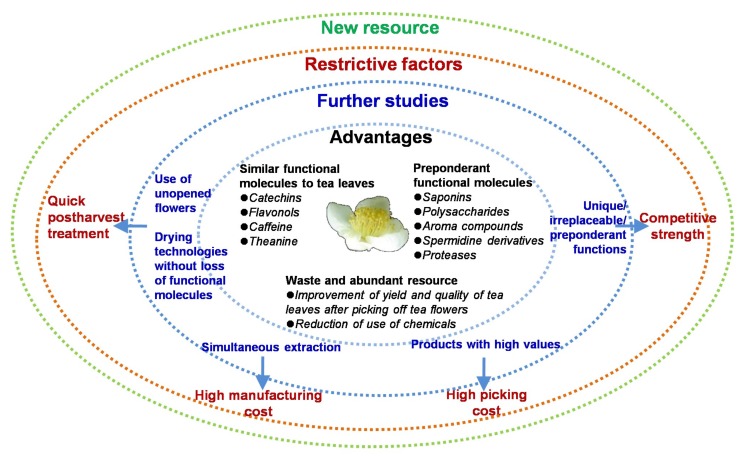
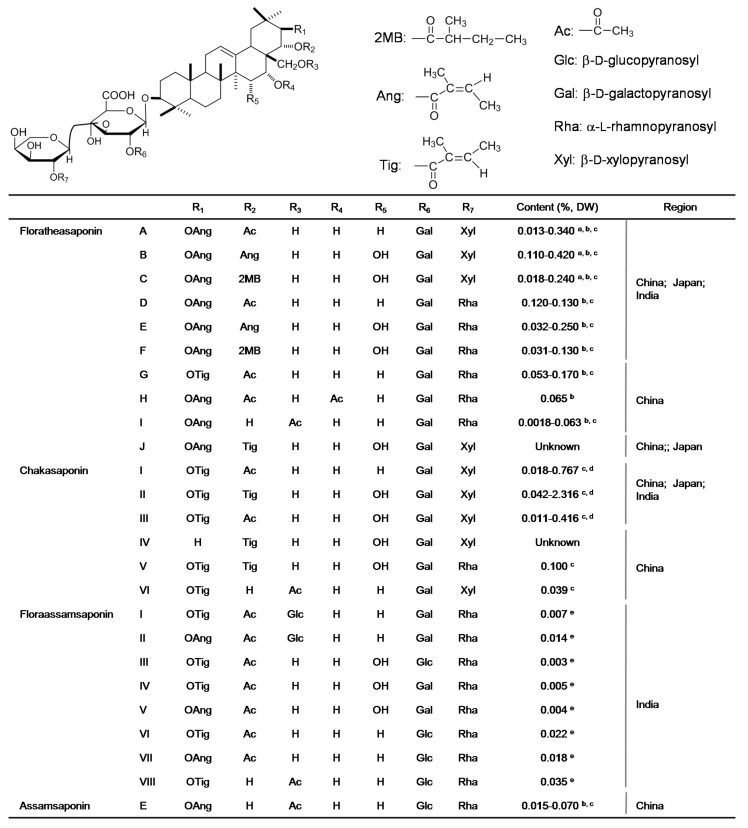
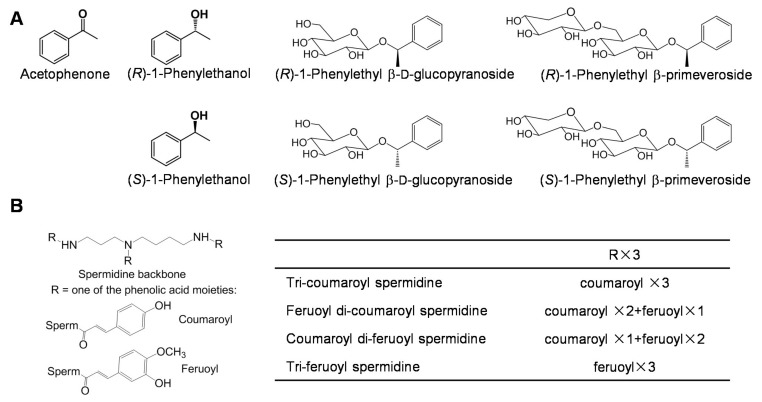
Tea () is an important crop, and its leaves are used to make the most widely consumed beverage, aside from water. People have been using leaves from tea plants to make teas for a long time. However, less attention has been paid to the flowers of tea plants, which is a waste of an abundant resource. In the past 15 years, researchers have attempted to discover, identify, and evaluate functional molecules from tea flowers, and have made insightful and useful discoveries. Here, we summarize the recent investigations into these functional molecules in tea flowers, including functional molecules similar to those in tea leaves, as well as the preponderant functional molecules in tea flowers. Tea flowers contain representative metabolites similar to those of tea leaves, such as catechins, flavonols, caffeine, and amino acids. The preponderant functional molecules in tea flowers include saponins, polysaccharides, aromatic compounds, spermidine derivatives, and functional proteins. We also review the safety and biological functions of tea flowers. Tea flower extracts are proposed to be of no toxicological concern based on evidence from the evaluation of mutagenicity, and acute and subchronic toxicity in rats. The presence of many functional metabolites in tea flowers indicates that tea flowers possess diverse biological functions, which are mostly related to catechins, polysaccharides, and saponins. Finally, we discuss the potential for, and challenges facing, future applications of tea flowers as a second resource from tea plants.
茶是一种重要的作物,其叶子被用来制作除水之外最广泛消费的饮料。人们长期以来一直使用茶树的叶子来制作茶叶。然而,人们对茶树的花朵关注较少,这是对丰富资源的浪费。在过去的 15 年中,研究人员试图从茶花中发现、鉴定和评估功能性分子,并取得了有见地和有用的发现。在这里,我们总结了最近对茶花中这些功能性分子的研究,包括与茶叶中相似的功能性分子,以及茶花中占优势的功能性分子。茶花含有与茶叶相似的代表性代谢物,如儿茶素、类黄酮、咖啡因和氨基酸。茶花中占优势的功能性分子包括皂甙、多糖、芳香化合物、亚精胺衍生物和功能性蛋白质。我们还回顾了茶花的安全性和生物学功能。茶花提取物被认为没有毒理学问题,这是基于对致突变性、大鼠急性和亚慢性毒性评估的证据。茶花中存在许多功能性代谢物表明,茶花具有多种生物学功能,这些功能大多与儿茶素、多糖和皂甙有关。最后,我们讨论了将茶花作为茶树的第二种资源进行未来应用的潜力和面临的挑战。