Franchin Giorgia, Maden Halide Selin, Wahl Larissa, Baliello Andrea, Pasetto Marco, Colombo Paolo
Department of Industrial Engineering, University of Padova, 35131 Padova, Italy.
Department of Civil, Environmental and Architectural Engineering, University of Padova, 35131 Padova, Italy.
Materials (Basel). 2018 Mar 28;11(4):515. doi: 10.3390/ma11040515.
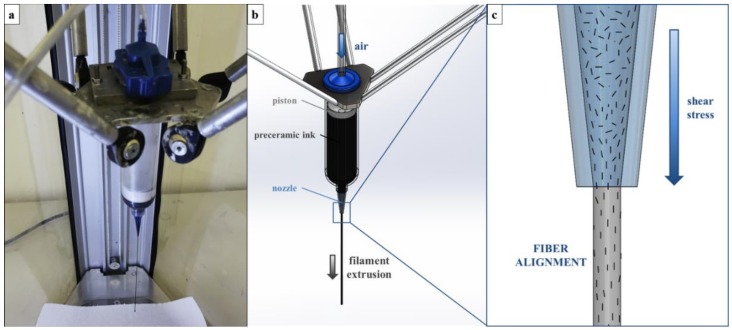
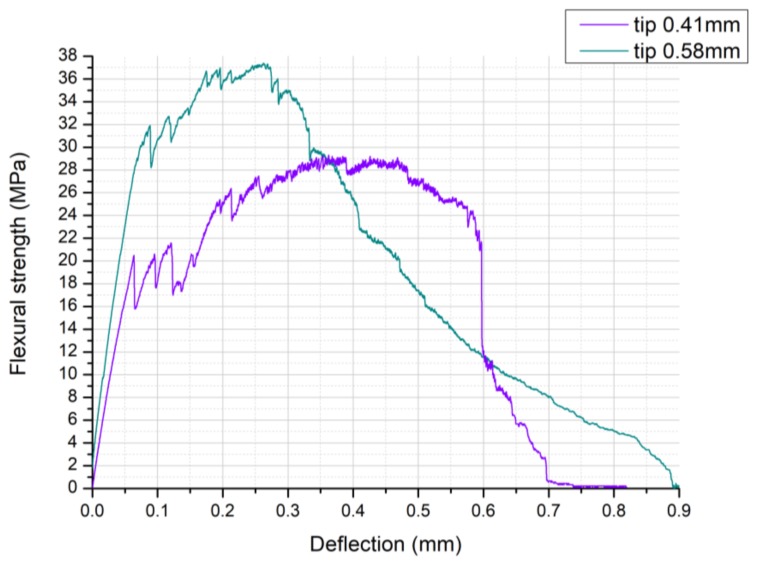
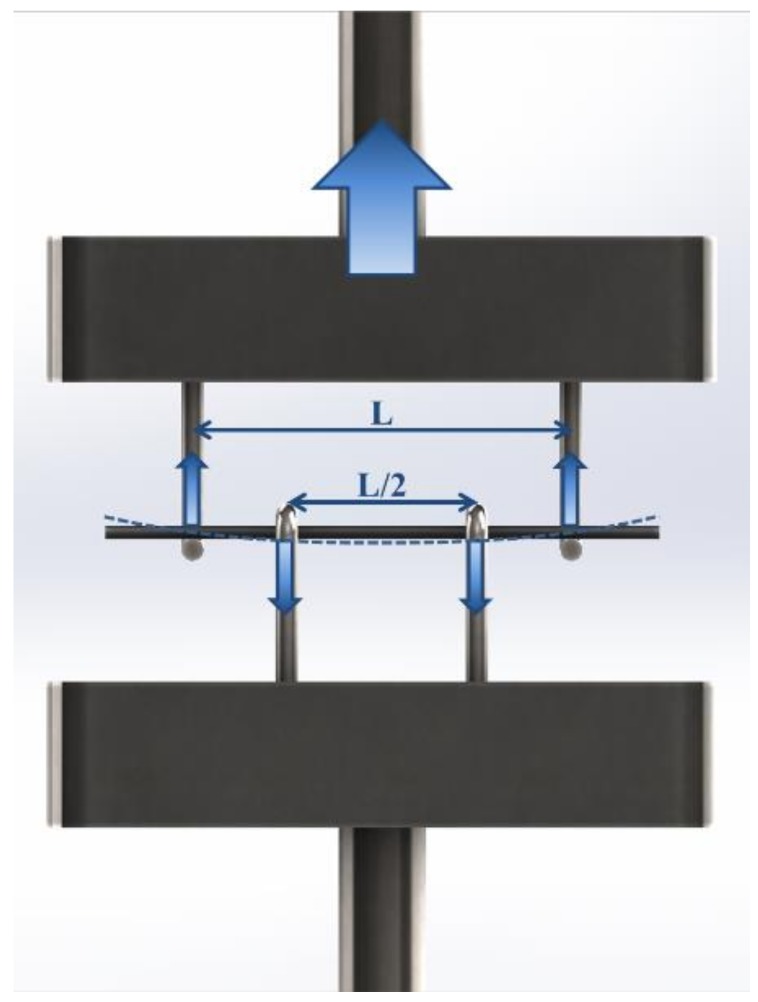
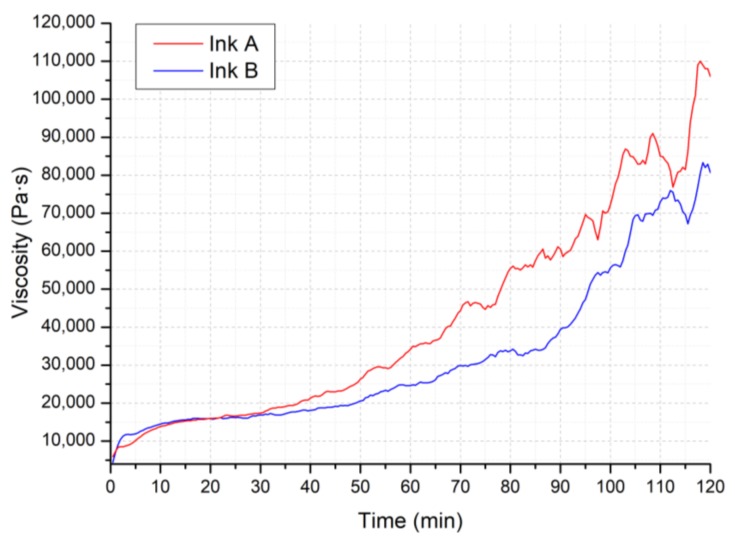
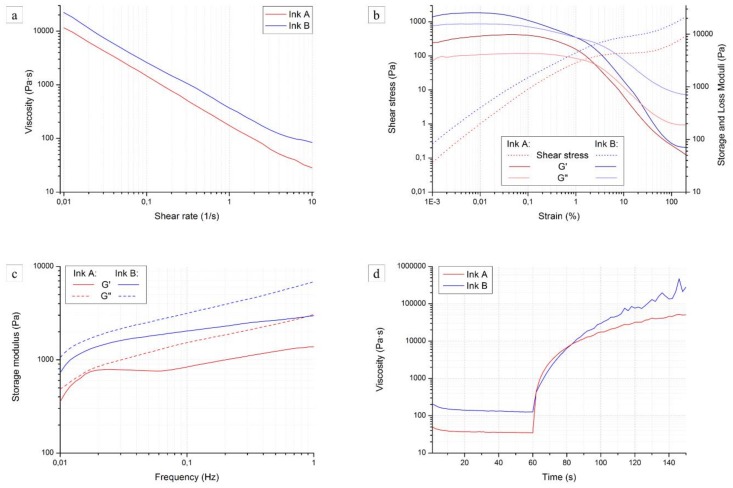
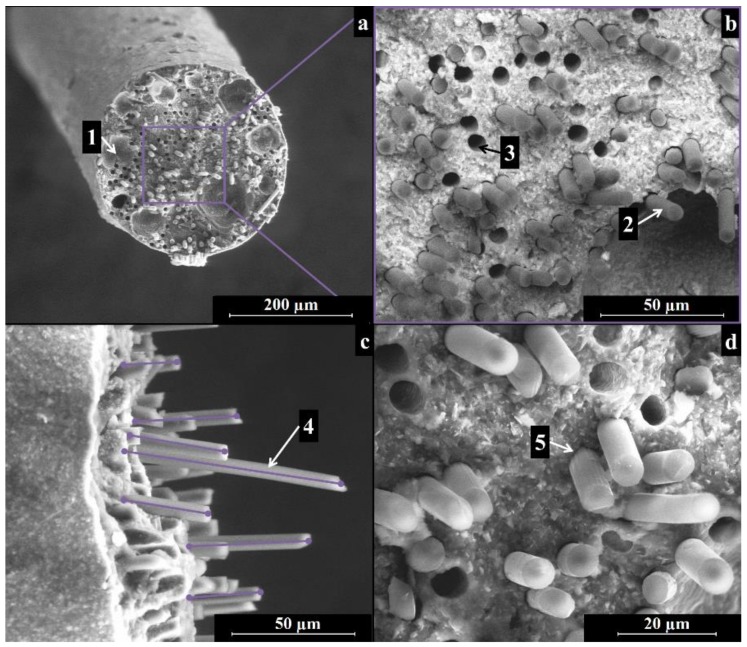
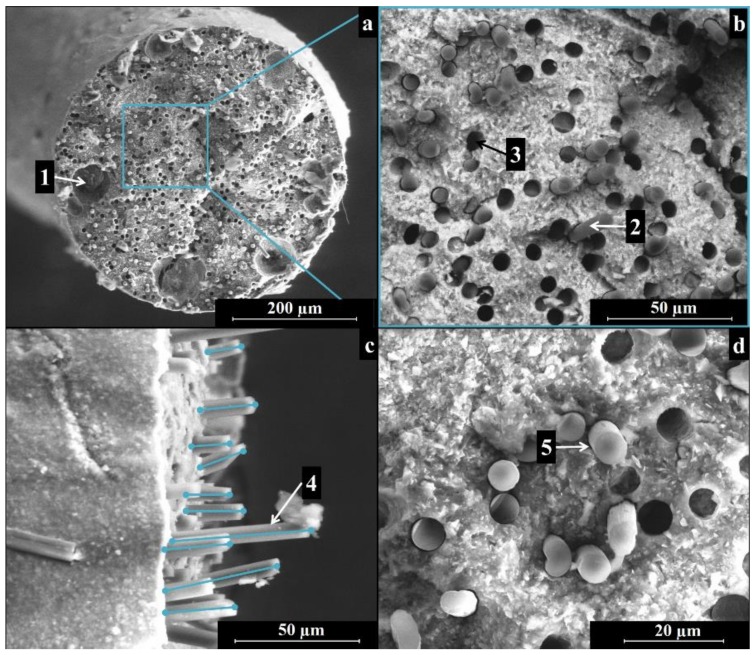
In a previous work, an ink based on a preceramic polymer, SiC fillers, and chopped carbon fibers was proposed for the production of Ceramic Matrix Composite (CMC) structures by Direct Ink Writing (DIW) and subsequent pyrolysis. Thanks to the shear stresses generated at the nozzle tip during extrusion, carbon fibers can be aligned along the printing direction. Fumed silica was added to the ink in order to enhance its rheological properties; however, the printed structures still showed some deformation in the Z direction. In this work, a second ink was successfully developed to limit deformation and at the same time avoid the addition of fumed silica, which limited the potential temperature of application of the composites. Instead, the positive role of the preceramic polymer on the ink rheology was exploited by increasing its concentration in the ink. Rheological characterization carried out on both inks confirmed that they possessed Bingham shear thinning behavior and fast viscosity recovery. Single filaments with different diameters (~310 µm and ~460 µm) were produced with the latter ink by DIW and subsequent pyrolysis. Tested under a four-point flexural test, the filaments showed a mean flexural strength above 30 MPa, graceful failure, and fiber pull-out. The results of this work suggest that CMC components can effectively be fabricated via DIW of a preceramic ink with embedded short fibers; the preceramic polymer is able to provide the desired rheology for the process and to develop a dense matrix capable of incorporating both fibers and ceramic particles, whereas the fibers addition contributes to an increase of the fracture toughness of the material and to the development of a graceful failure mode.
在之前的一项工作中,提出了一种基于陶瓷前驱体聚合物、碳化硅填料和短切碳纤维的油墨,用于通过直接墨水书写(DIW)和随后的热解来生产陶瓷基复合材料(CMC)结构。由于挤出过程中在喷嘴尖端产生的剪切应力,碳纤维可以沿印刷方向排列。向油墨中添加了气相二氧化硅以增强其流变性能;然而,印刷结构在Z方向上仍表现出一些变形。在这项工作中,成功开发了第二种油墨,以限制变形,同时避免添加气相二氧化硅,因为气相二氧化硅限制了复合材料的潜在应用温度。相反,通过增加油墨中陶瓷前驱体聚合物的浓度,利用了其对油墨流变学的积极作用。对两种油墨进行的流变学表征证实,它们具有宾汉剪切变稀行为和快速粘度恢复特性。使用后一种油墨通过DIW和随后的热解制备了不同直径(约310 µm和约460 µm)的单丝。在四点弯曲试验下进行测试,这些单丝显示出平均弯曲强度高于30 MPa,失效形态良好,并且有纤维拔出。这项工作的结果表明,通过具有嵌入短纤维的陶瓷前驱体油墨的DIW可以有效地制造CMC组件;陶瓷前驱体聚合物能够为该过程提供所需的流变学,并形成一种能够包含纤维和陶瓷颗粒的致密基体,而添加纤维有助于提高材料的断裂韧性并形成良好的失效模式。